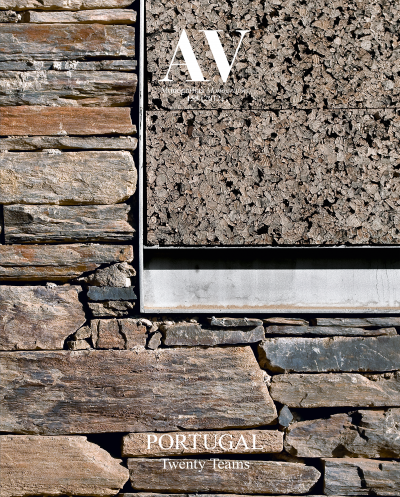
AV Monografías 155



The Lisbon firm Domitianus Arquitetura – led by Paulo Tormenta Pinto and Rosa Maria Bastos – carried out the project on the north part of the Ramalde Sport Complex in Porto. It involved the construction of a new field for rugby and soccer, an ancilla
In a region of exceptional beauty, the architecture engages in a dialogue with a centuries-old winemaking tradition deeply rooted in the landscape. The Adorigo estate is located in Alto Douro Vinhateiro, a Portuguese wine-growing area recognized by U
Intended to be temporary, the house went up under strict pragmatic premises and took on a clear-cut geometry that separates the social areas from the bedrooms by levels...
Abiding by a firm economy of means, each element is minimized to its essence, but this does not prevent the building from attaining a certain degree of spatial monumentality...
A perimeter composed of large blocks of granite and a gridded wooden roof determine the spaces of this greenhouse located within the famous park of Portugal’s northern capital...
Behind a rare cork front facade is a cottage of sorts inside which the only additions have been a staircase and a beam that serves to reinforce support of the roof...
In a valley located close to the city, twin dwellings pour out all their spaces onto outsized platforms from which one can contemplate and enjoy highly privileged views...
The intervention maintains almost everything as it was, adding only a false pillar that gives rise to a series of geometric dynamics with the effect of cropping the wooden walls and ceilings...
The Lisbon neighborhood of Padre Cruz, in Carnide, was an agricultural area that became one of the largest social housing developments on the Iberian Peninsula in the mid-20th century. In the 1960s, an old dairy farm was transformed into its municipa
Part of an agricultural estate classified as a ‘quinta de recreio,’ the building was abandoned for decades. It originally contained a winery and accommodations of people working on the property. It was broken up into various constructions connected b
The objective was to turn an 1898 building in Lisbon into an apartment complex. The 20th century had seen it modified a number of times to serve different uses. The new intervention would preserve only some elements of the original construction. The
The Mortuary House of the municipality of Barrancos is located close to the Spanish border, in Portugal’s Alentejo region. The Lisbon-based Mesa Atelier – Ana Isabel Santos, João Tavares, João Varela, Paulo Dias – drew up the project ‘Building with t
Like an open box of sorts, a single-family dwelling breaks the predictability of a peripheral neighborhood through a roof where a curved gable and a straight one converge inverted, violating the most basic of architectural conventions. Resting on a g
The remains of an old villa and its fountain have been restored and protected with a wooden roof to give the people of the neighborhood a gathering place with a distinctive identity. Rising from newly cleaned walls and with the tip resting on a V-sha
This walking and cycling path is a major piece of infrastructure for sustainable mobility on the banks of the Loures, stretching across 100 hectares of ecologically valuable marshland that is a strategic point for migratory birds. Located in the Port
The architecture studio Summary, founded by Samiel Gonçalces in Porto, is the author of this group of five single-family homes built with prefabricated reinforced concrete. The project stands out for its modular approach, its constructive efficiency,
The Portuguese firm Estudio ods – Bruno Oliveira and Marlene dos Santos – undertook the project of transforming an old fish-canning factory in Olhão, a municipality it the Algarve region, into a dwelling. The plant was part of a group of five buildin
Built high on a hill near the town of Santa Bárbara de Nexe, this concrete house fuses with nature while evoking the image of an old ruin. To make the most of views, the main livable zones are placed in the upper level, a 385-square-meter space. The
In Quinta do Campo Alegre, the project for the renovation and extension of the grandstand and headquarters of CDUP (Centro Desporto da Universidade do Porto) addresses the context of the stadium that opened in 1953. The original grandstand building
Located in Lanheses, an industrial area in the Portuguese municipality of Viana do Castelo, BW II is a building for BorgWarner, an American group of manufacturers of electric motors and components for both light and heavy and both hybrid and electric
The owner’s wishes were clear: to replace the original house he grew up in with a similar one, strategically positioned to avoid direct exposure to the neighbors. The Zurich-based Portuguese architect Fábio Ferreira Neves built the new dwelling in th
With a built area of 520 square meters, this block of tourist housing takes up a plot on Rúa Pedro Álvares Cabral, in Porto, where a leafy tree used to stand. The project seeks to bring back memories of that tree, which was removed for construction w
Trofa is Portugal’s youngest municipality, belonging to the district of Porto, in the north. For more than 25 years, the City Council occupied spaces scattered across the city. A 2016 competition to turn some old industrial facilities into a single T
A few projects do not describe a generation. Besides, the selection of buildings presented ahead is neither clear nor consistent; at best, we could say it is inclusive, an alibi of our time. Yet, these assorted productions share an even context: a co
The Environmental Education and Interpretation Center of the PPCB - CEIA – in Paredes de Coura, Portugal, designed by Atelier da Bouça, offers a beautiful example of symbiosis between the built and the natural. It does not seek protagonism. It avoids
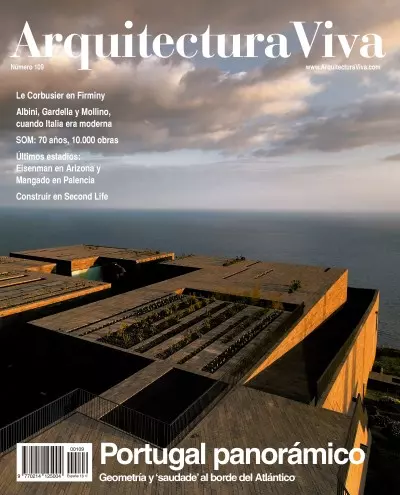
A laconic title. Behind the cover, an Atlantic scape. Next page, what looks like an attic, delimited by blocks of unfaced concrete. Then a terrace overhanging the garden one perceives to be part of a private house... And so with the next 300 pages: j
To think of monasteries and Portugal is to think of the novel Memorial do Convento (published in English as Baltasar and Blimunda), where in Baroque prose José Saramago intertwined the pursuits of a group of heterodox characters with the construction
Since 2014, the price of housing in Portugal has been increasing more than 6% per year. Lisbon was the municipality in the country most affected by this problem, infecting the surrounding districts and pushing inhabitants out of the centre. The exhib
1935-2022 The most international name in Portuguese painting, Paula Rego, died in London at 87. She grew up in a well-off family in Lisbon during the dictatorship of Salazar, a situation which prompted this restless young woman to leave the country i
Despite the inevitable brevity of her career, Maria Antónia Leite Siza (Porto, 1940-1973) produced more than 3.000 drawings and paintings. Crippled women, disfigured bodies and, in sum, victims of misery and circumstance, filled her work in an exerci
From the early canvases in protest against the Estado Novo to her images of women in pain, Paula Rego defended a militant art up to the end of her days.
I was born in Matosinhos, in 1933, into a large family. We were five siblings, common at the time, and twelve people living at home, starting with my grandmother, who had come from Brazil as a widow with six children. We ate all together and converse
I believe it was John Cage who once told me, “When you start working, everybody is in your studio – the past, your friends, enemies, the art world, and above all, your own ideas – all are there. But as you continue painting, they start leaving, one b
Whereas the precondition for the urge to empathy is a happy pantheistic relationship of confidence between man and the phenomena of the external world, the urge to abstraction is the outcome of a great inner unrest inspired in man by the phenomena of
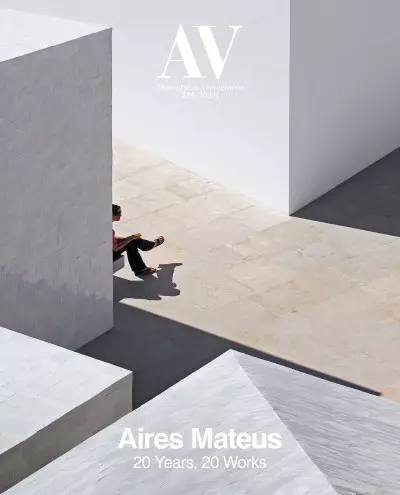
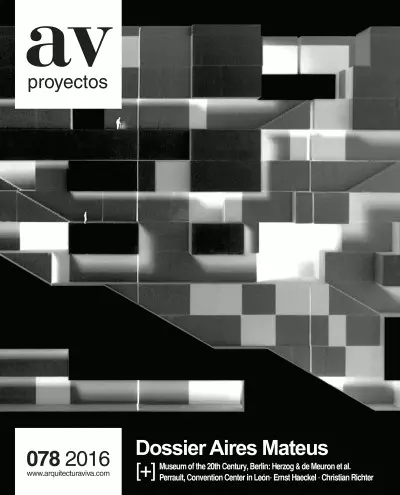
Looking at the past and the future at the same time, the Roman god of thresholds and transitions sums up well the profuse career of Manuel and Francisco Aires Mateus, two brothers and two studios that use geometry to take in each project a path that
1953-2019 The architect and critic Manuel Graça Dias died in his home city of Lisbon on 24 March. Graduated in 1977 from the ESBAL of Lisbon, he started teaching at the schools of architecture of Lisbon and Porto, where he completed his PhD in 2009.
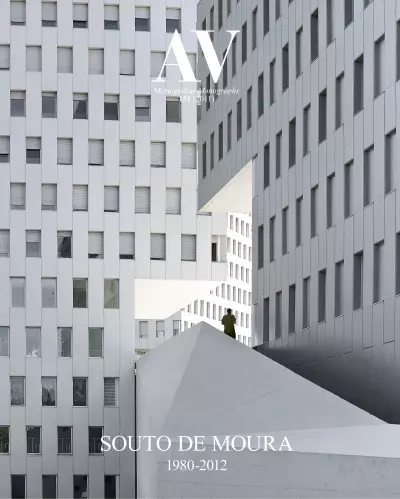
Saïd Hejal (Kronos Homes), who recently presented the project for two towers in Valencia with Ricardo Bofill, has commissioned Eduardo Souto de Moura – currently the subject of an extensive exhibition at the Casa da Arquitectura in Matosinhos – to ca
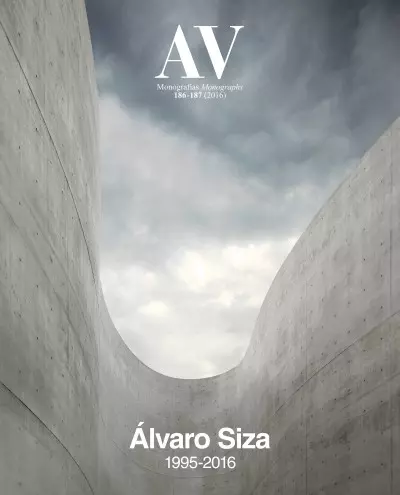
For years the field of action of Álvaro Siza (Matosinhos, 1933) has extended beyond the boundaries of his native Portugal, transferring the master’s ideas to a variety of contexts in Europe, America, and recently also Asia. It is in this latest stage
The jury of the first Leon Battista Alberti Prize, formed by representatives of the Politecnico di Milano, the Alberti Foundation, and Mantua City Hall, has unanimously voted to hand the award to the Portuguese architect João Carrilho da Graça, ackno
Álvaro Siza has designed a €7.5 coin in honour of fellow Portuguese architect Eduardo Souto de Moura, which will be put into circulation in Portugal on 12 December 2018. The silver alloy coin features an abstract outline of the crown of a tree
Mine was a normal childhood, in a conservative and religious family of northern Portugal – my family is from Braga. My uncles, grandfathers, and great-grandfathers were educated, they all studied Greek and Latin in Coimbra, or medicine and psychiatry
After a long period of decadence, the stately old Lisbon evoked by the actress and fado singer Amália Rodrigues has become a popular destination that already threatens to eclipse foci of tourist obsession like Venice and Barcelona. An unbeatable exam
Articulated by images, objects, and ideas rather than by buildings, the Lisbon Triennale questions the essence of architecture in the world today.
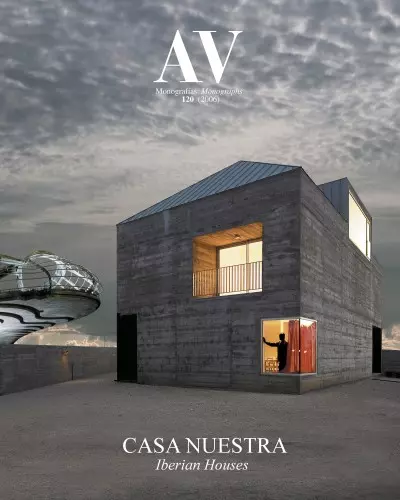
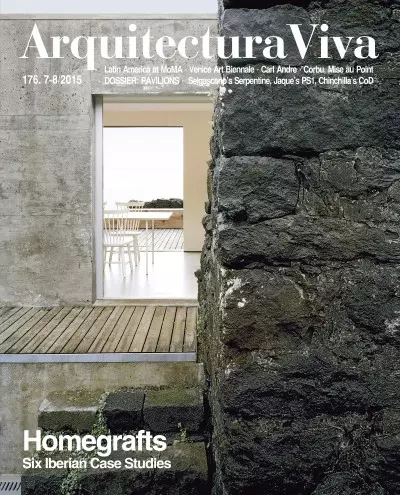
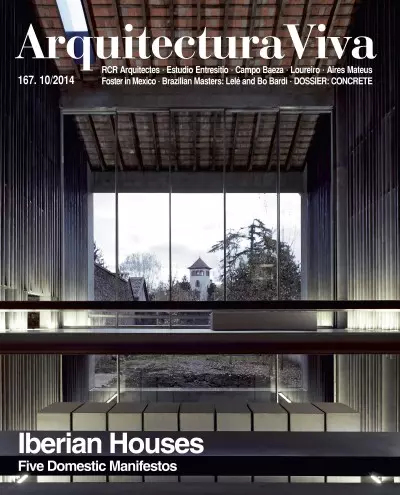
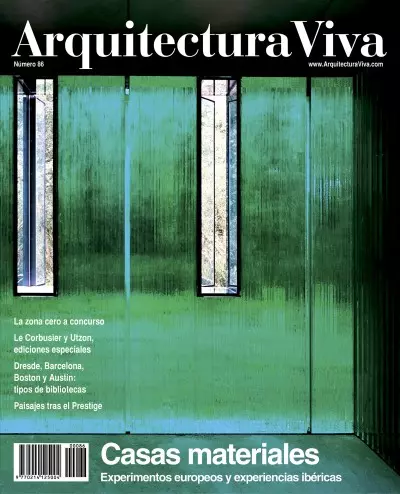
In the fifties and sixties, the house was the experimentation laboratory through which modernity was introduced in Spain and Portugal, but also subjected to revision.
Modernity turned each house into a manifesto, and the history of architecture in the 20th century can be summed up with domestic constructions that became milestones in a journey of discovery. This tradition of expressing the aesthetic intentions of
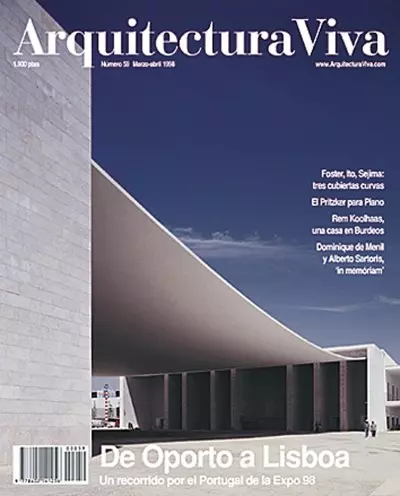
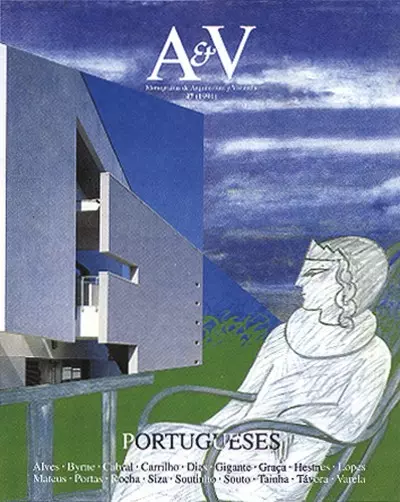
Is there such a thing as ‘Portuguese architecture’? In the early decades of the 20th century, modern architecture was for the Portuguese an aspiration postponed, considering the political and cultural circumstances of the period, with its tendency to
Ana Luisa Soares Filipe Magalhães João Paupério Maria Rebelo
Oporto 2024
Circo de Ideias - 262 Pages
André Tavares Diego Inglez de Souza Equações de Aquitectura
Casal de Cambra 2016
Caleidoscópio - 208 Pages
José Neves
Porto 2014
Dafne Editora - 408 Pages
Arquitectura contemporânea. Norte de Portugal