Twelve Months and Twelve Works

The year, initiated with the return of Donald Trump to the White House and with a key episode in the AI race between US-China was especially dark in a Europe lacking technological companies, unable to defend itself, and with barely any geopolitical influence. The inevitable protagonist was the hyperactive and unpredictable president of the United States, who used military, political, and tariff threats and deployed disorderly efforts to reach agreements in conflict areas like Ukraine or Gaza. Meanwhile, China continues to grow in economic power, scientific development and diplomatic influence, exercising leadership in the Global South and offering itself as a guarantee of stability in a planet hit by the dismantling of institutions, the rise of populism, and the threat of climate change. And a Spain concerned for the access to housing, immigration, and ideological polarization suffered the double impact of a massive blackout and devastating summer fires that cast a dark shadow over the efficiency of its governance.
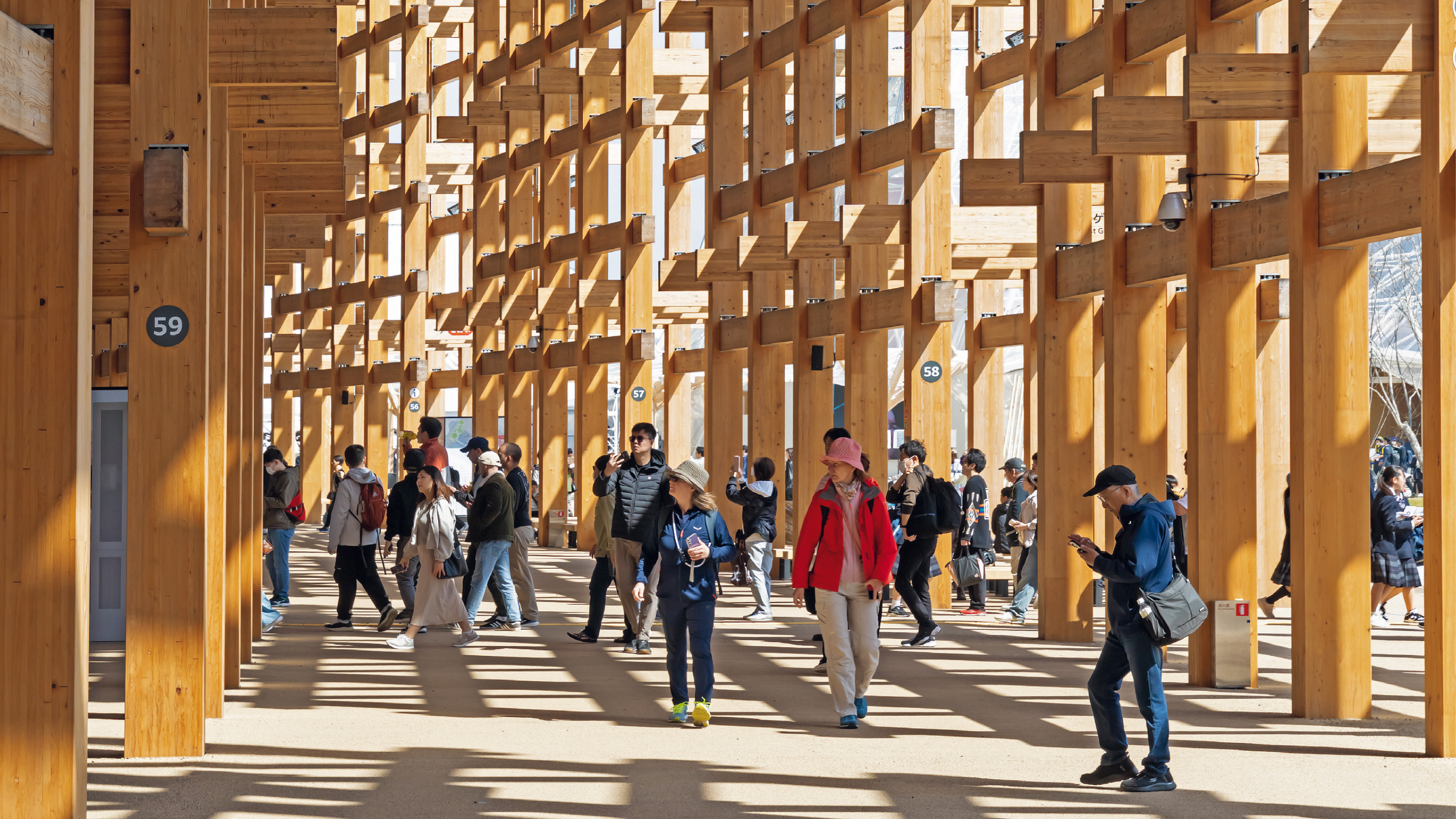
The buildings of the year illustrate the strengths and risks of the present moment. The huge wooden ring of Osaka reflects Japanese sophistication, while the hotel in Jingdezhen is a reminder of the unstoppable rise of China. The influence of this colossus is felt in Africa too, represented here by the Grand Egyptian Museum, a defficient work that has lifted the Arab self-esteem, while the Mexican market is a good example of Latin American inventiveness. The three US works, by European architects – daring in New York, exquisite in Philadelphia, and tectonic in Fayetteville – speak at once of its economic muscle and its weaker cultural dynamism, though the list also includes a New York firm that has completed in London a building innovative in its program. And Europe is again this year the geographic area wtih greater density of ideas and proposals, with unique works in Lausanne, Rotterdam, Paris, and Copenhagen that testify to the continent’s experimental drive as well as to its will to give the existing new uses.
The chronicle of twelve months, initiated with the 1994 Yearbook, and the selection of twelve international works, included from 1998, are now collected under the title ‘World Tour,’ encompassing both the time-traveling narrative of the chronicle and the spatial journey of the buildings. It seems fitting to accompany both with the remembrance of twelve international figures who passed away during the year: the Japanese Hiroshi Hara, the Americans Ricardo Scofidio and David Childs, the British Nicholas Grimshaw and Terry Farrell, the Peruvian and French Henri Ciriani, the Swedish Lars Lerup, and the Chinese Kongjian Yu join personalities so admired by architects like the filmmaker David Lynch, the patron Aga Khan IV, the gallerist Kristin Feireiss, and the photographer Sebastião Salgado. And in addition to these twelve names, we have paid special attention here to five figures who shared part of the journey with us: Françoise Choay, Léon Krier, François Chaslin, Robert Stern, and Frank Gehry, to whom we bid farewell with heartfelt obituaries.