Grand Egyptian Museum in Giza
Heneghan Peng Architects- Type Culture / Leisure Museum
- Date 2025
- City Giza
- Country Egypt
- Photograph Iwan Baan


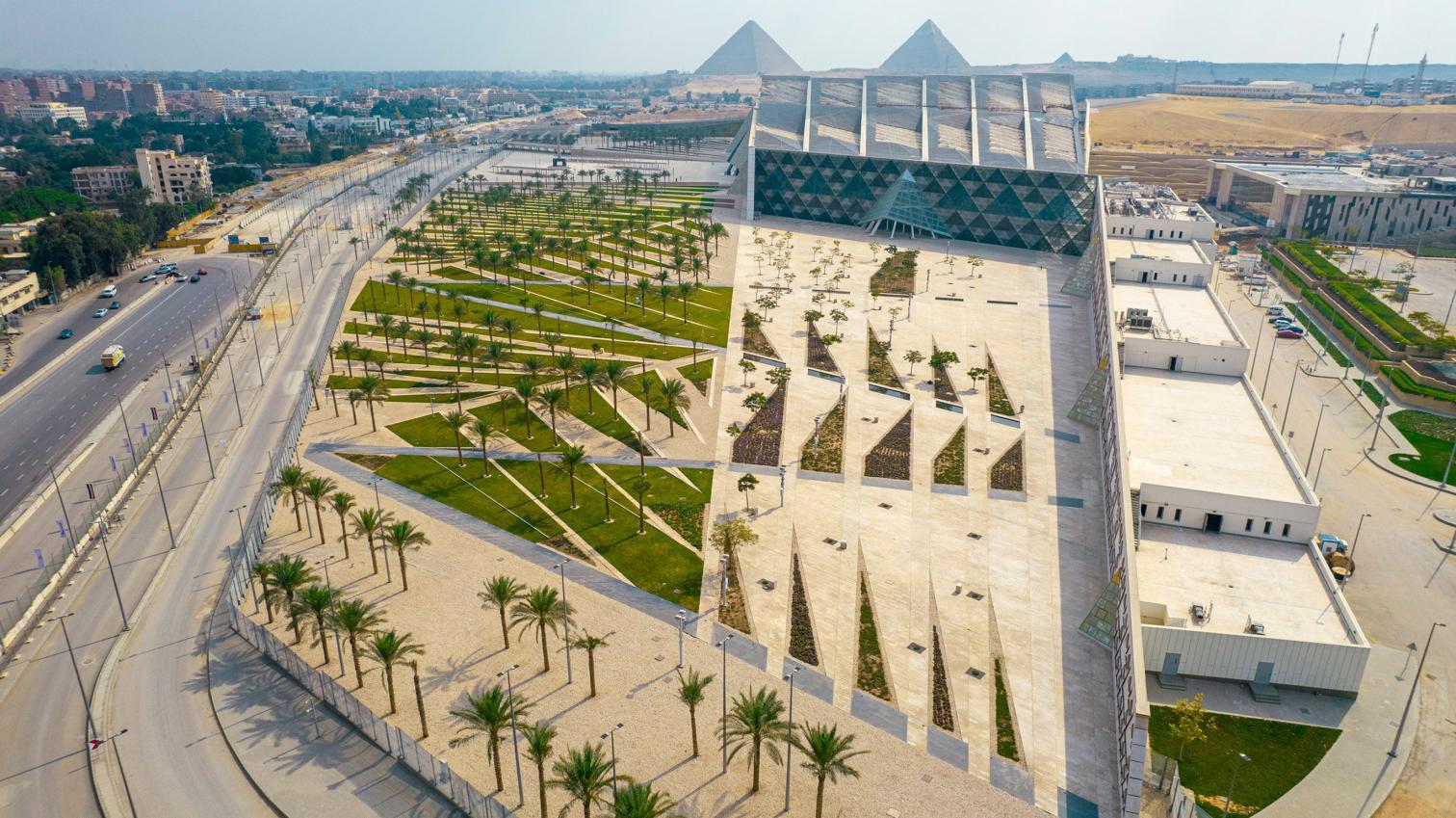
After more than three decades of waiting and numerous postponements, 1 November 2025 sees the long-awaited official opening of the Grand Egyptian Museum (GEM). The full opening of this colossal complex, located just two kilometres from the Pyramids of Giza, brings to an end a long process that began in 1992, when then-President Hosni Mubarak allocated the land to house a museum that would bring together the country's vast pharaonic collections.
Cortesía del Gran Museo Egipcio
The GEM project is the work of the Irish studio founded by Shih-Fu Peng and Róisín Heneghan, winner of the international competition held in 2003. The engineering was carried out by Arup and Buro Happold, while the landscaping was developed by West 8. Construction began in 2012 and, despite political, economic, health and organisational setbacks, the museum managed to partially open in October 2024 with twelve rooms. A few days after the official inauguration in 2025, the full opening to the public—scheduled for 4 November—took on symbolic significance: that date coincided with the anniversary of the discovery of Tutankhamun's tomb, found on 4 November 1922 by British archaeologist Howard Carter.
Cortesía del Gran Museo Egipcio
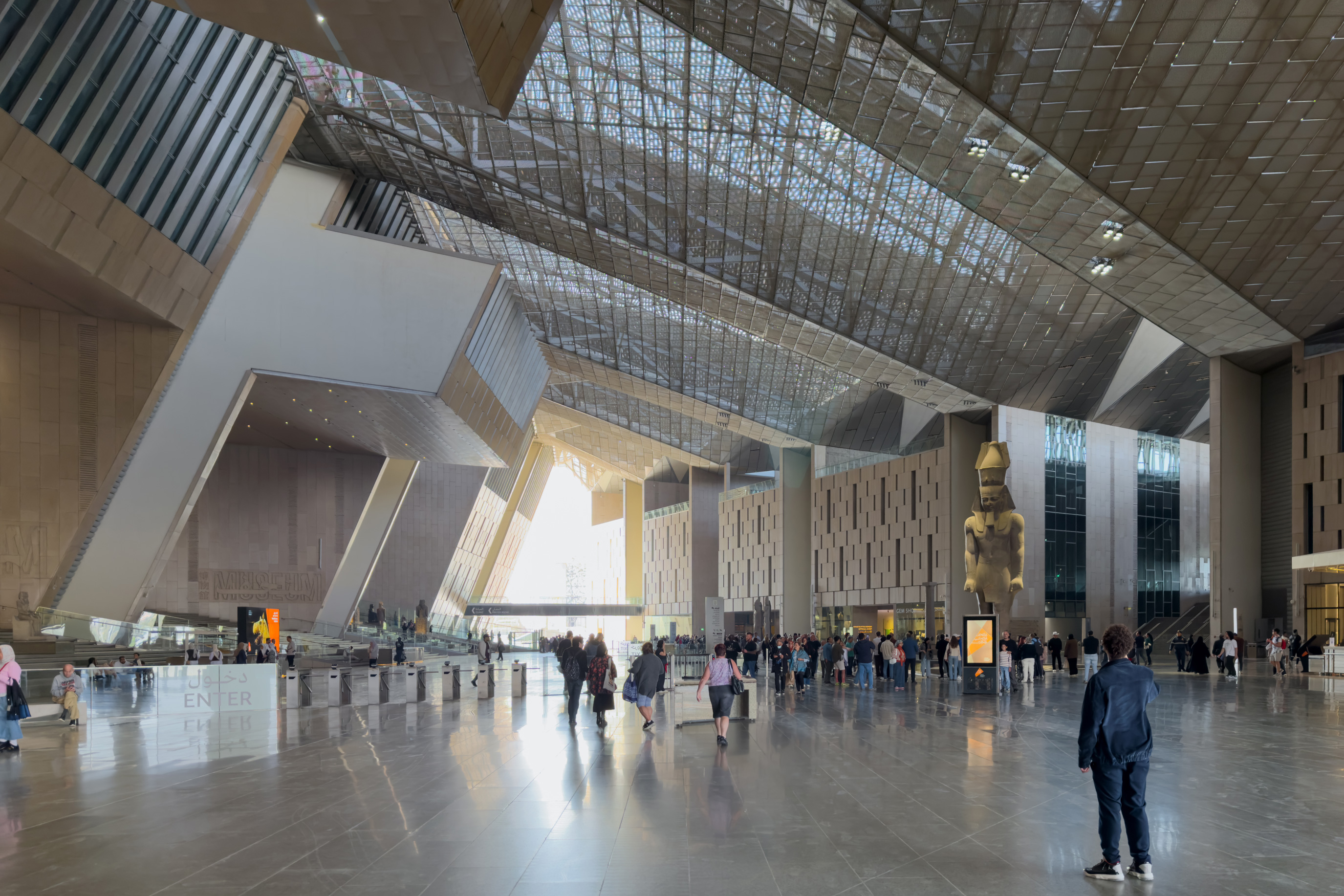
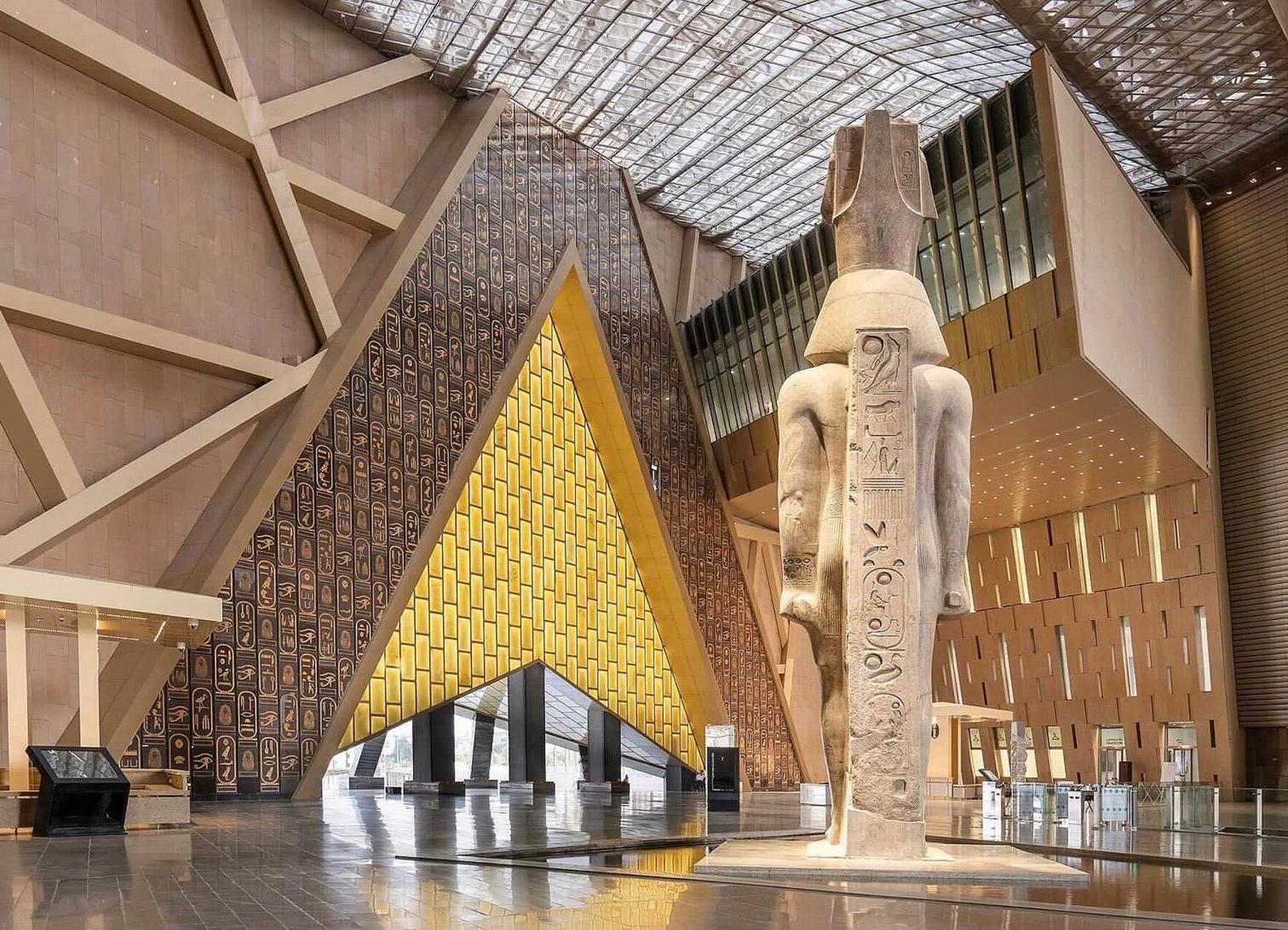
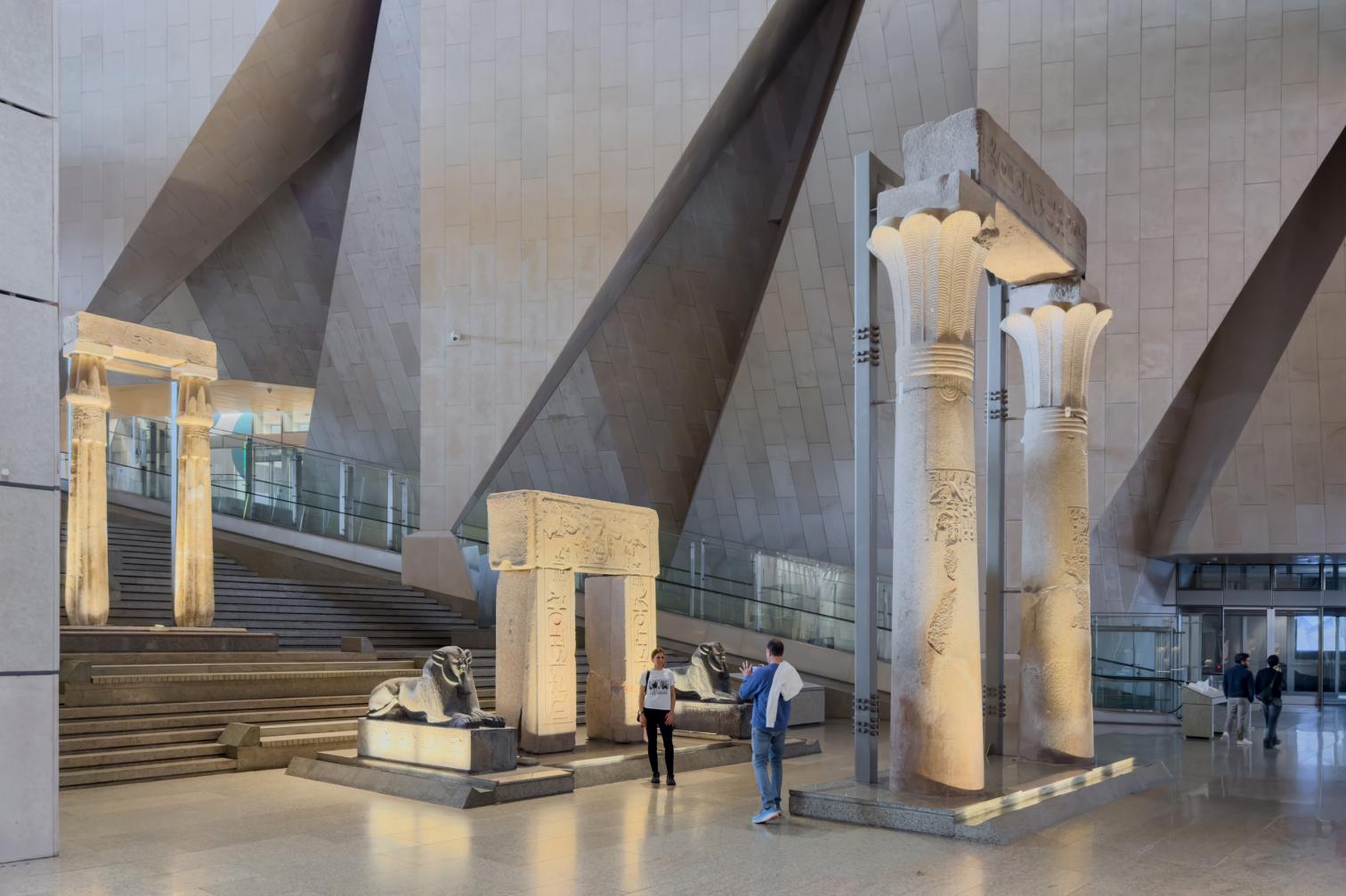
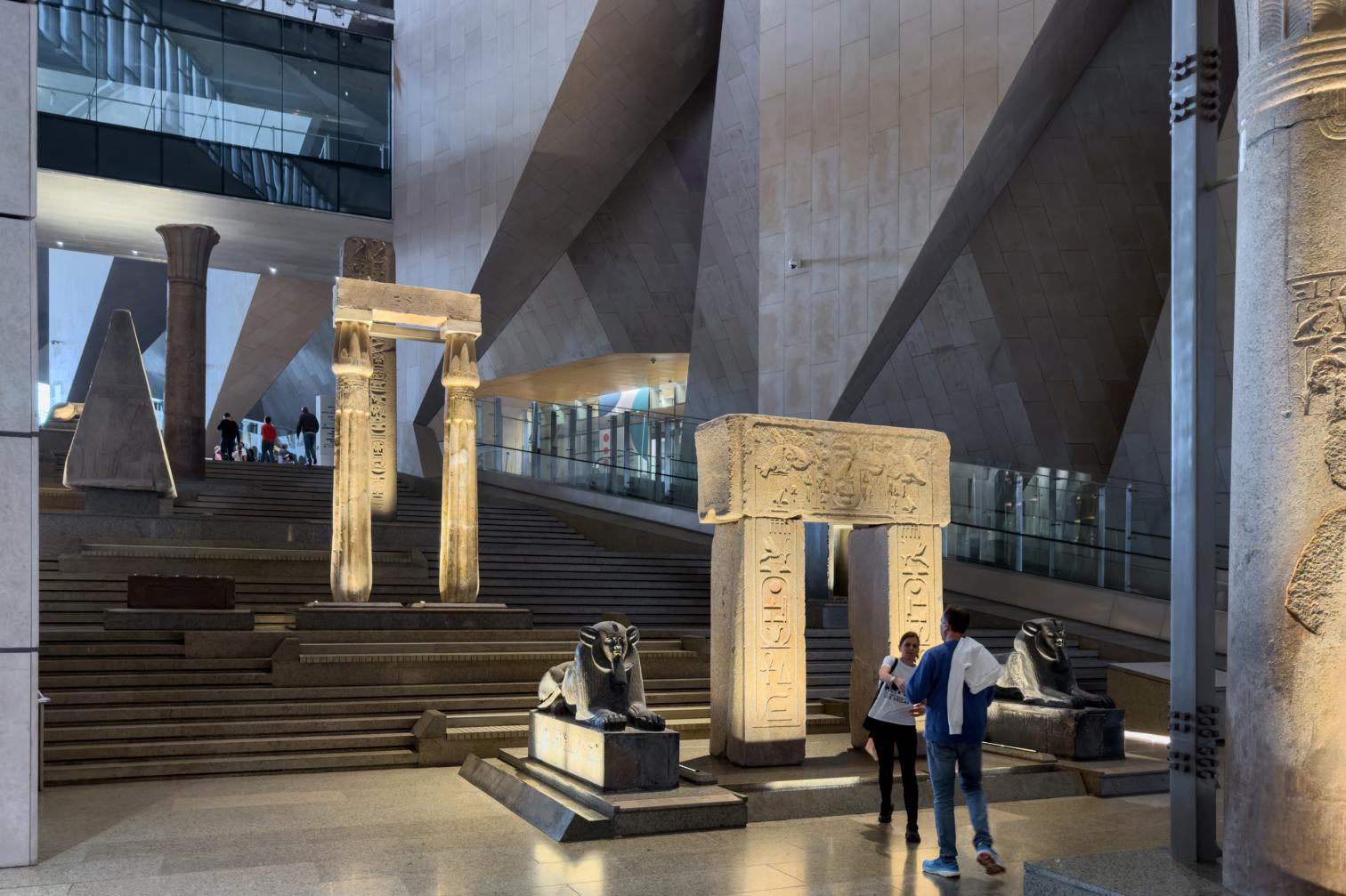
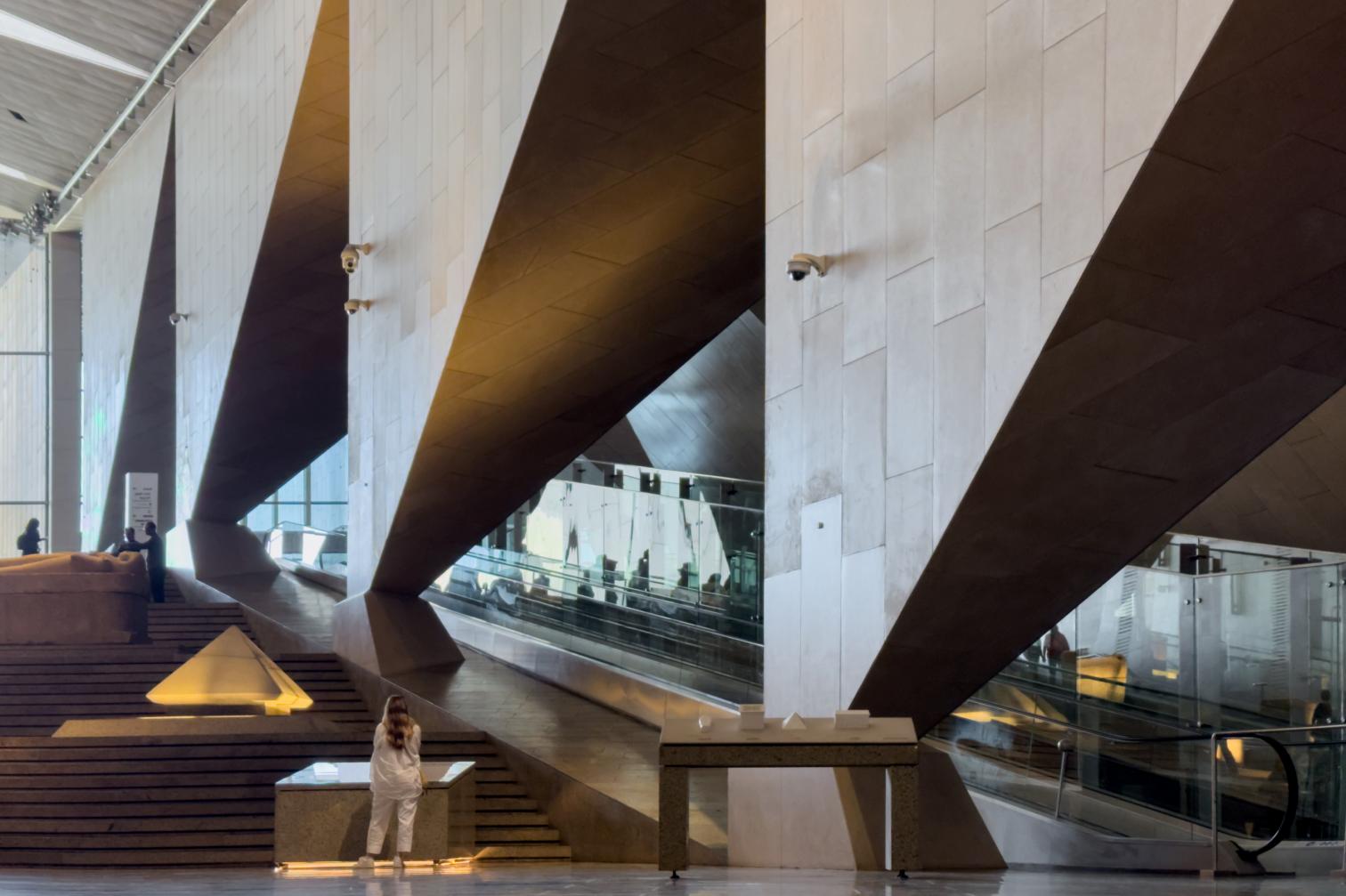
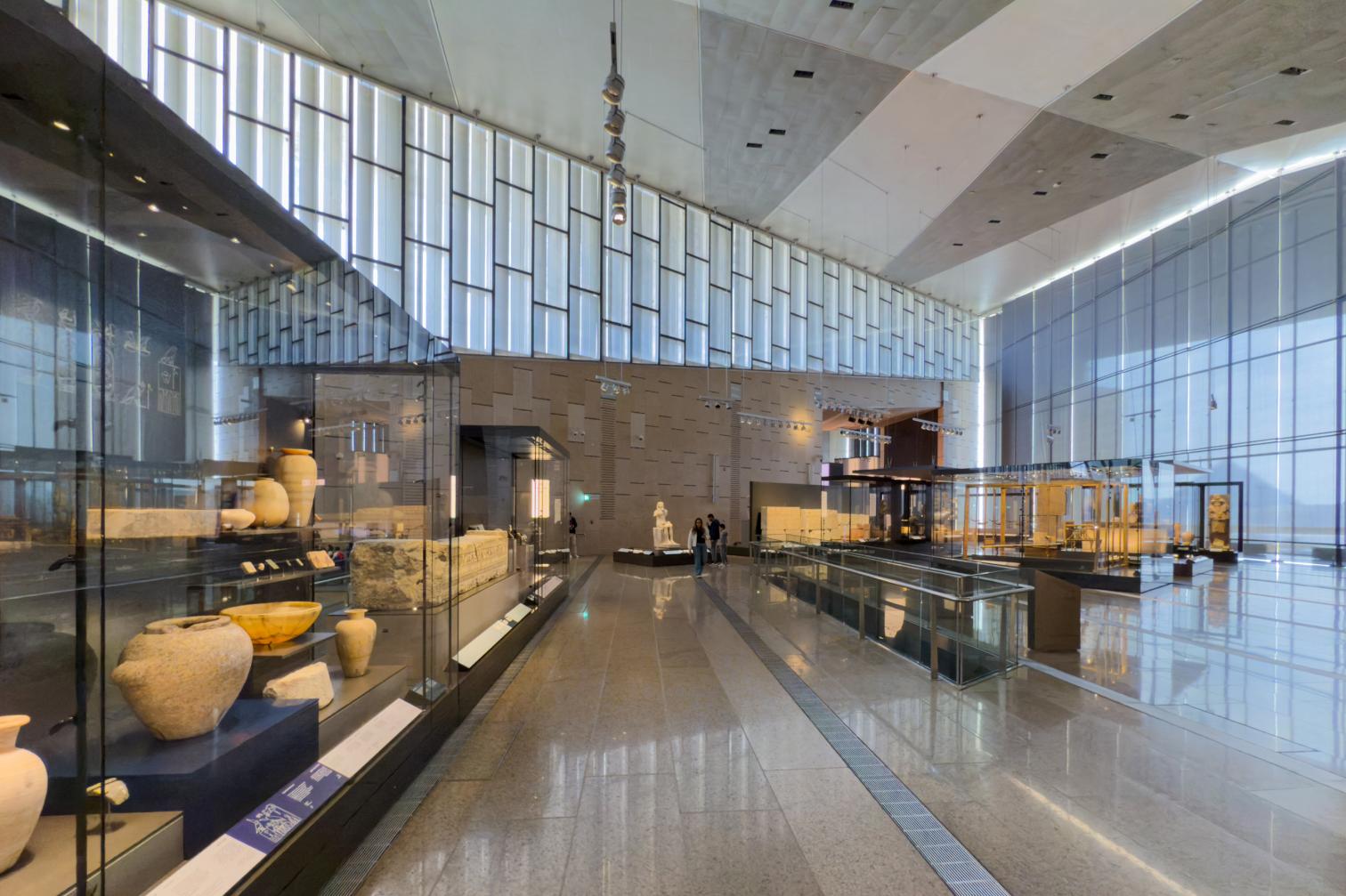
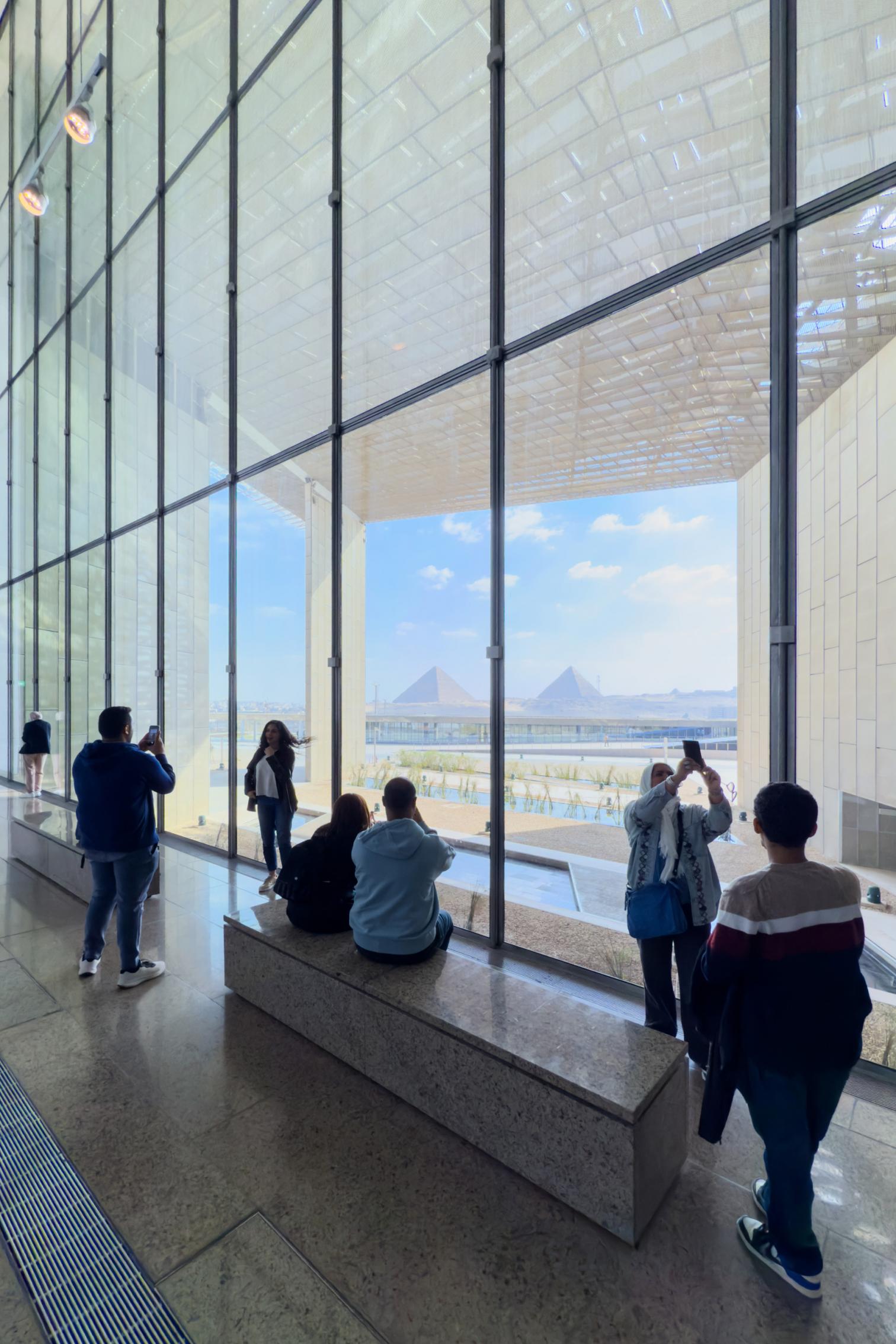
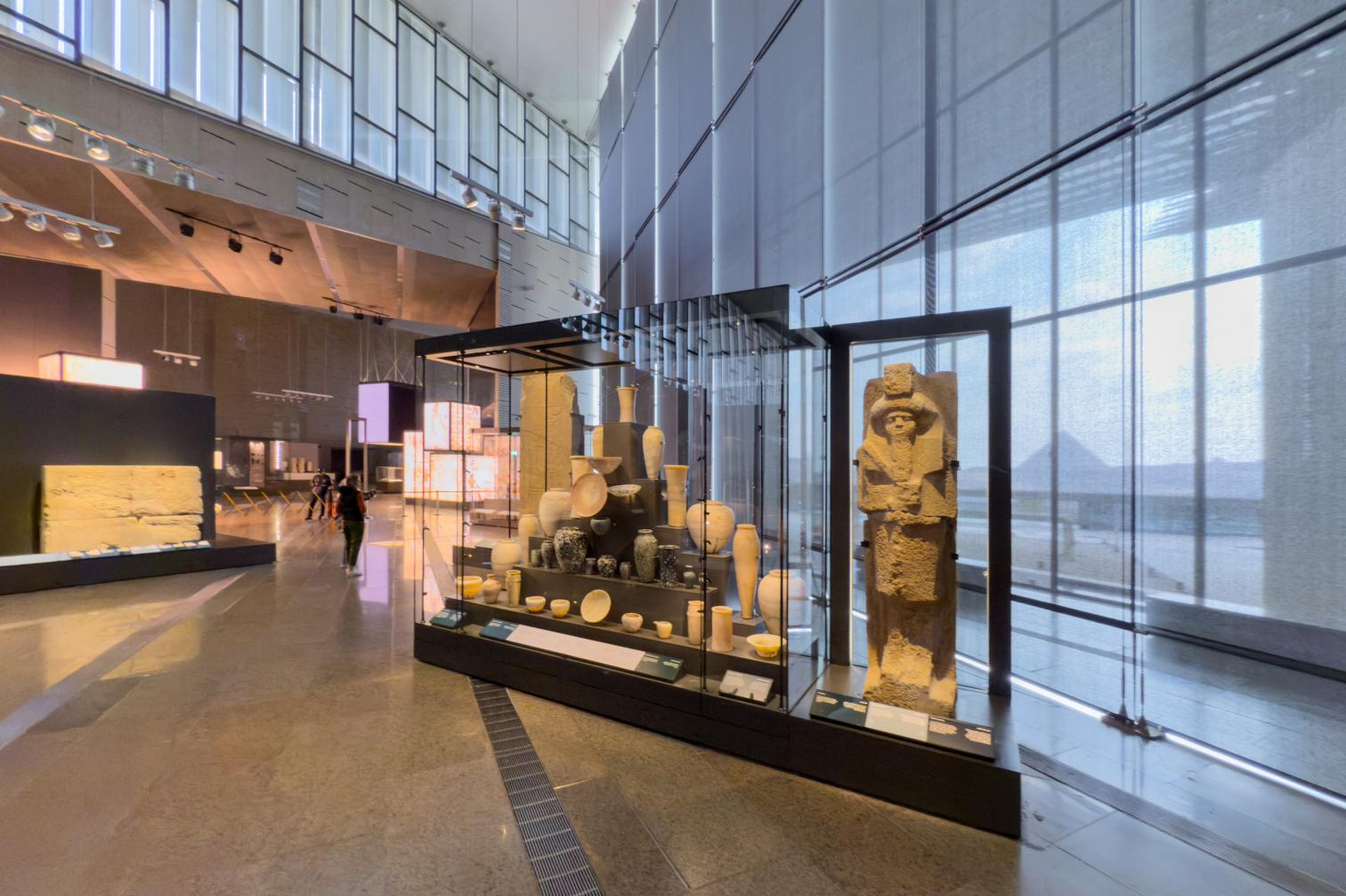
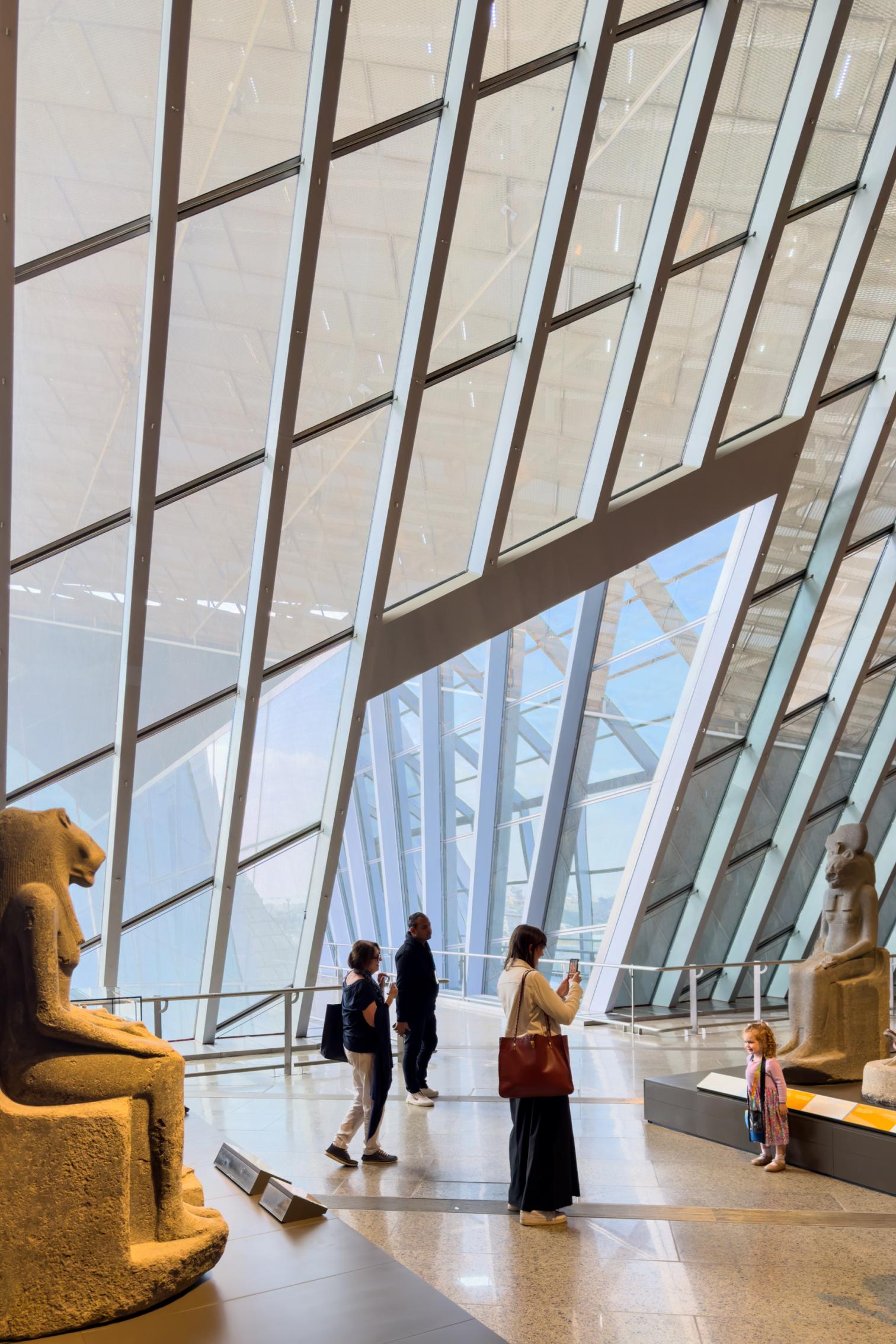
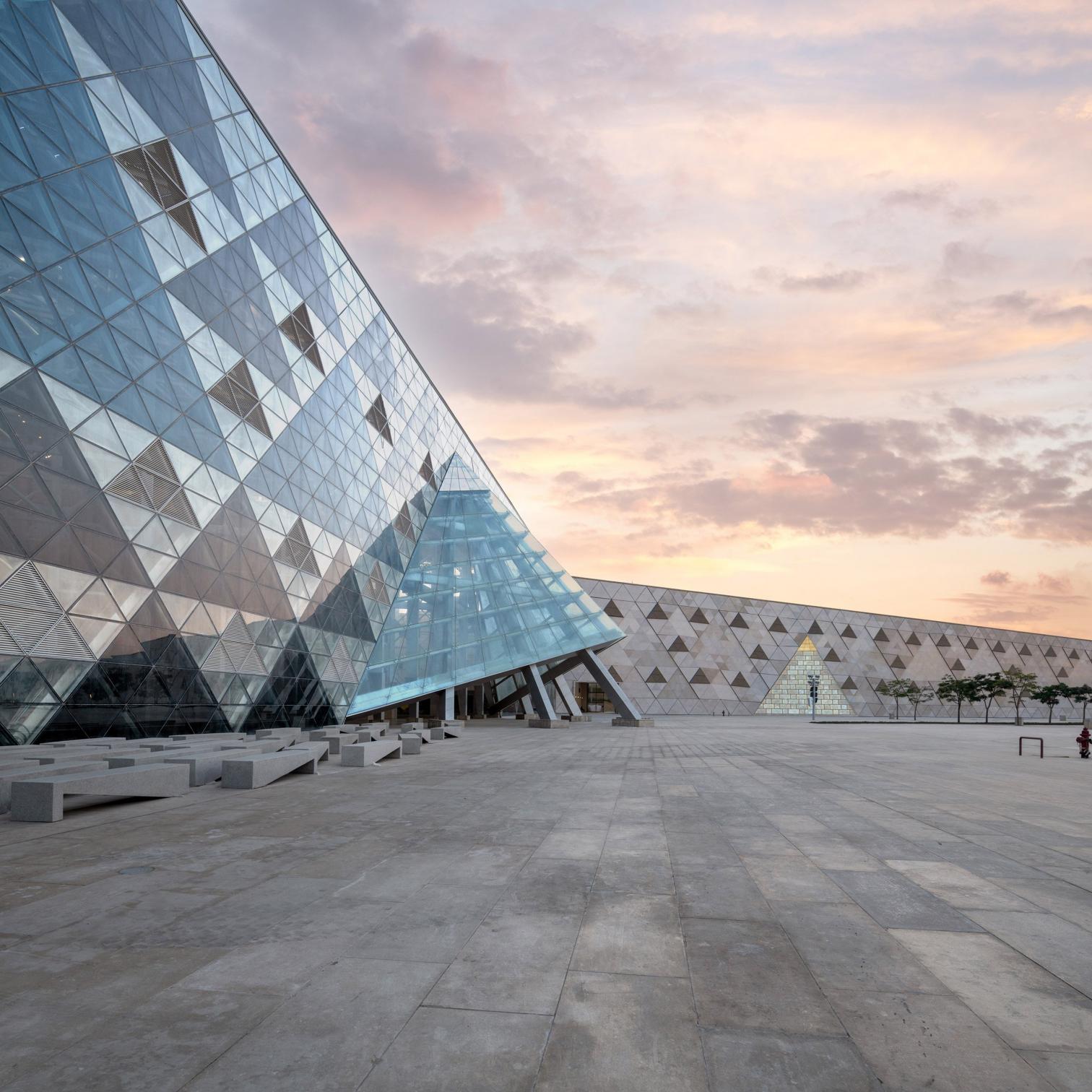
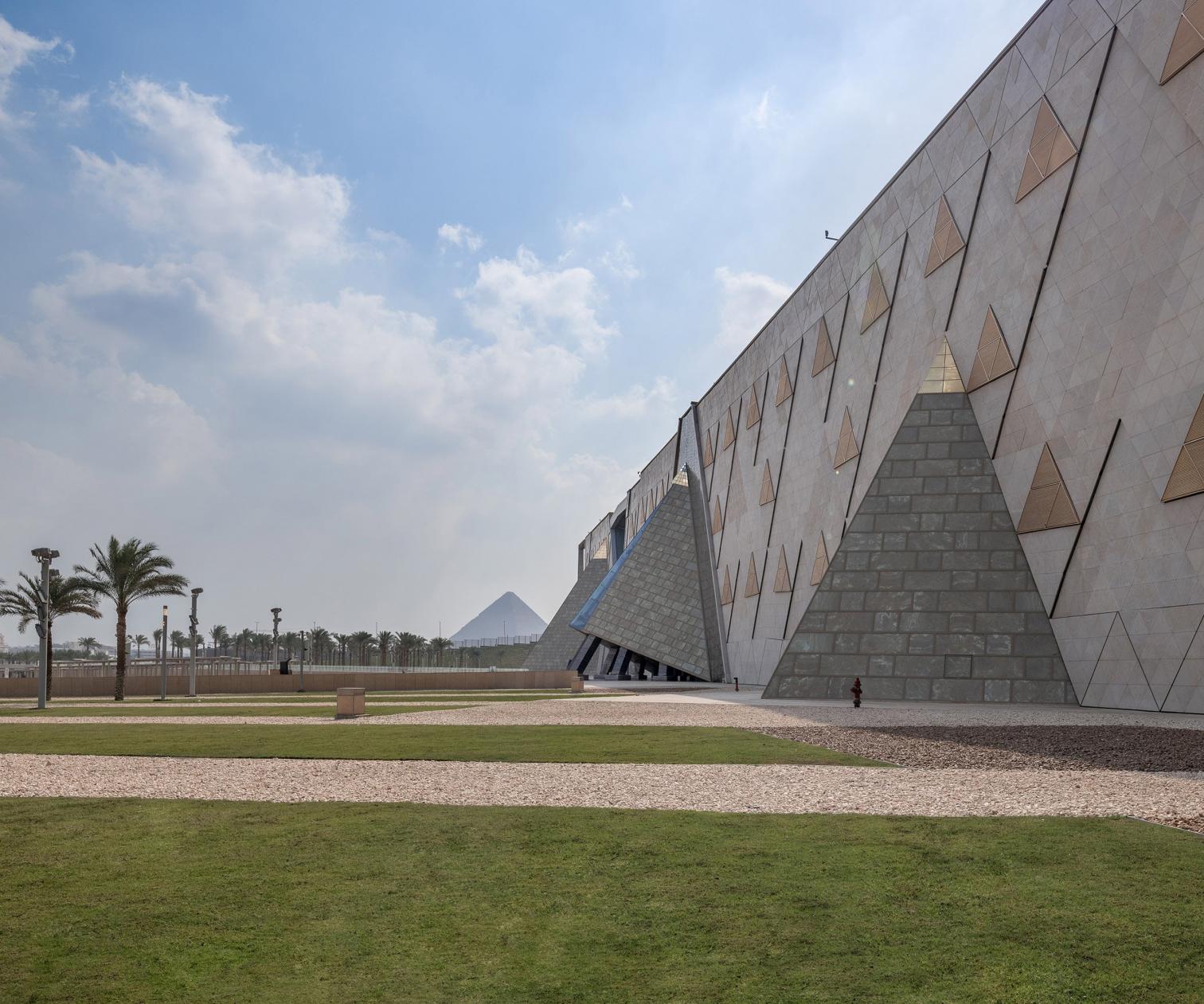
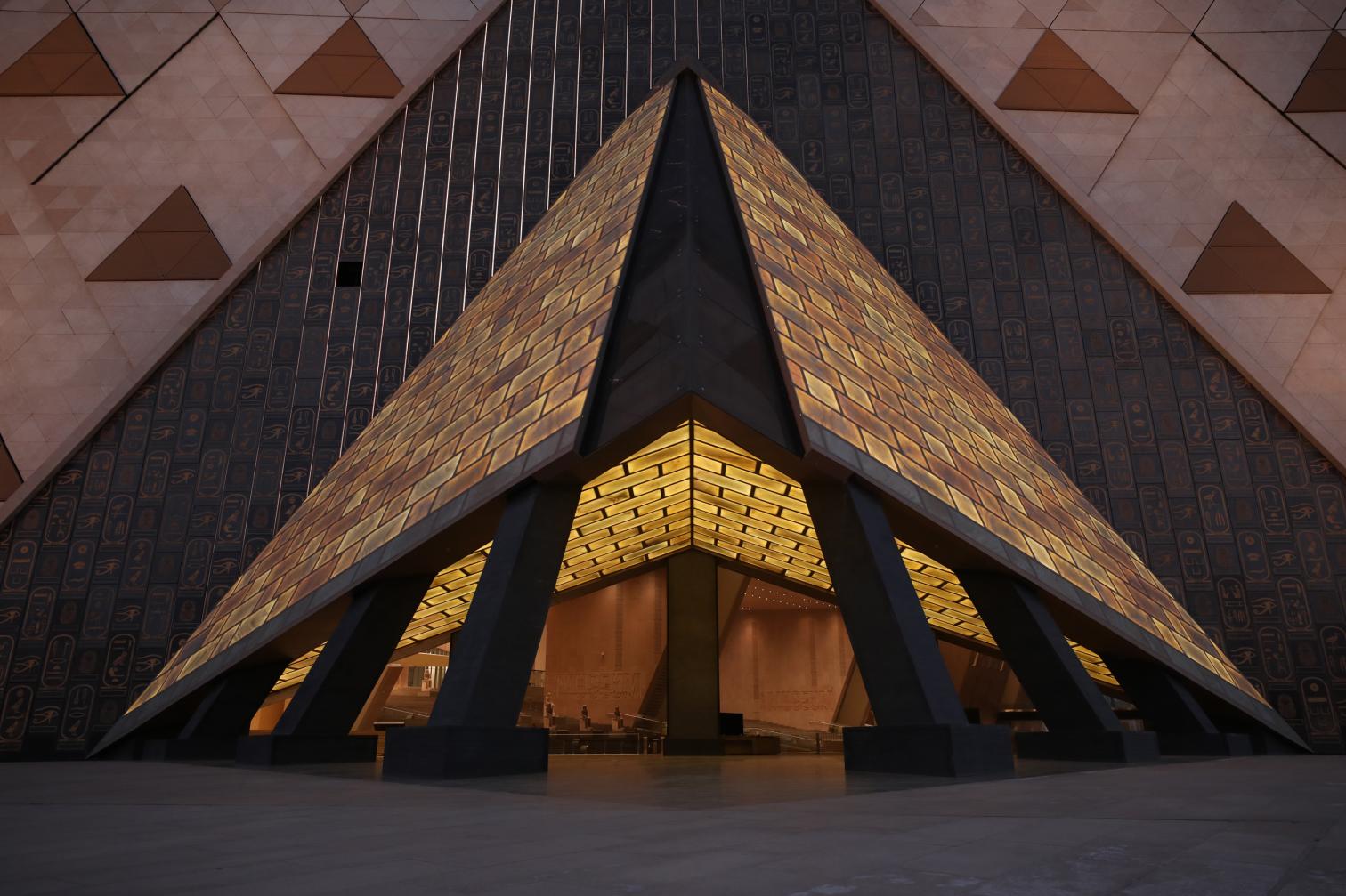
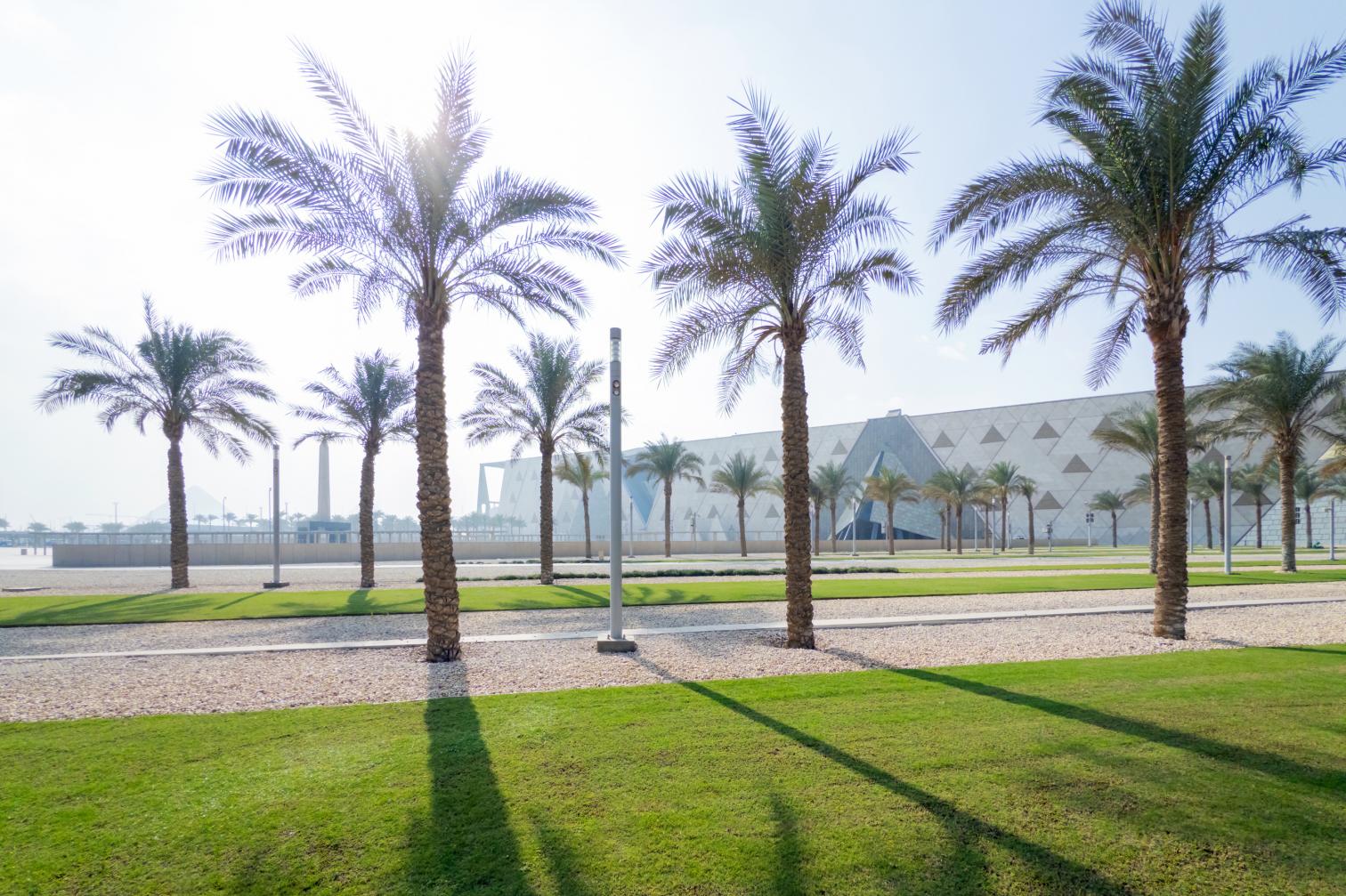
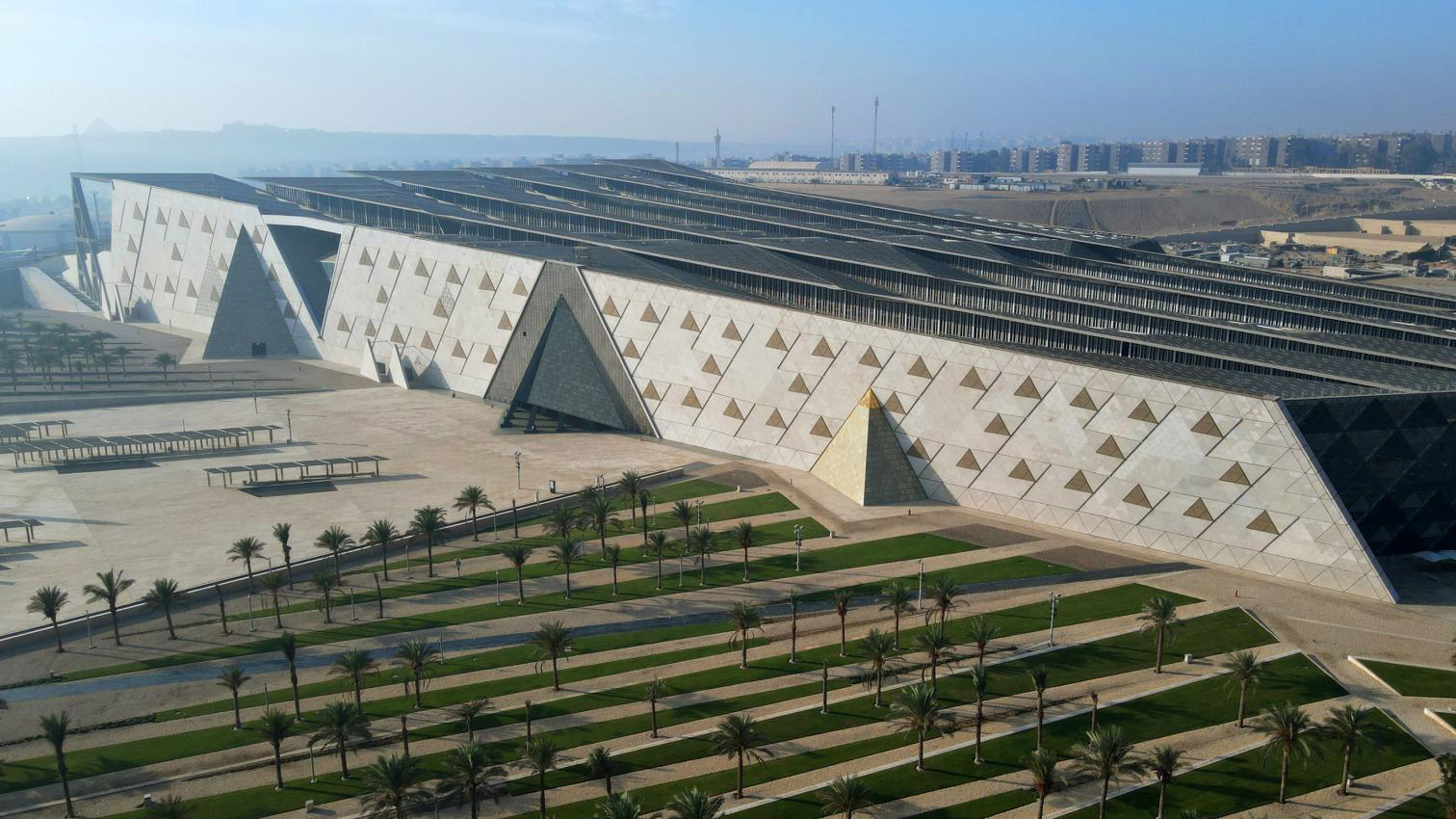
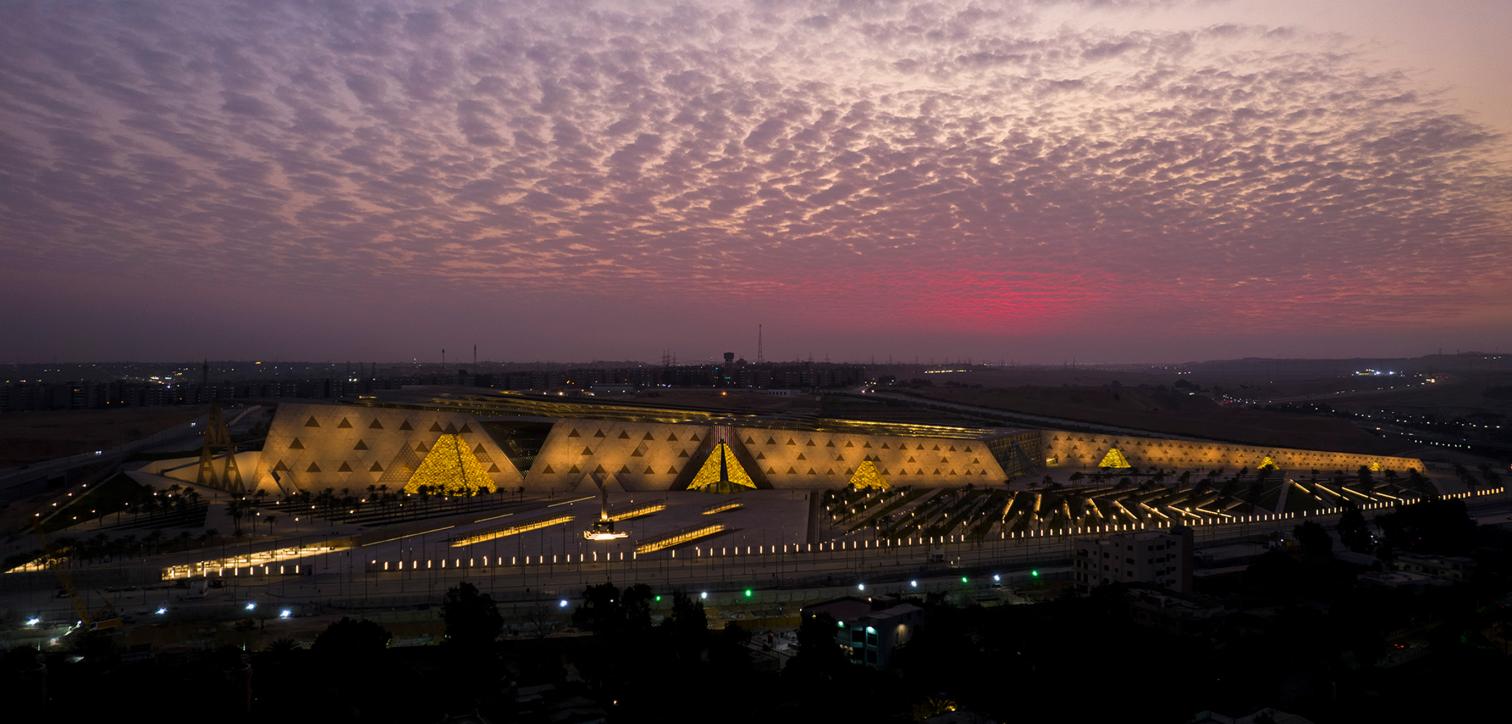
With a total area of 81,000 square metres to house more than 100,000 Pharaonic antiquities, the Grand Egyptian Museum stands, according to Heneghan Peng, as “the world's largest museum dedicated to a single civilisation”. Its angular geometry is carefully aligned with the pyramids of Giza, maintaining a visual axis. The façade combines triangular panels of translucent alabaster, Egyptian limestone and glass, which provide texture and light variation.
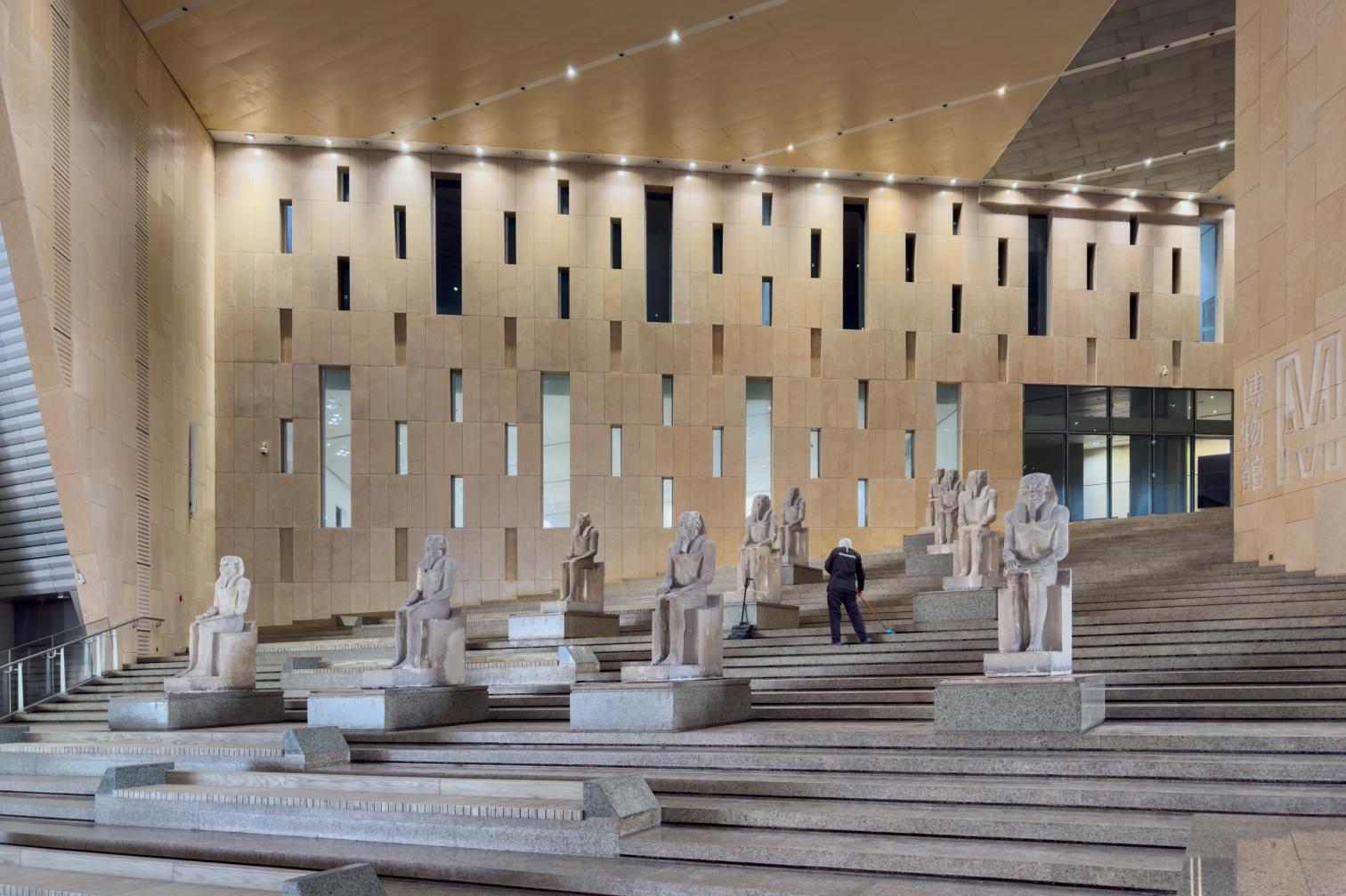
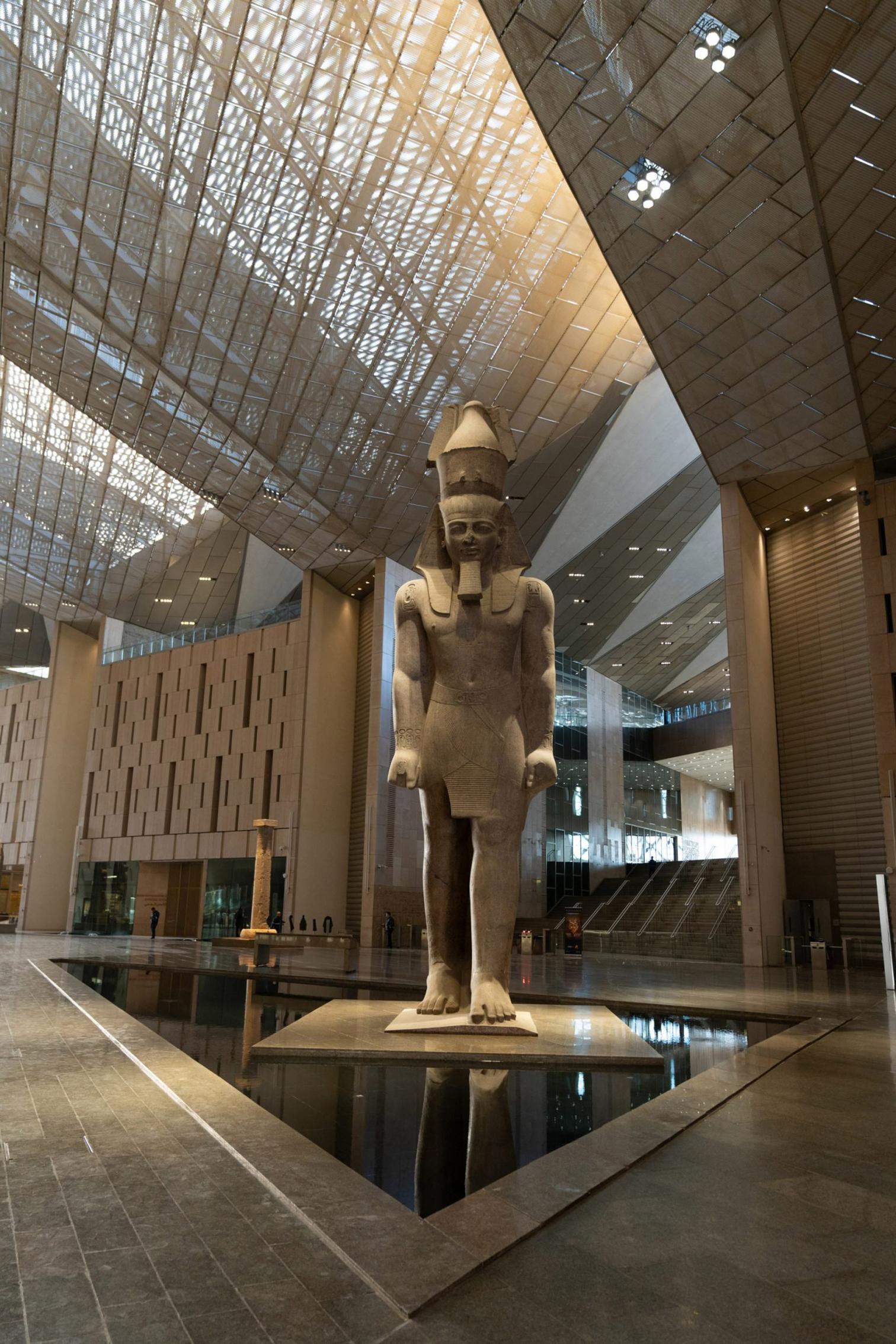
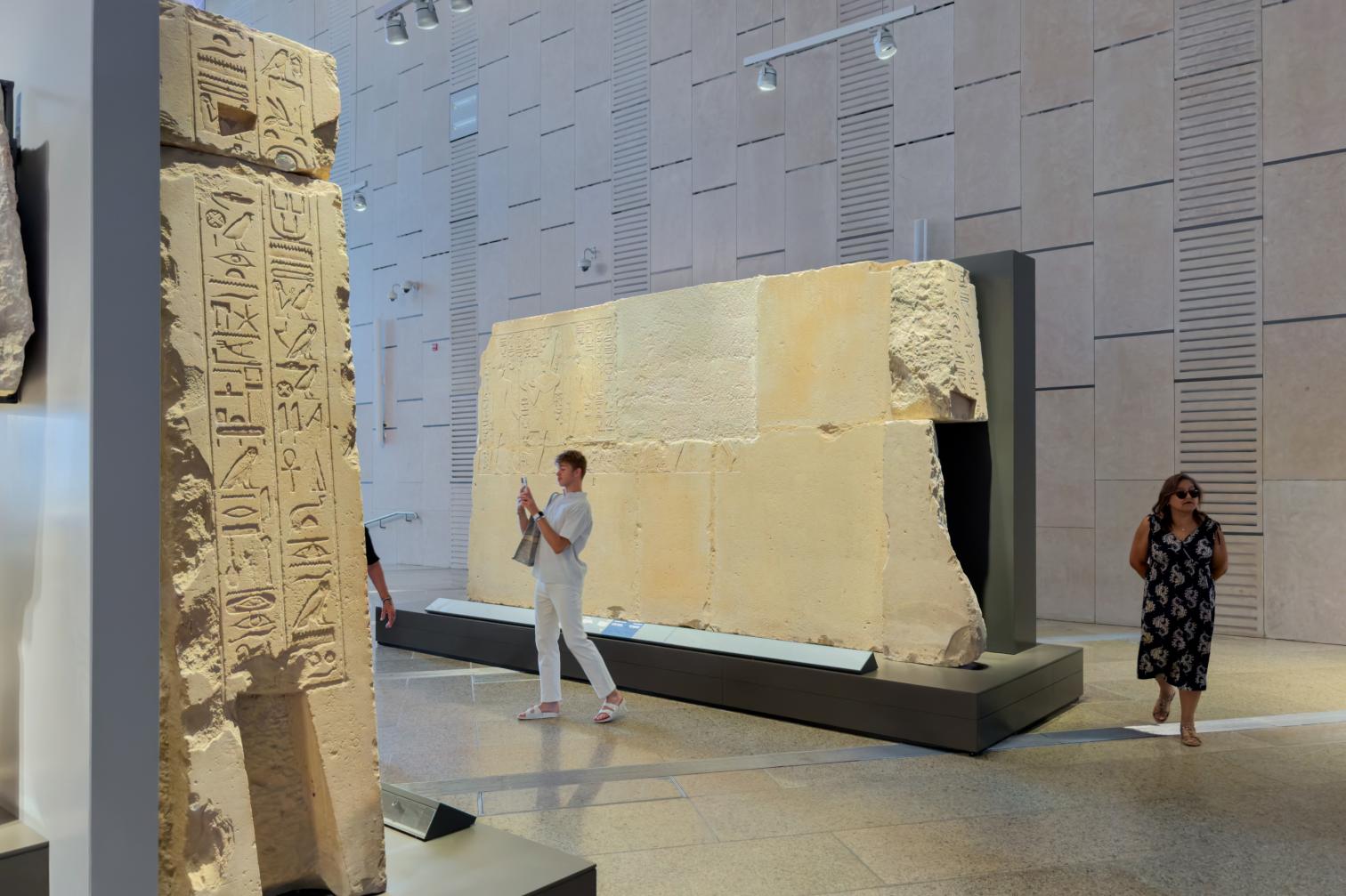
Visitors are greeted by the imposing statue of Ramses II in the large central atrium, from where the monumental Grand Staircase begins, a chronological ascent of six levels flanked by colossi, steles and sculptures that lead to the Tutankhamun Gallery on the upper floor. This space, whose exhibition design was carried out by the German studio Atelier Brückner, displays for the first time the nearly 5,400 pieces found in the pharaoh's tomb.

The building, constructed largely of concrete, uses its thermal mass to stabilise temperatures and reduce the use of air conditioning, while natural light—precisely introduced—illuminates the main areas without compromising the preservation of the artefacts. According to Heneghan Peng, the conservation centre, which is connected to the main building by a tunnel, contains 17 different laboratories and is one of the largest in the world.
The Grand Egyptian Museum presents itself not only as a sanctuary for Pharaonic heritage, but also as a symbol of continuity between Egypt's millennial history and its contemporary present.
Luis Fernández-Galiano: Pharaonic Works

Cortesía del Gran Museo Egipcio
Cortesía del Gran Museo Egipcio
Cortesía del Gran Museo Egipcio
Cortesía del Gran Museo Egipcio
Cortesía del Gran Museo Egipcio
Cortesía del Gran Museo Egipcio
Obra Work
Grand Egyptian Museum, Giza (Egypt)
Cliente Client
Ministry of Culture, Egypt
Arquitectos Architects
Heneghan Peng Architects, Raafat Miller Consulting (site architect)
Colaboradores Collaborators
Arup, ACE (structural, civil and traffic engineering); Buro Happold, Shaker Engineering (building services); West 8 (landscape); Davis Langdon (design team management, quantity surveyor); Arup (facade engineering); Buro Happold (security, fire, acoustics consultant); Bartenbach Lichlabor (lighting consultant); Bruce Mau Design (signage consultant); Metaphor (exhibition masterplanning); cultural innovations (museology)
Superficie Floor area
100.000m² (main museum and conference center); 18.000m² (conservation center); 11.000m² (energy centre)
Fotos Photos
Iwan Baan; Grand Egyptian Museum