AVE high-speed train station and walkway, Santiago de Compostela
estudioHerreros- Type Infraestructure Station Bridge / footbridge
- Date 2025
- City Santiago de Compostela
- Country Spain
- Photograph Manuel G. Vicente Luis Díaz Díaz

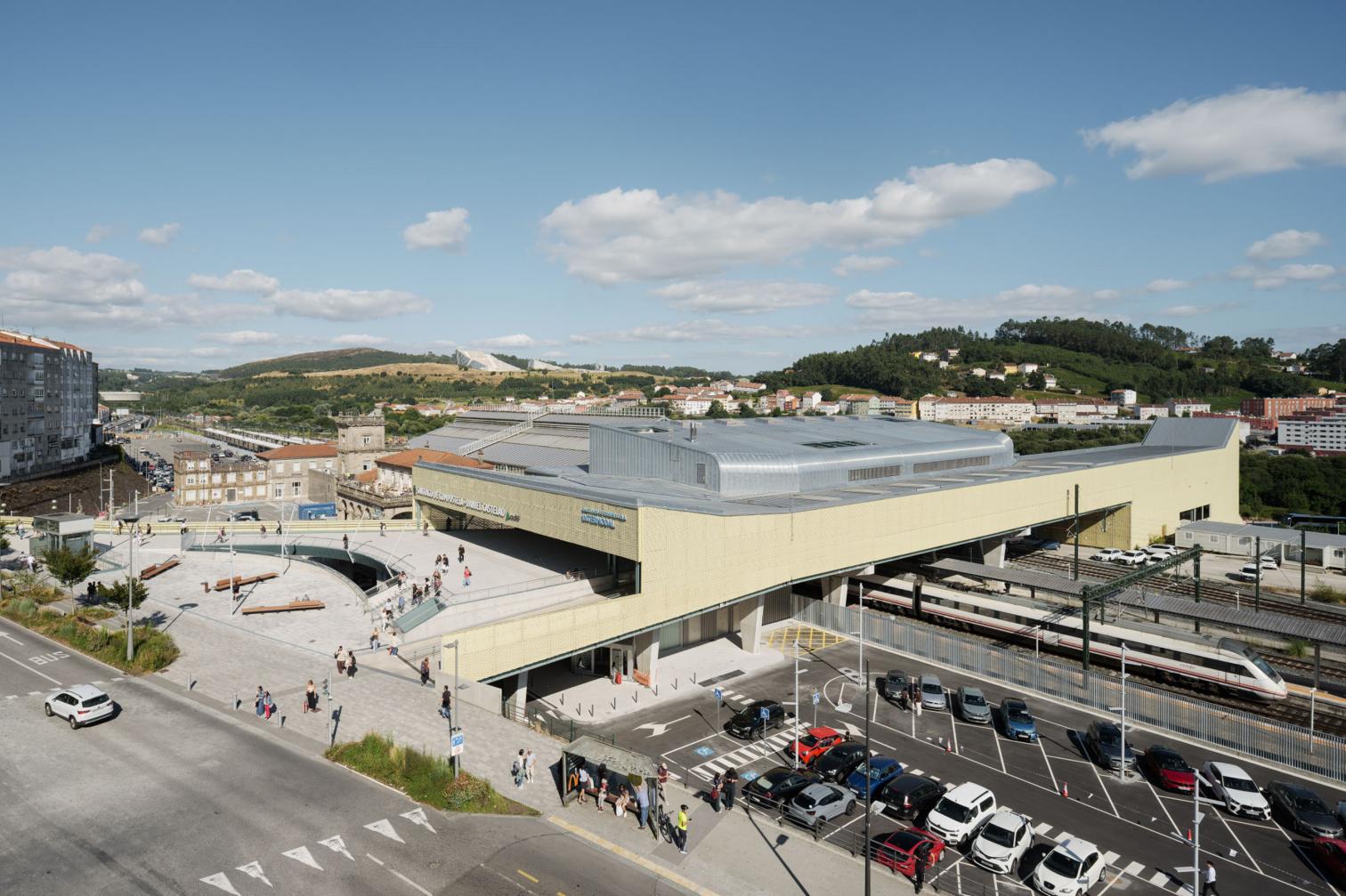
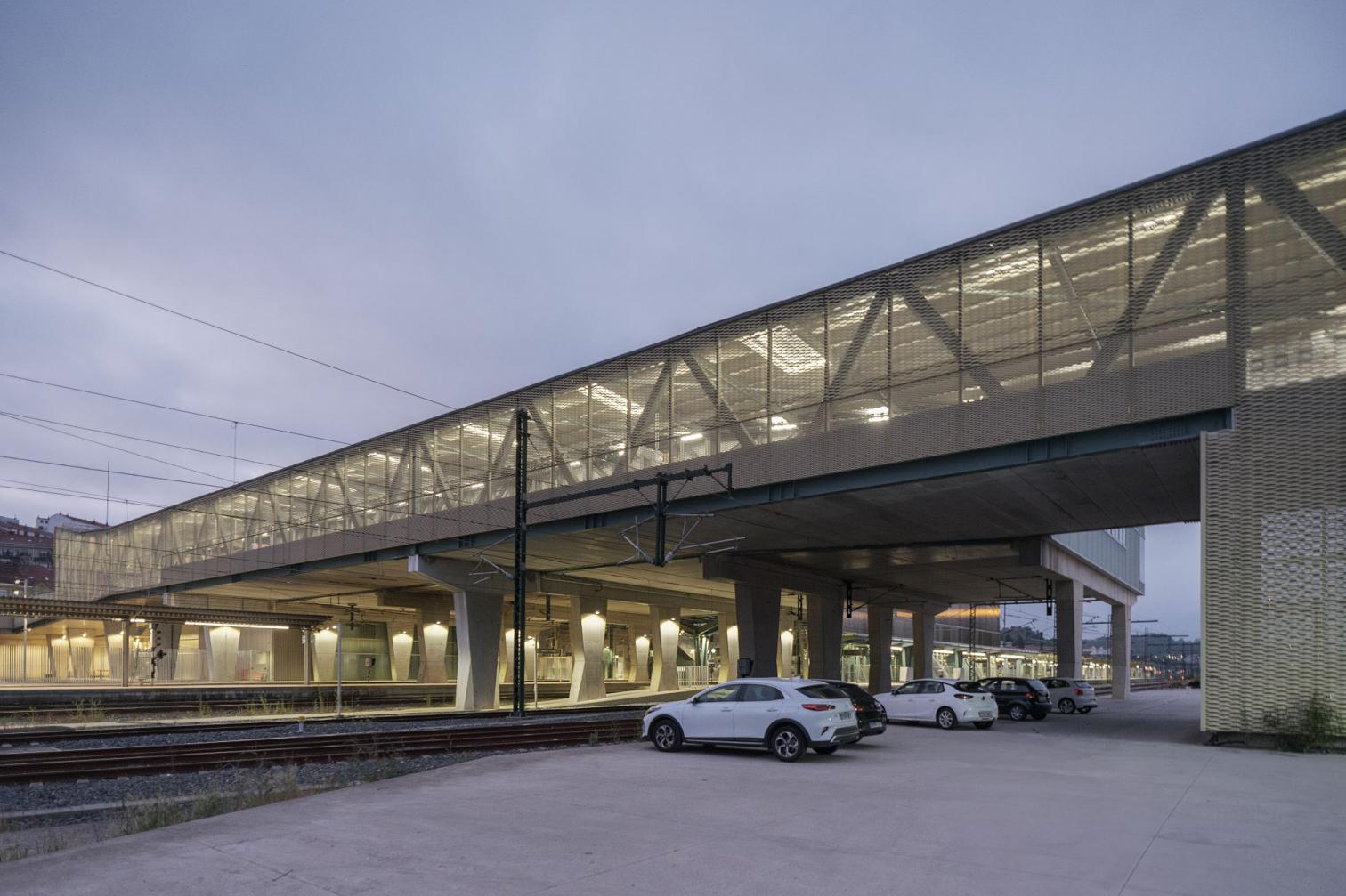
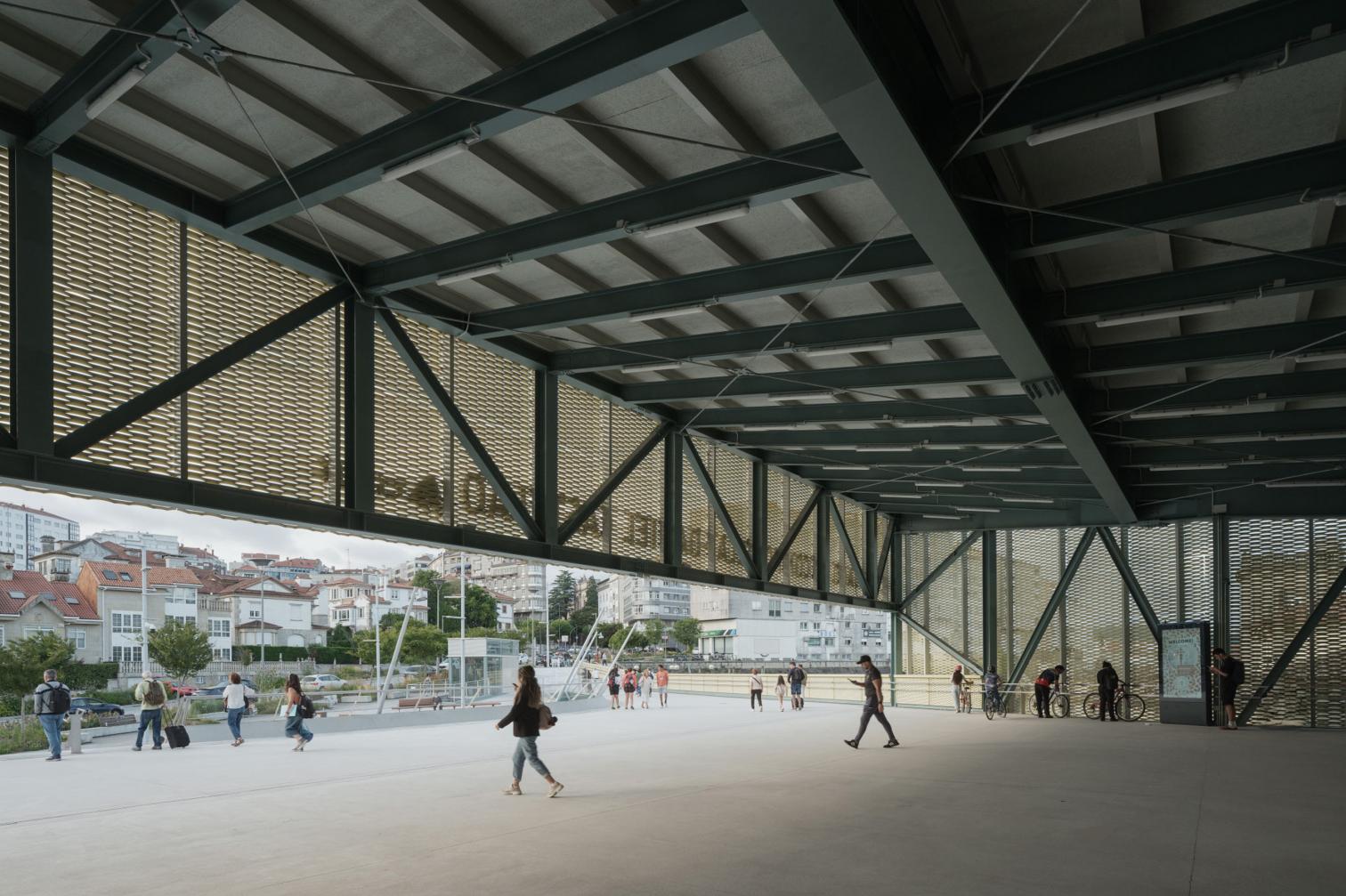
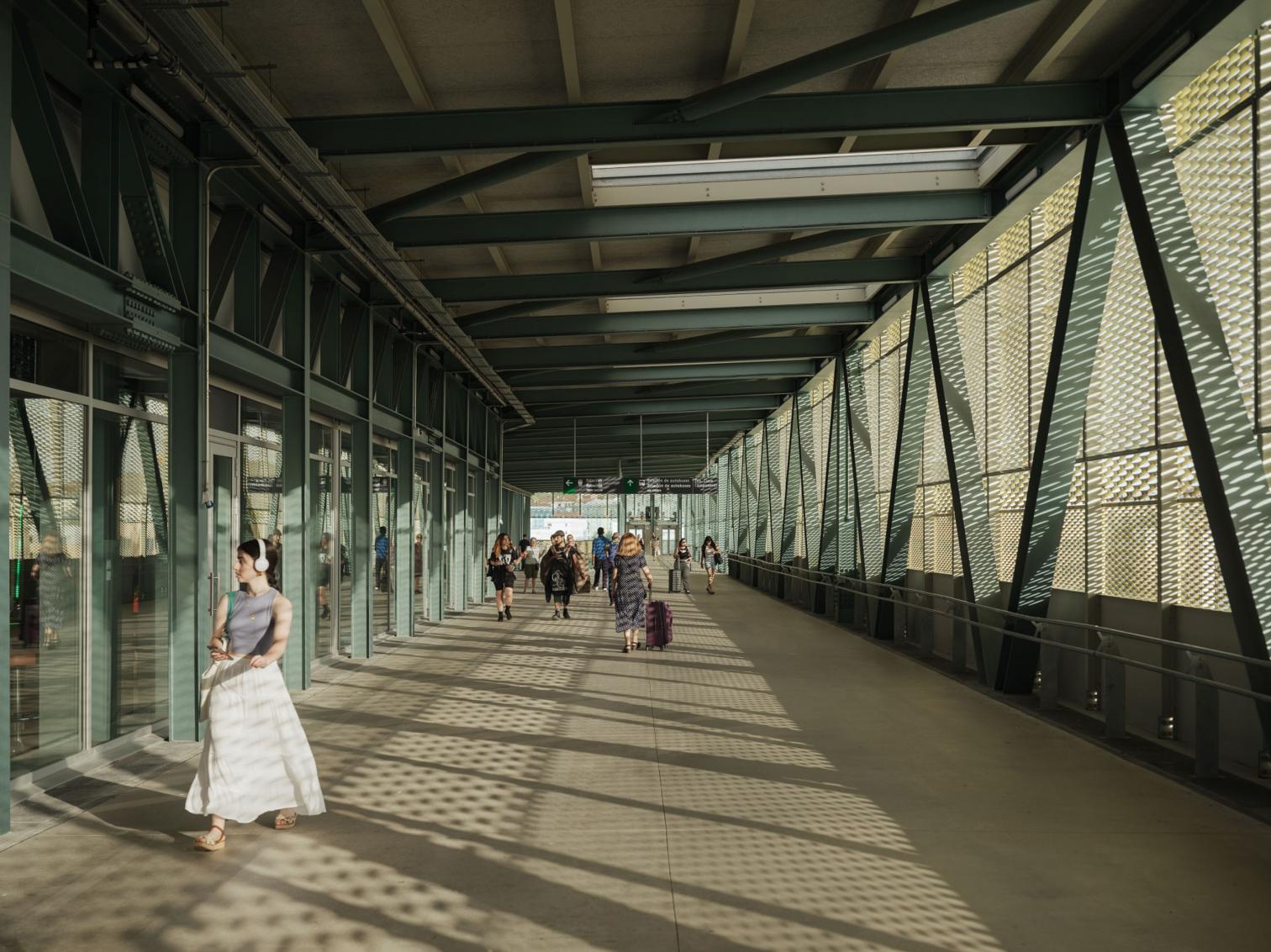
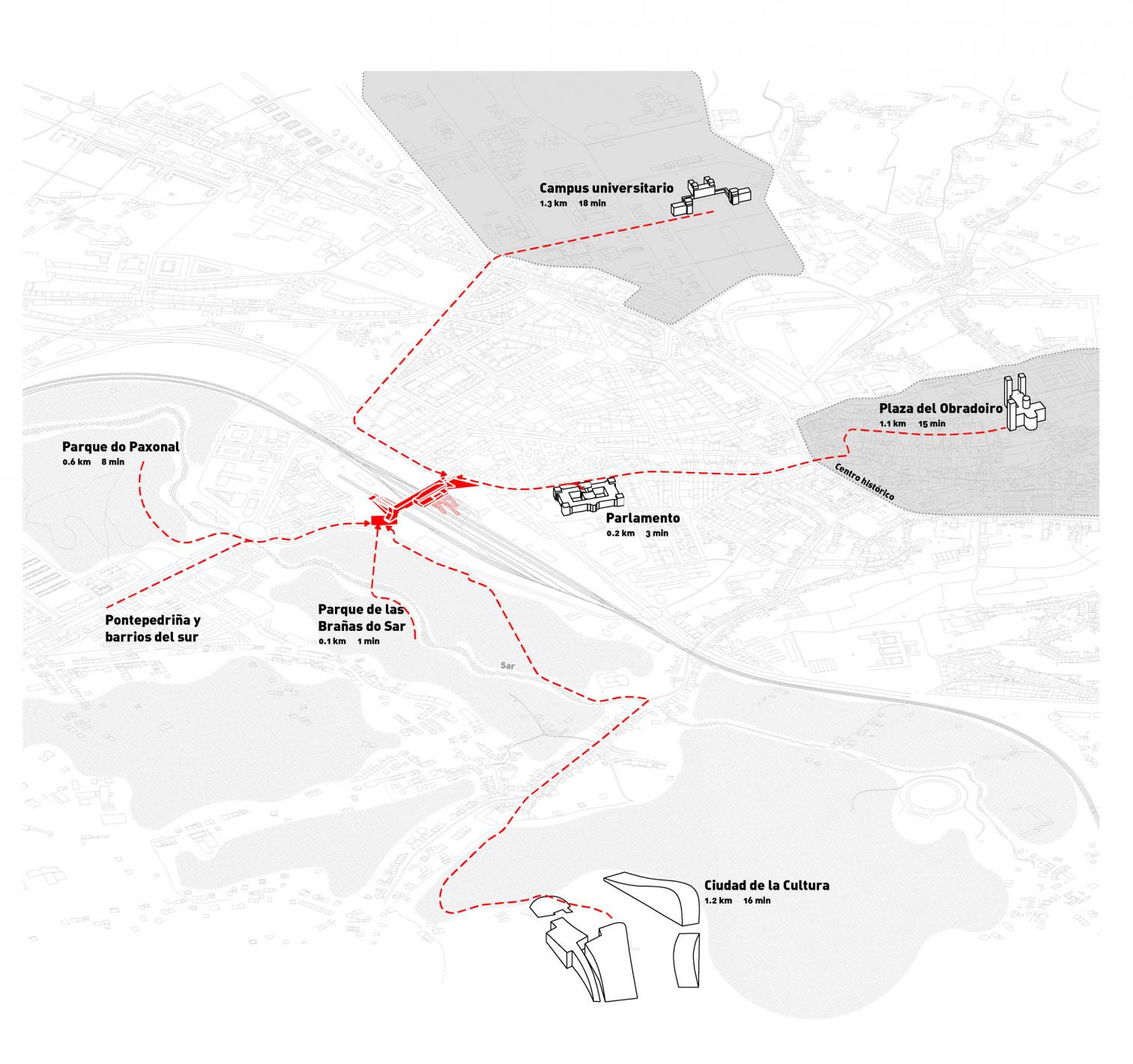
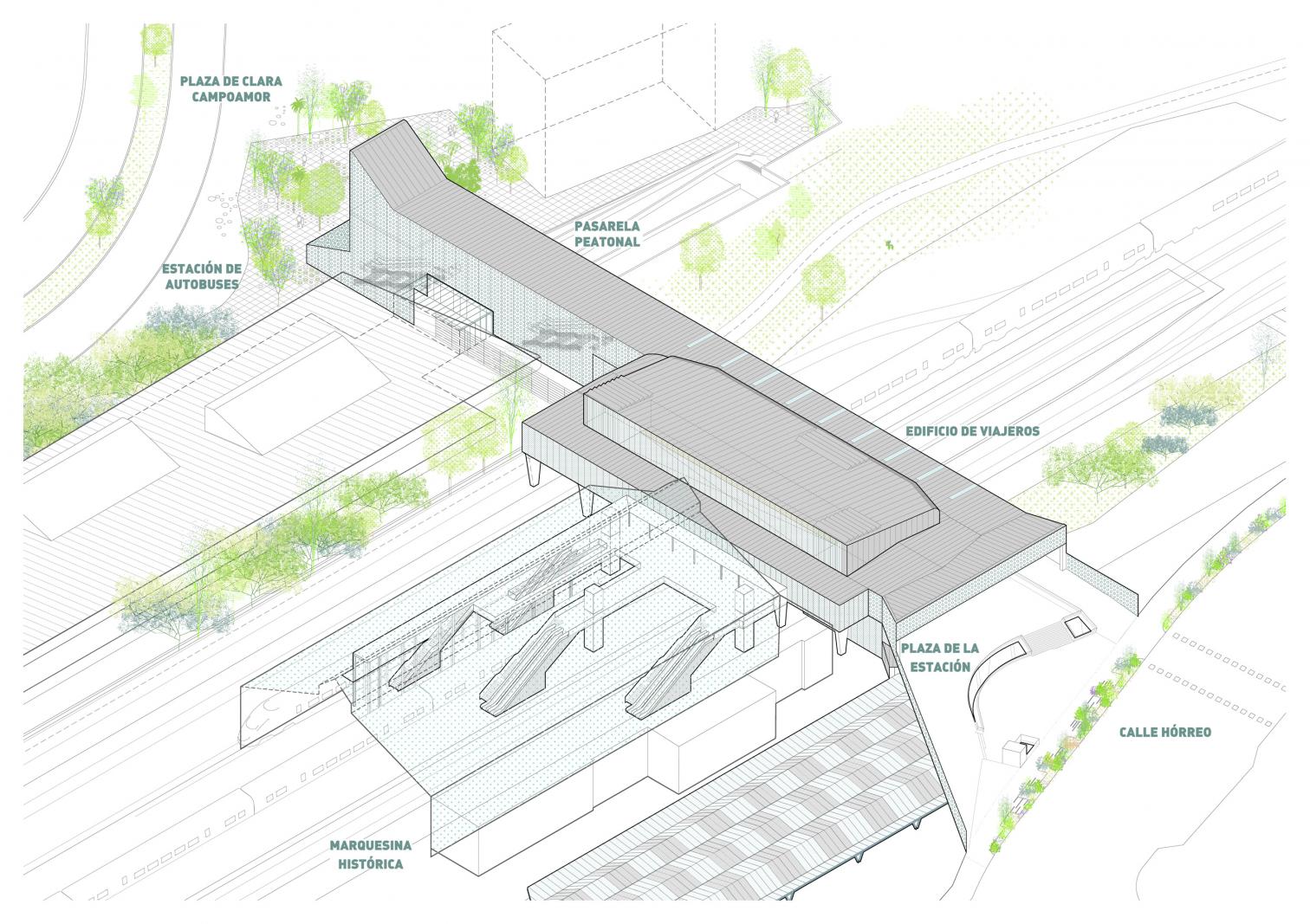
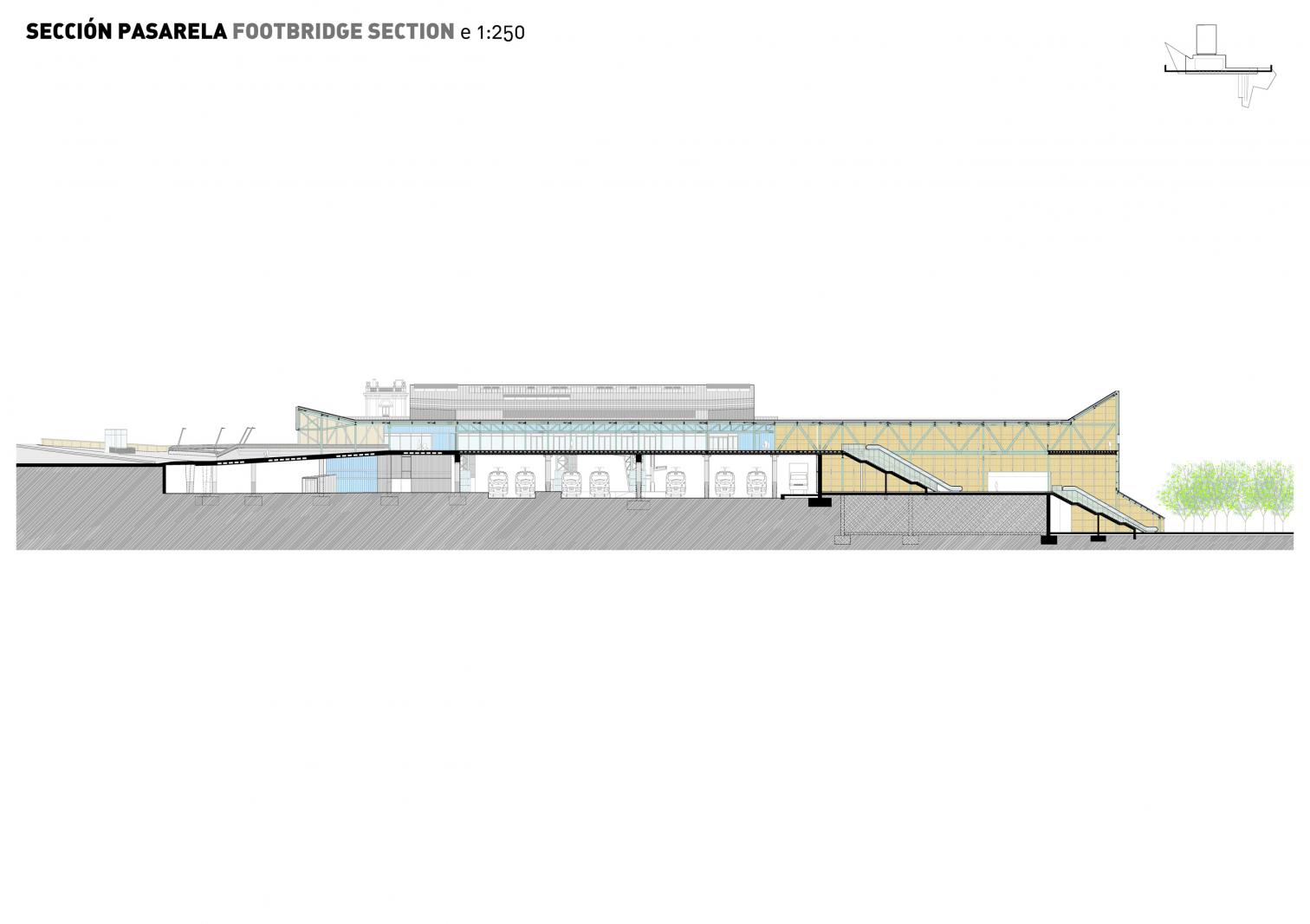
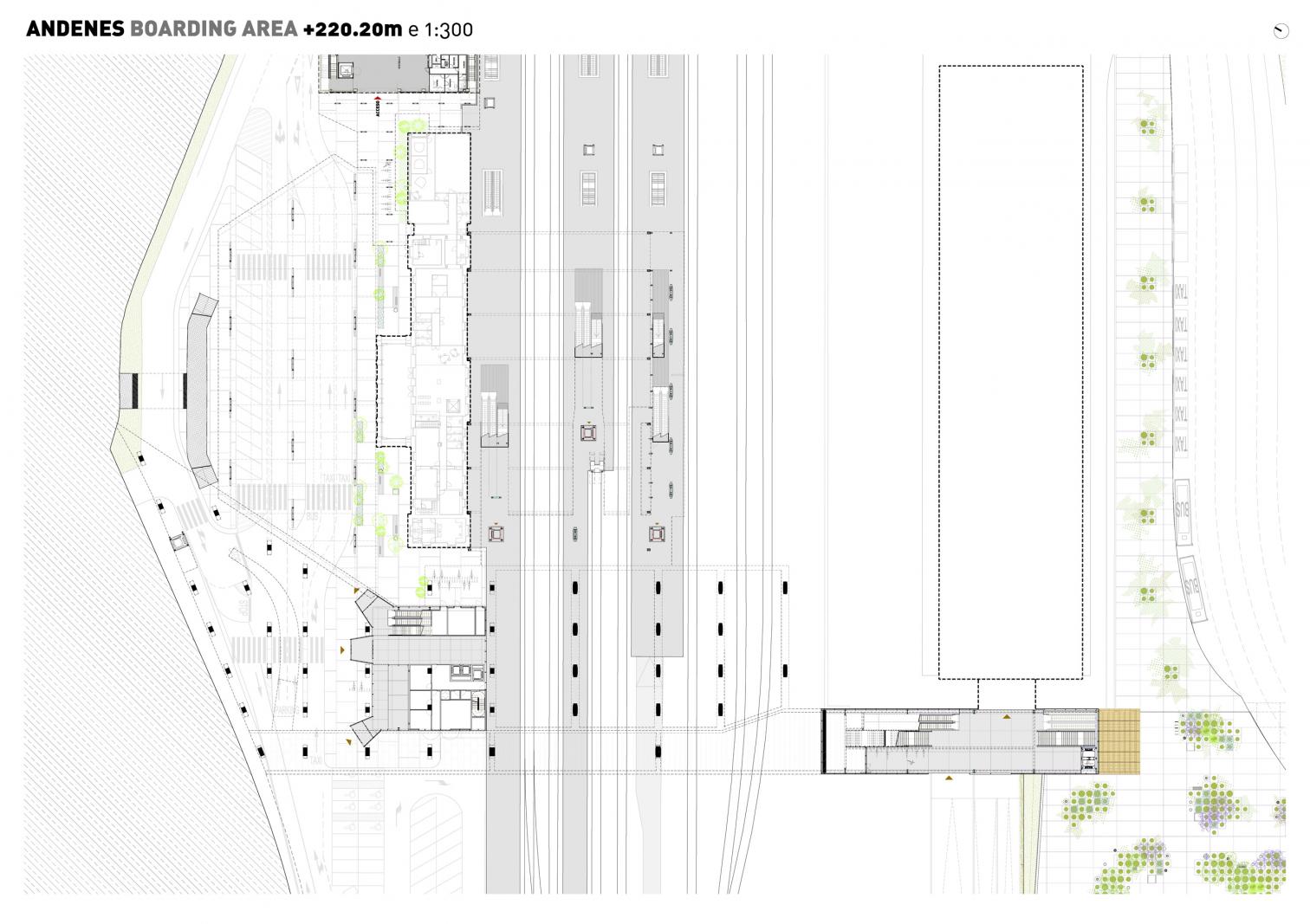
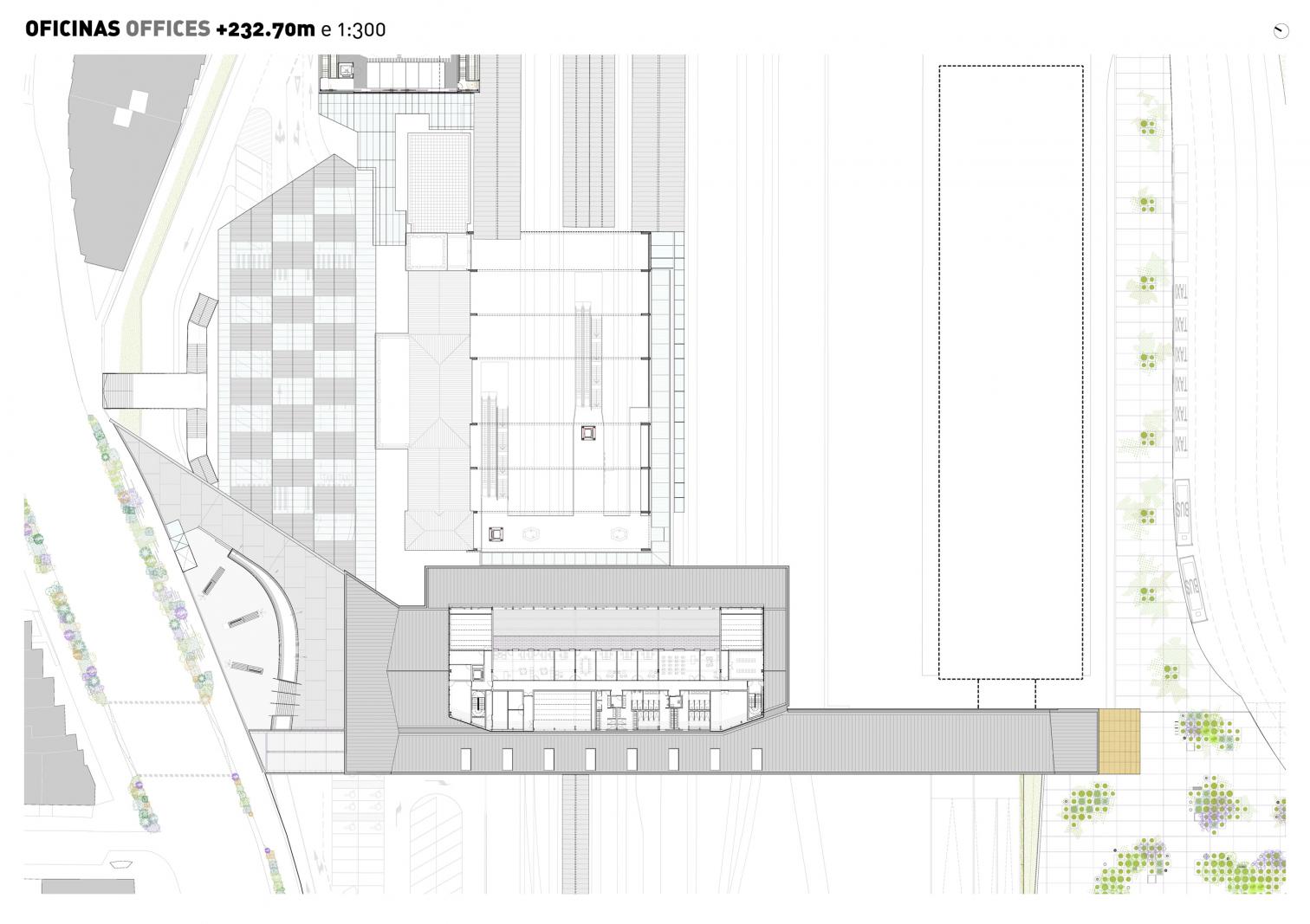
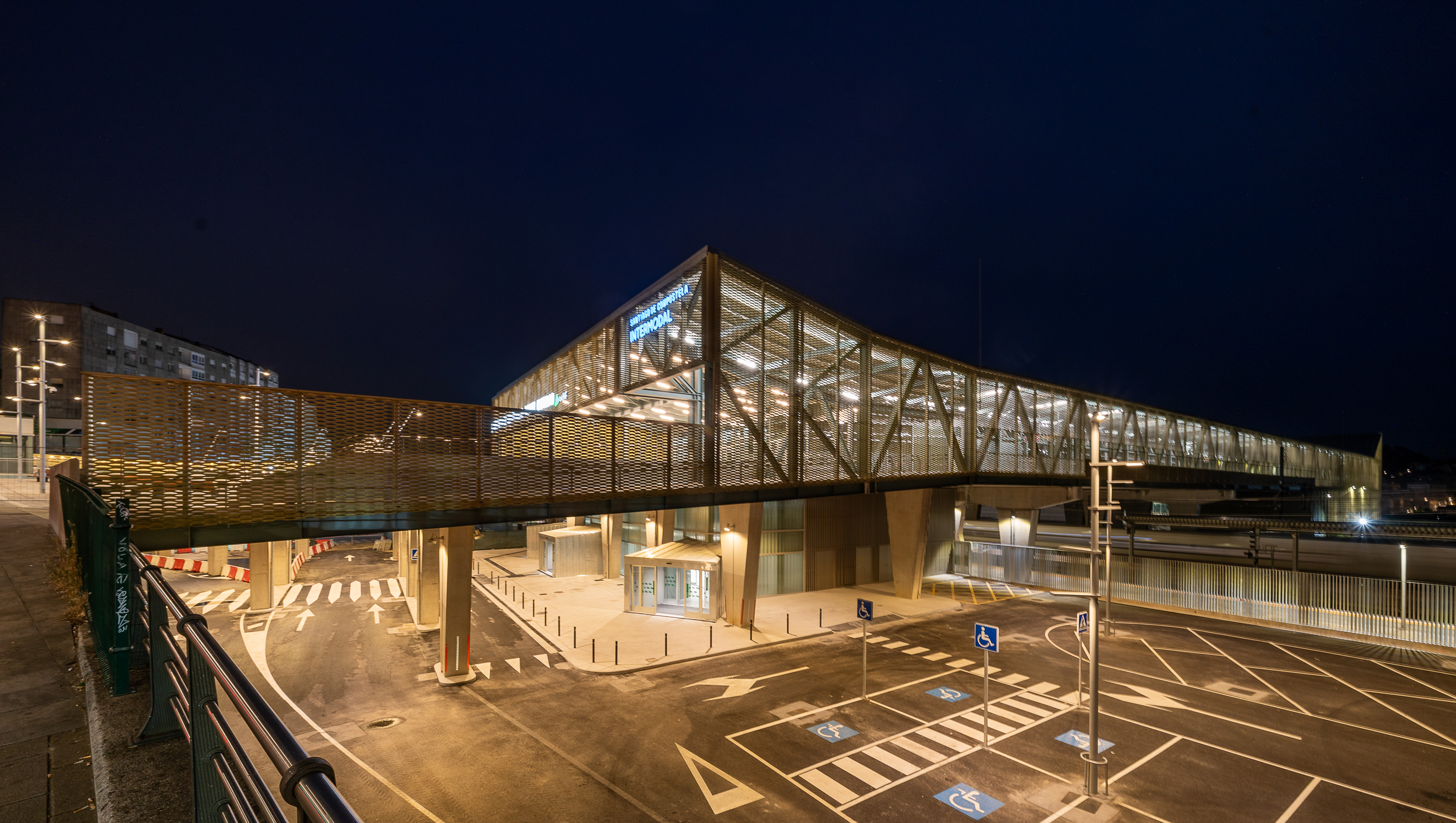
The new high-speed railway station of Santiago de Compostela, the outcome of an international competition organized by ADIF, is to stand as a key piece of architecture and infrastructure defining the city’s urban connections. The winning project proposes a passenger building positioned transversally over the tracks, attached to the walkway completed in 2011. This walkway is an urban nexus between the historic center and the southern outskirts, negotiating the steep slope and the railway line that always fragmented the zone.
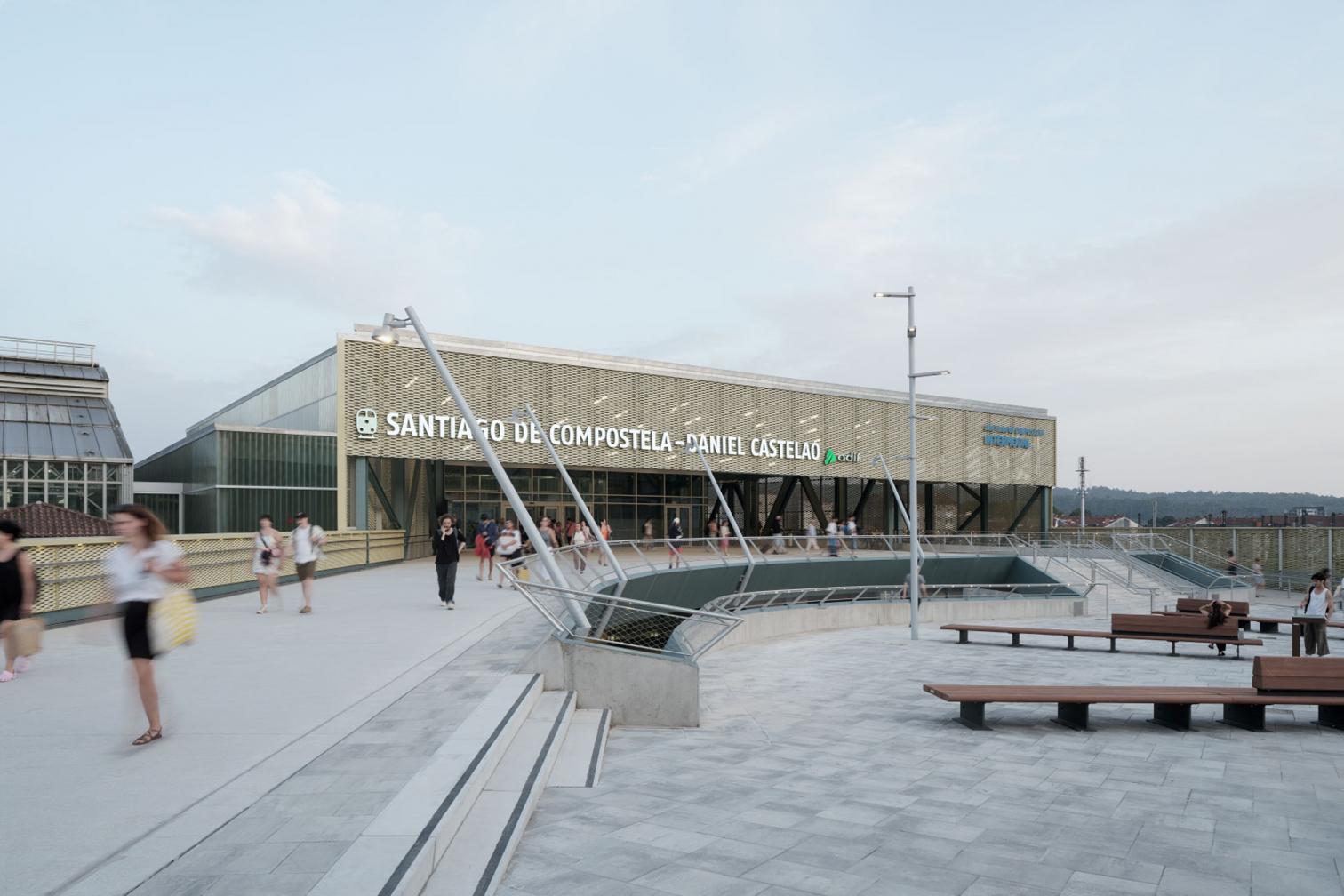
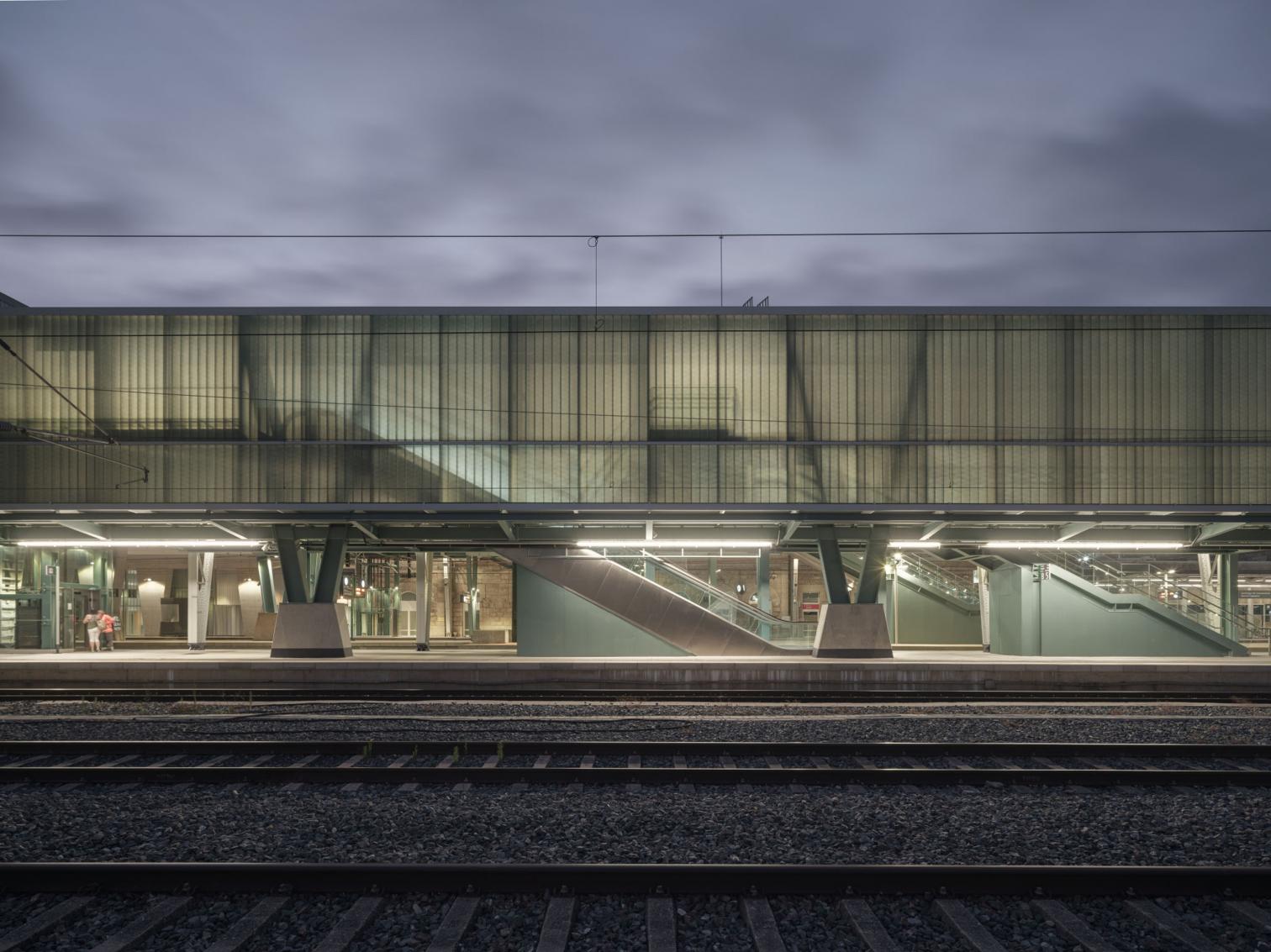
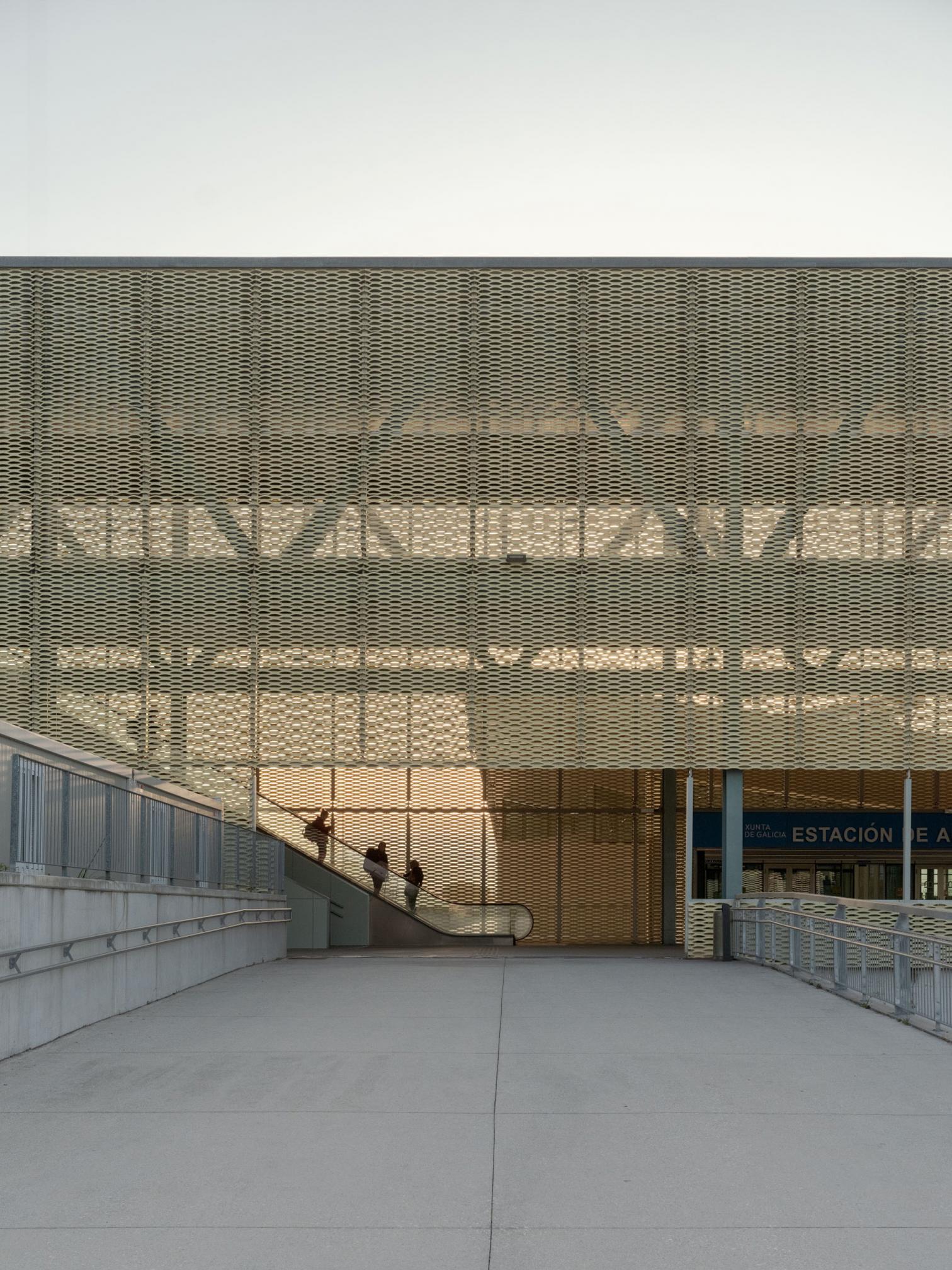
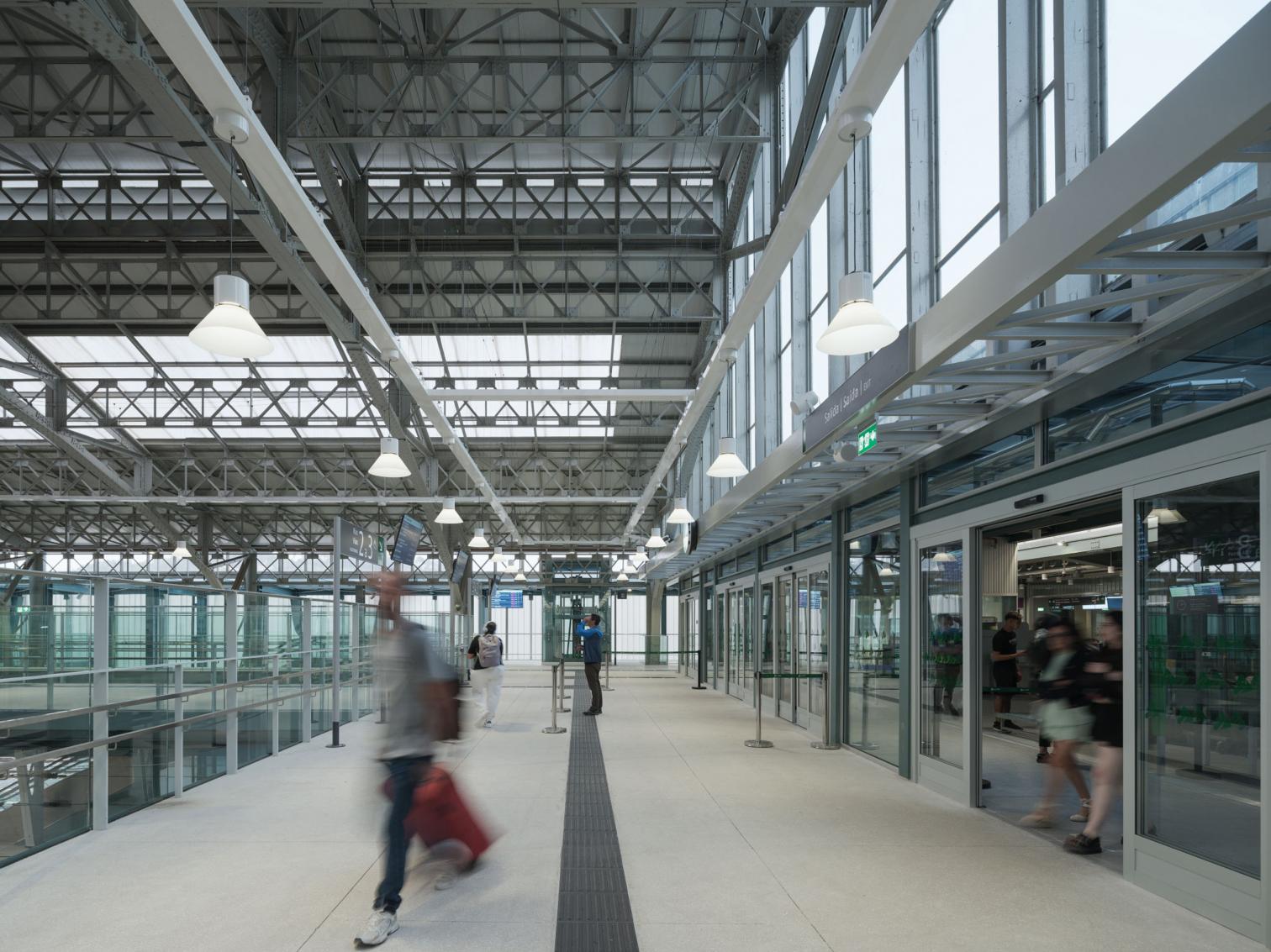
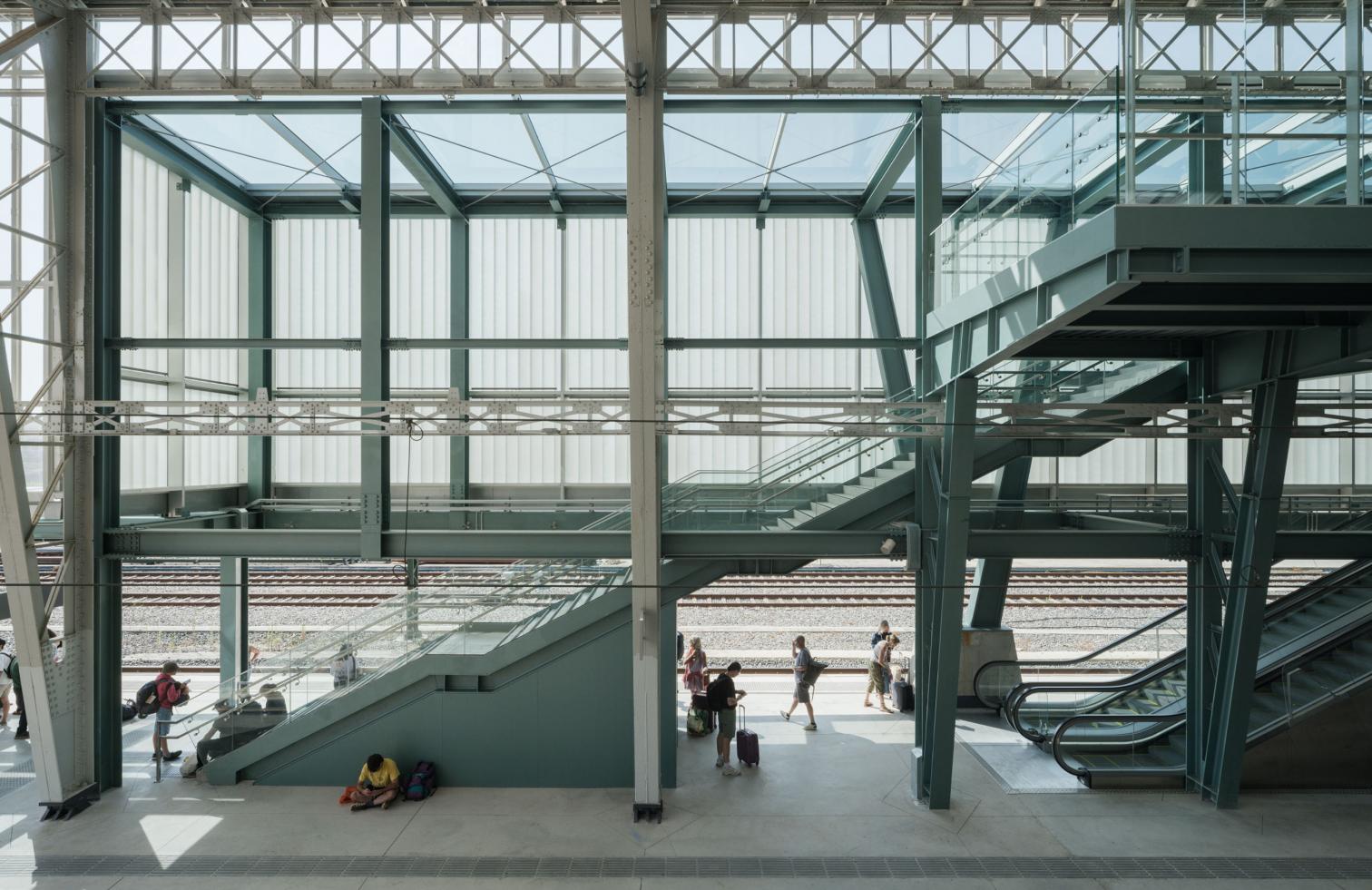
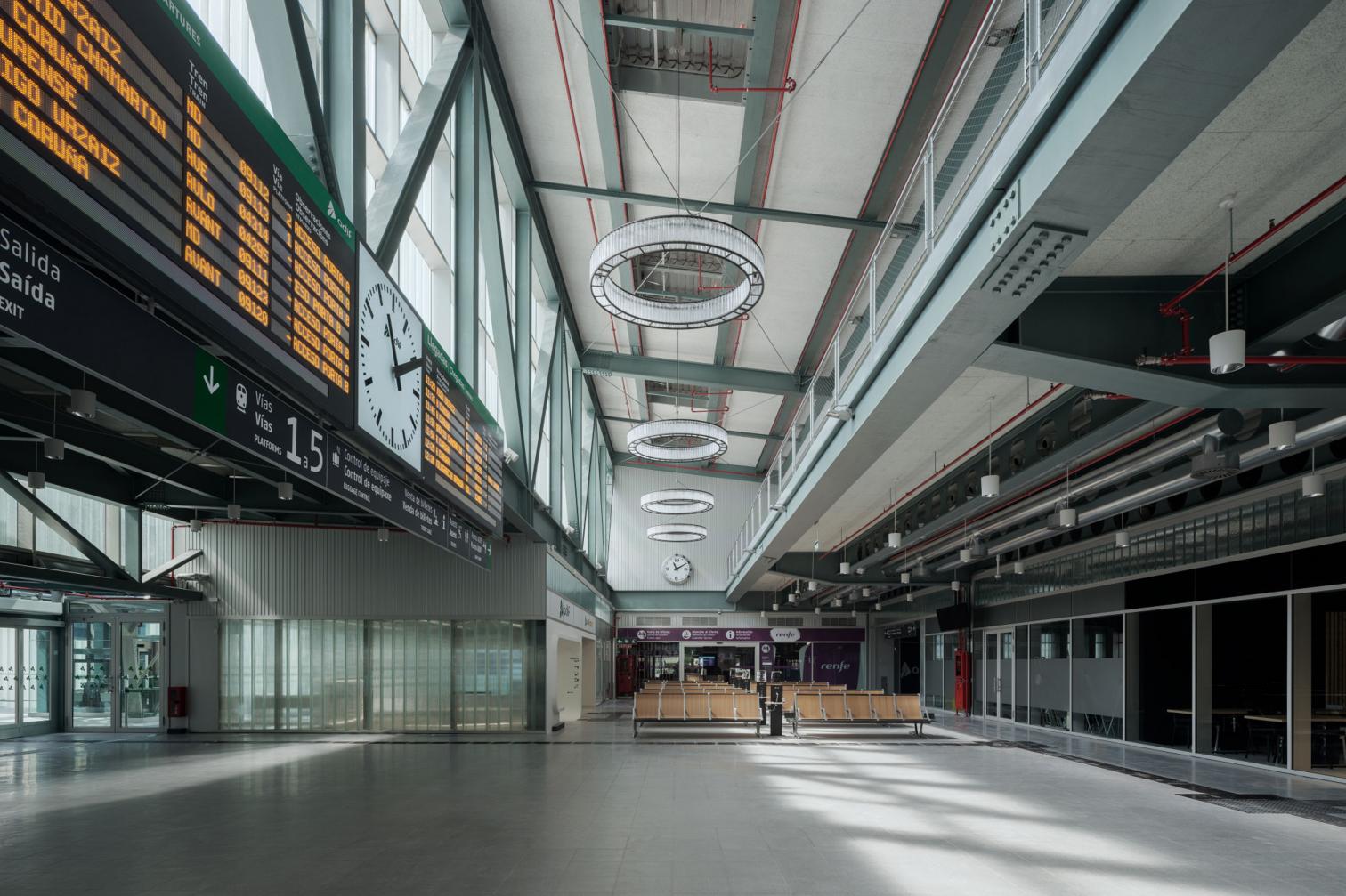
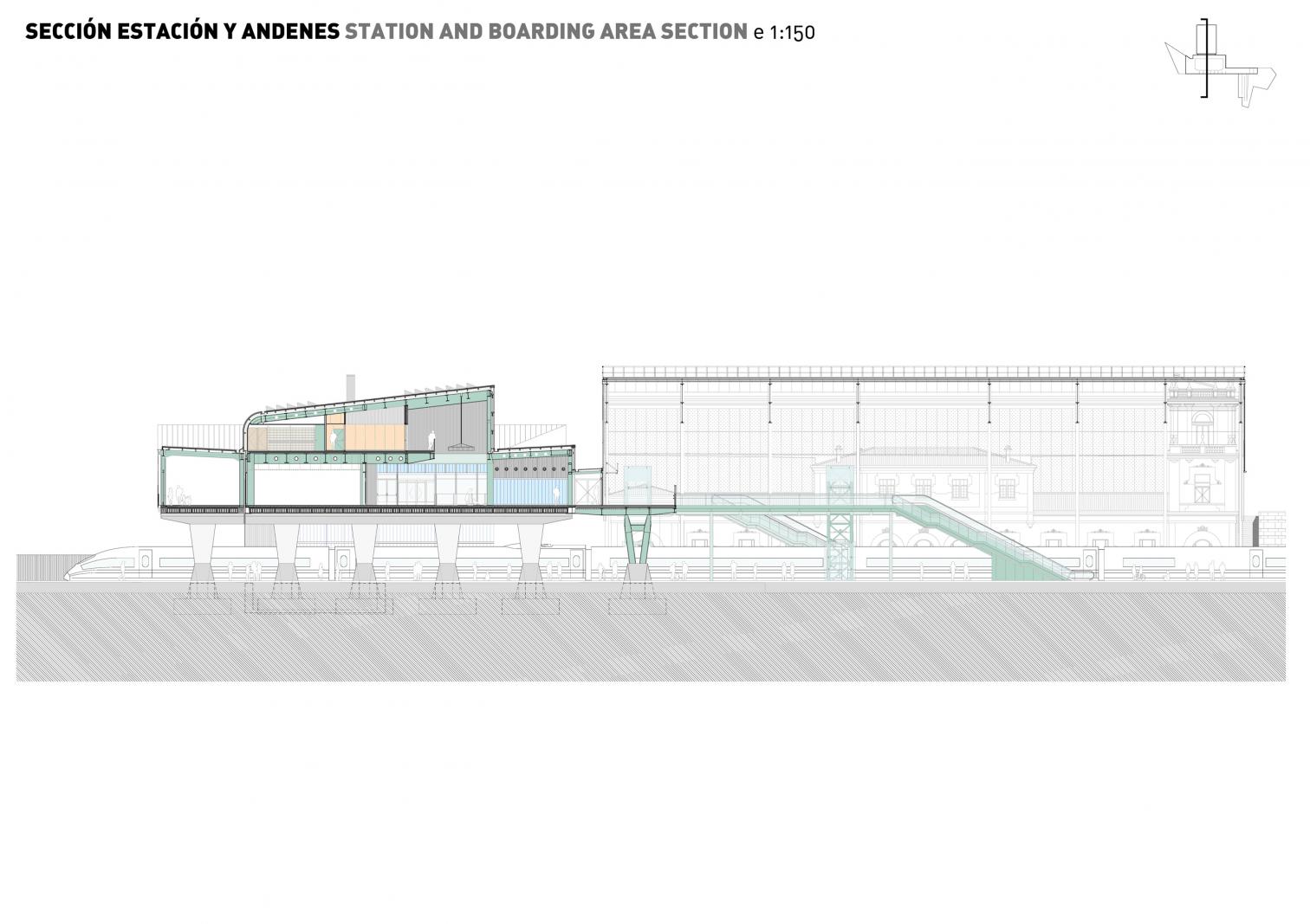
Intended mostly for pedestrian use, the station puts its main entrance at street level. From this upper level, a bright, transparent foyer becomes the heart of the project. This space, raised over the platforms, recalls the way airports work: an upper level for arrivals and departures, a lower one for transport connections. Travelers get to the trains directly from the platforms through ‘fingers.’
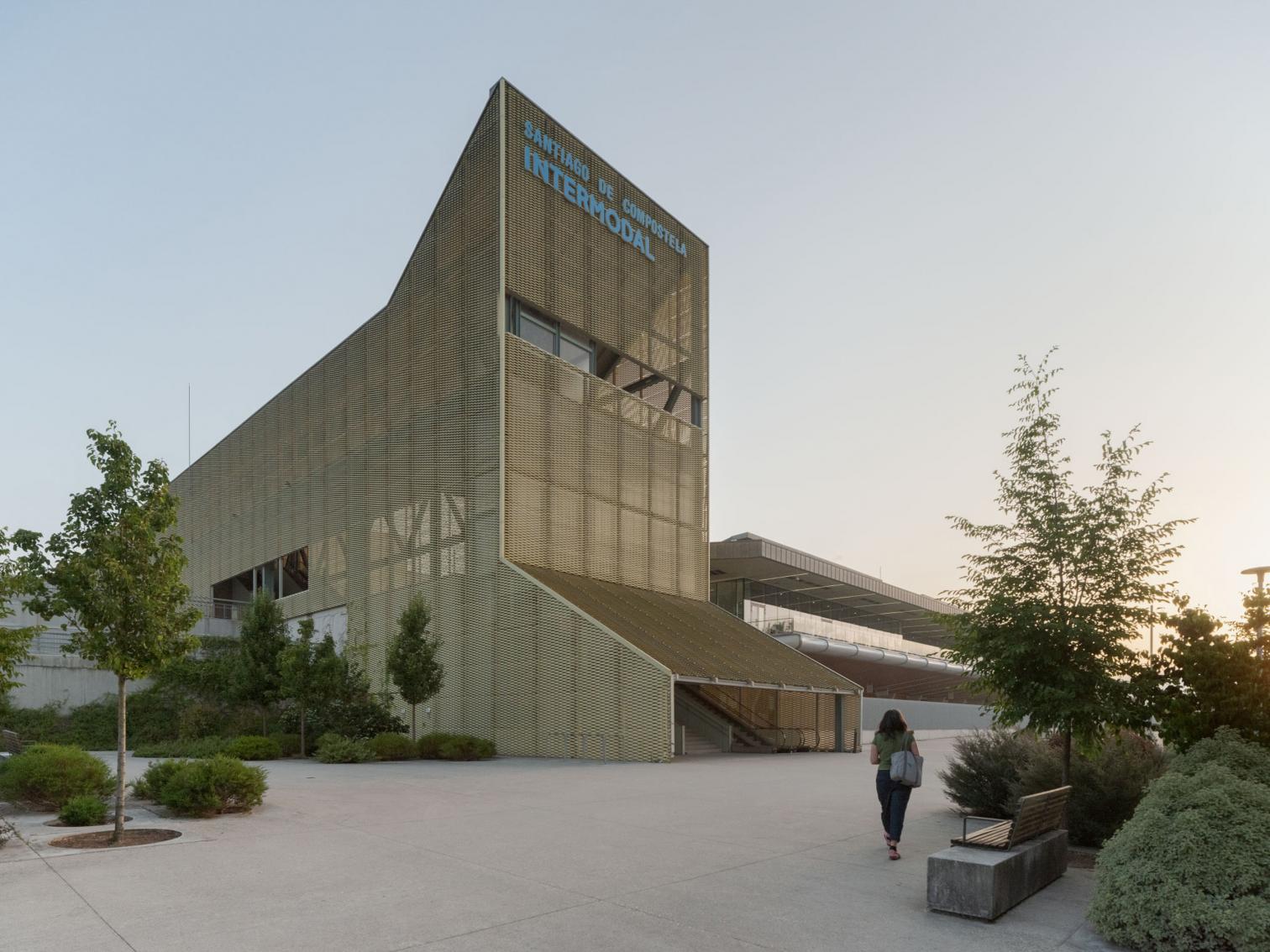
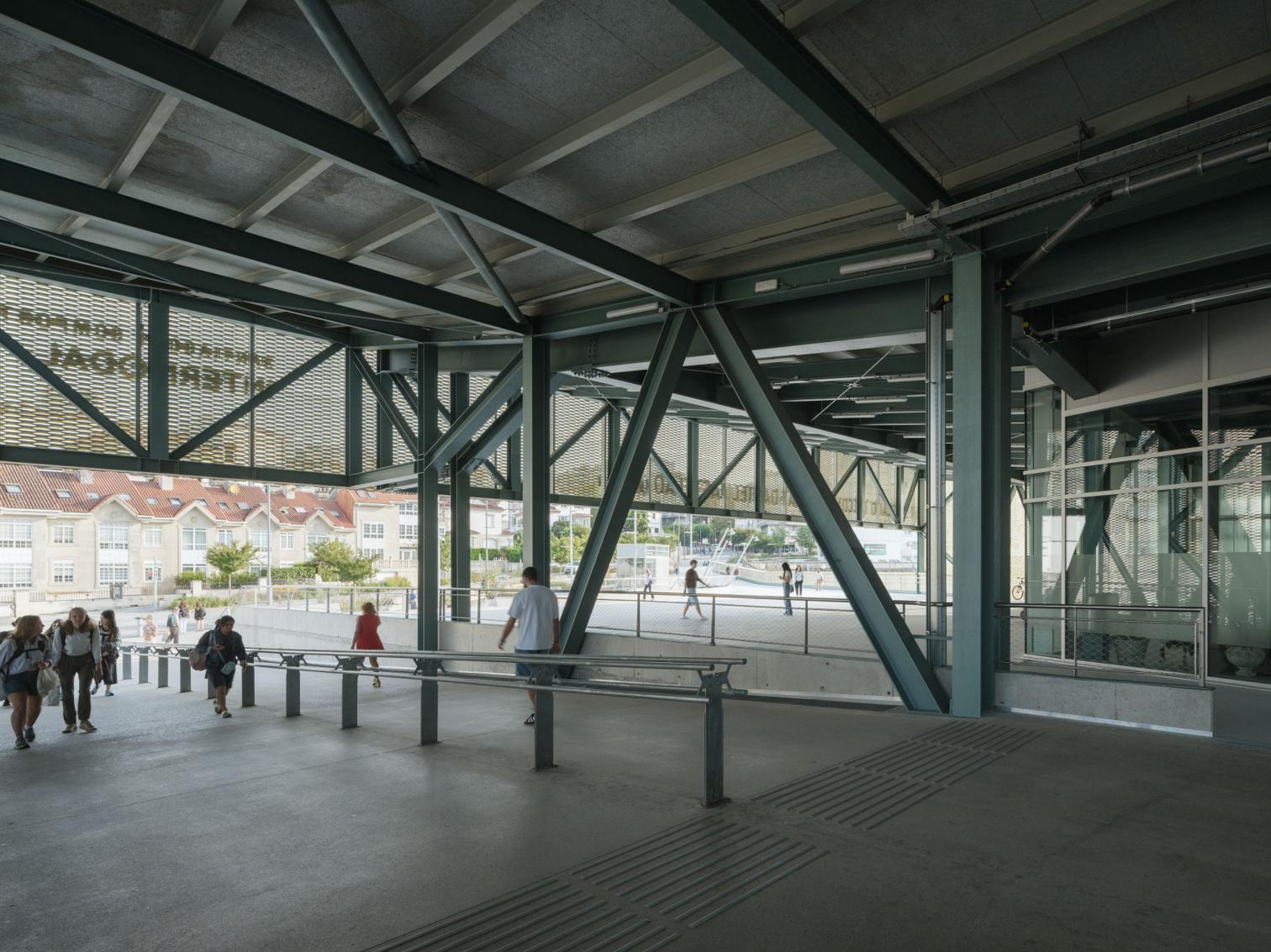
The architectural scheme is clear-cut and functional, in dialogue with the old station and its marquee. Two public squares complete the urban composition: Plaza de la Estación on the north side, and Plaza Clara Campoamor on the south, connected by vertical circulation cores providing stairs and elevators, and linked by the walkway.
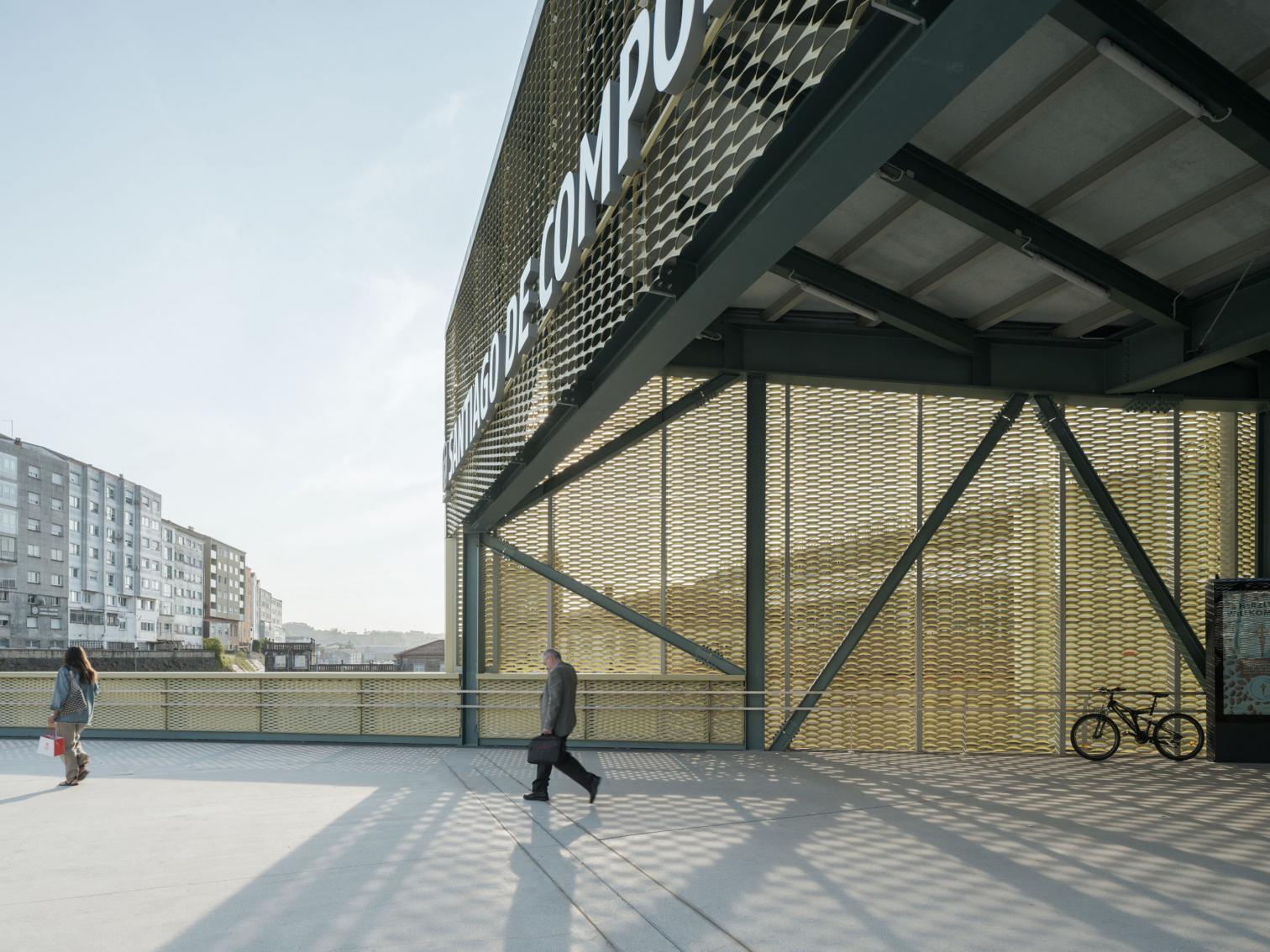
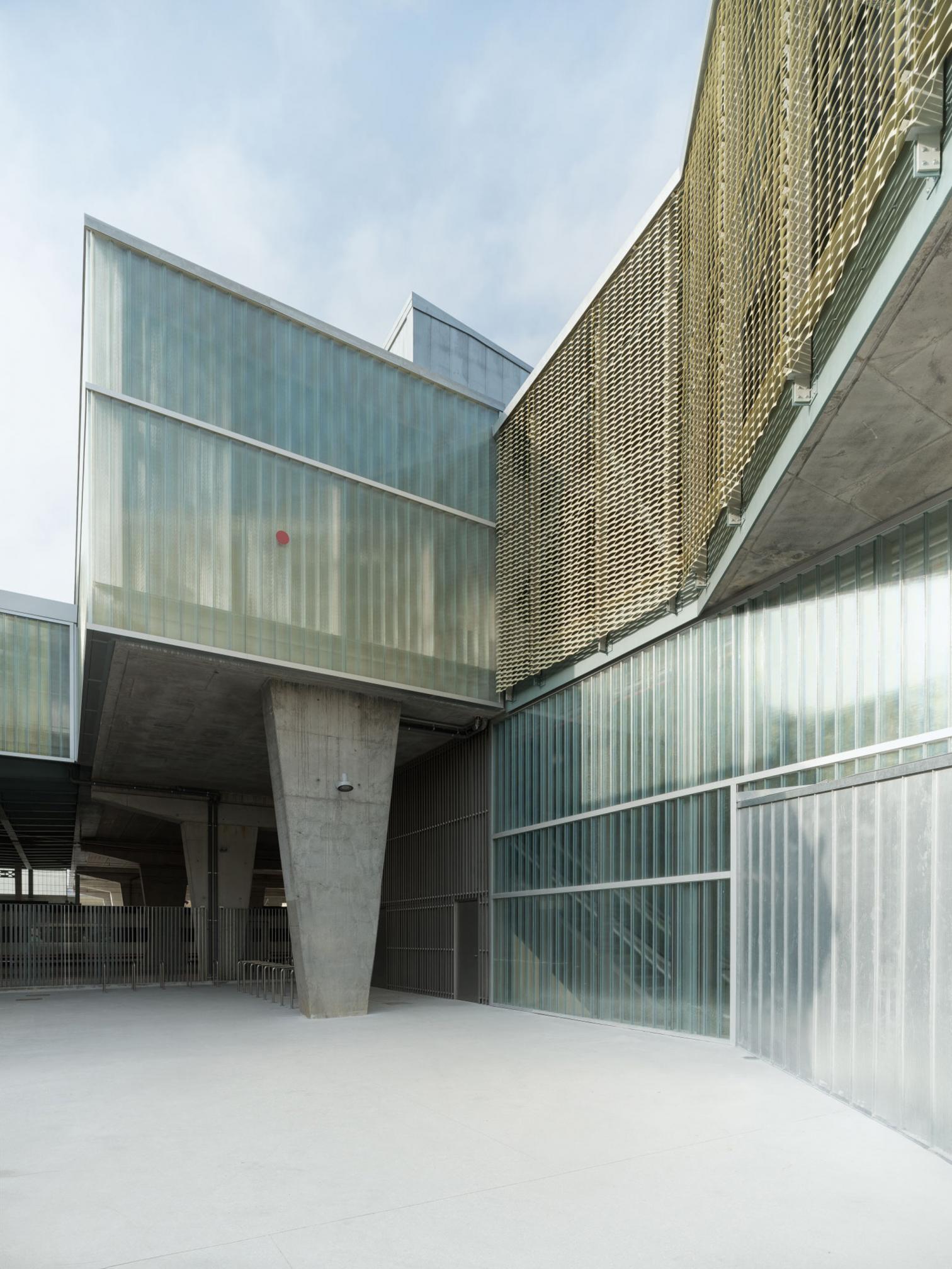
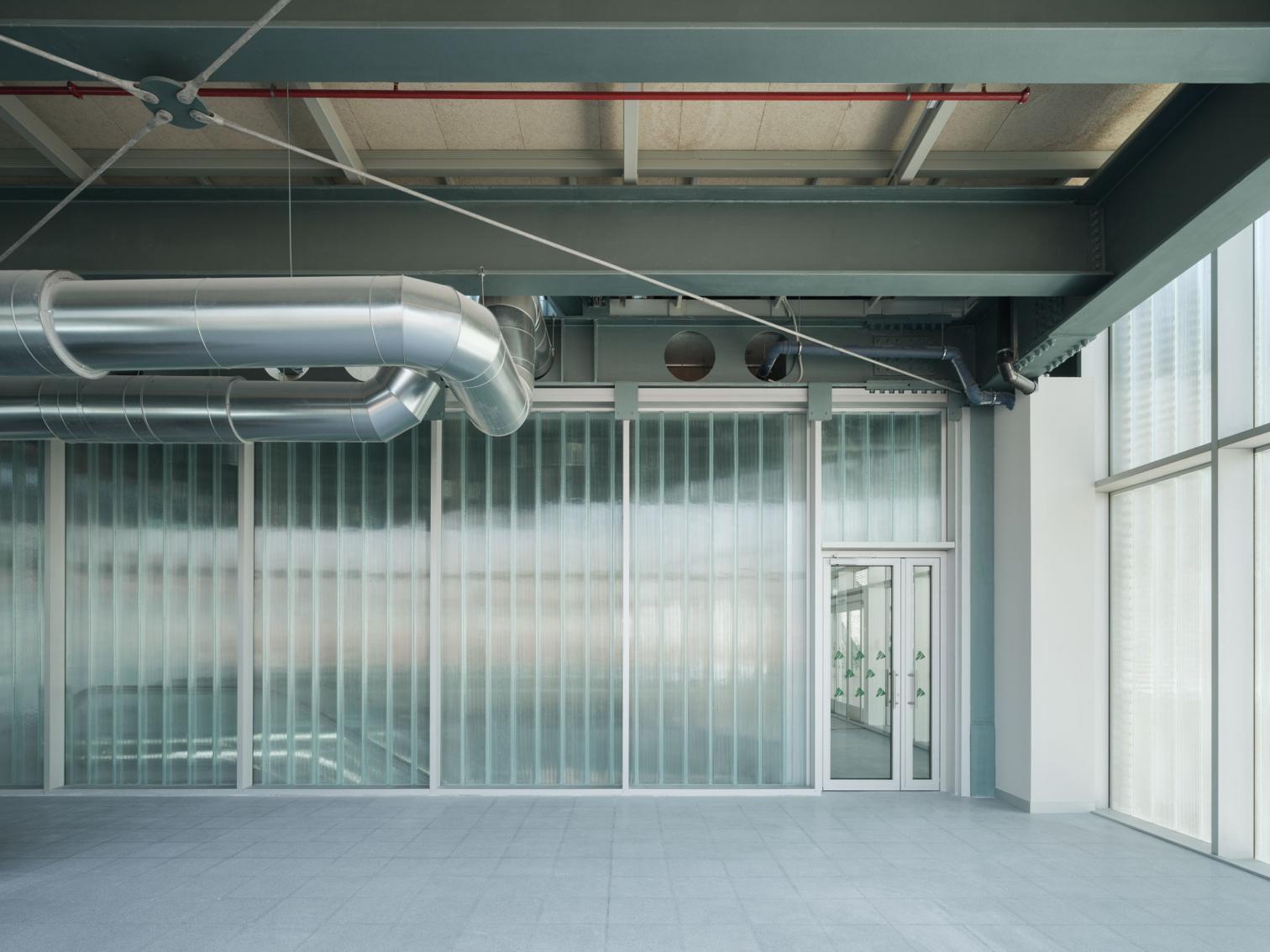
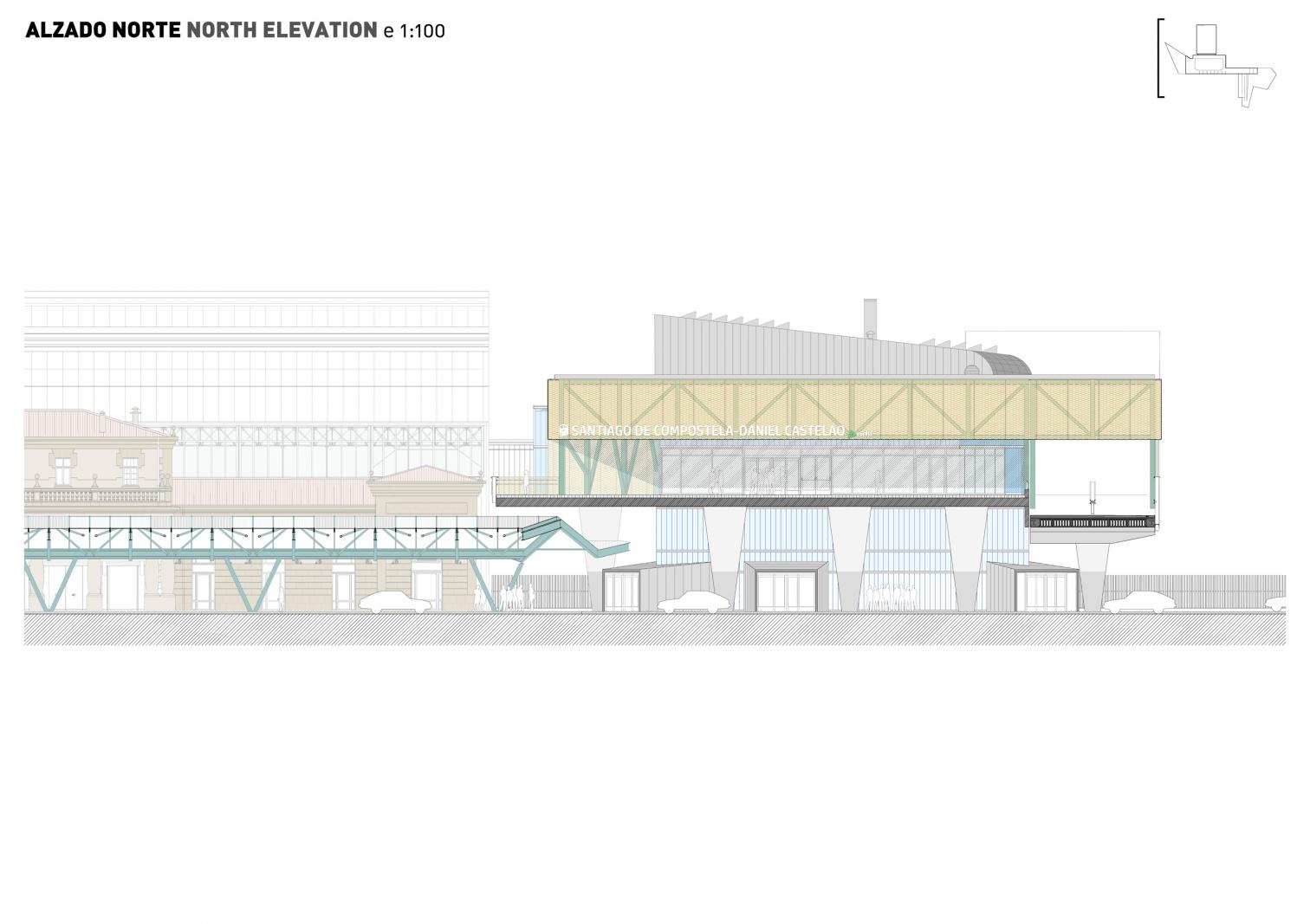
The building’s architecture adapts to the surroundings with an organic shape. Its construction stems from a large platform raised on pillars and prefabricated concrete slabs, on which lightweight industrialized systems are assembled, allowing work to be carried out without interrupting rail traffic. The envelope uses materials like polycarbonate, U-glass, zinc, and perforated metal panels, in a palette that combines transparency, texture, and durability. The exposed metal structure, painted green, reinforces the industrial character of the complex.
Beyond its function as a railway terminal, the new station becomes a strategic mobility hub and an urban-integration infrastructure which, through a rational, sensible architecture, reconfigures the experience of travelers and city residents alike.