Casa del Este in Los Cabos
JVL Arquitectos- Type Housing House
- Material Rammed earth
- Date 2025
- City Los Cabos (Baja California Sur)
- Country Mexico
- Photograph César Béjar
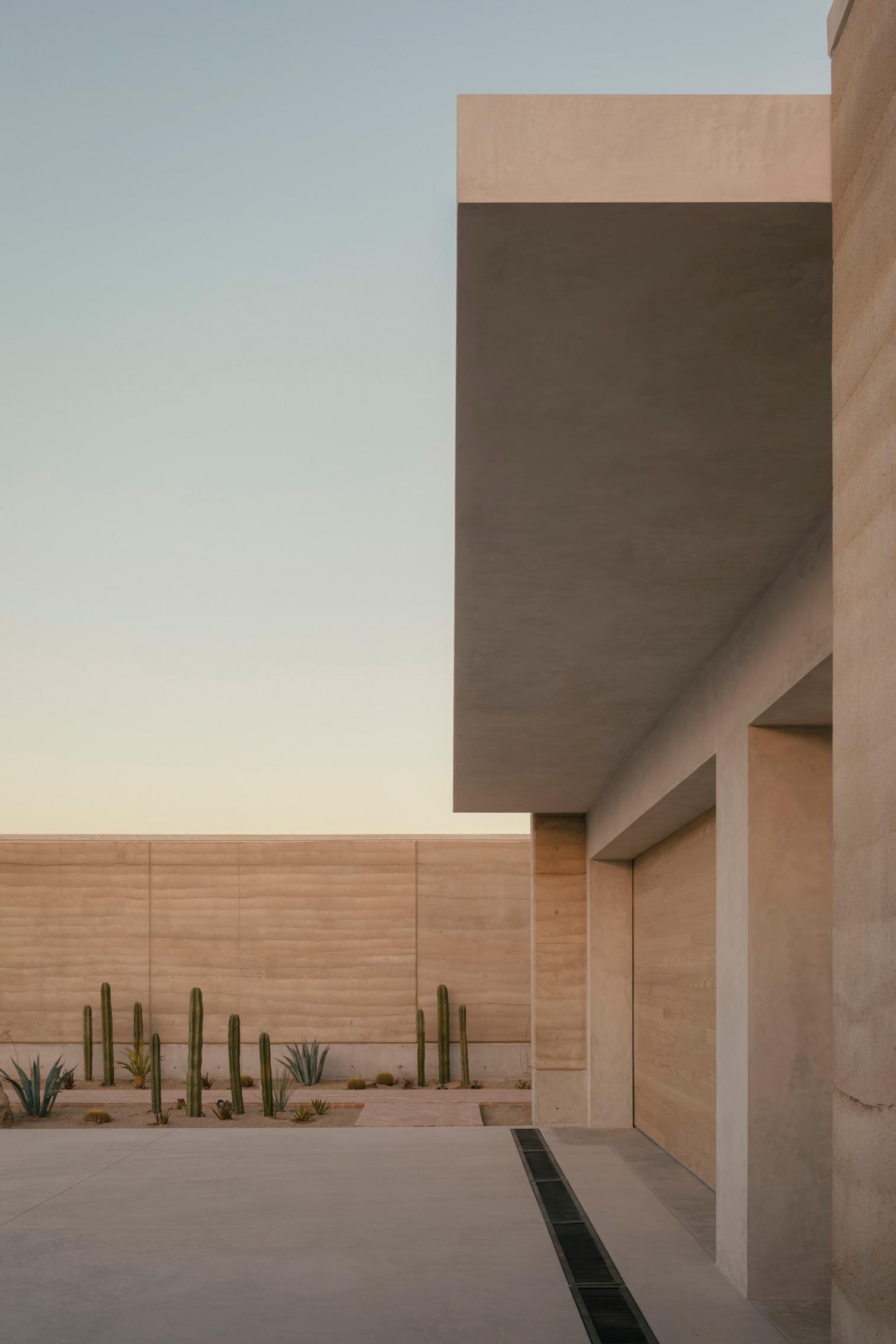
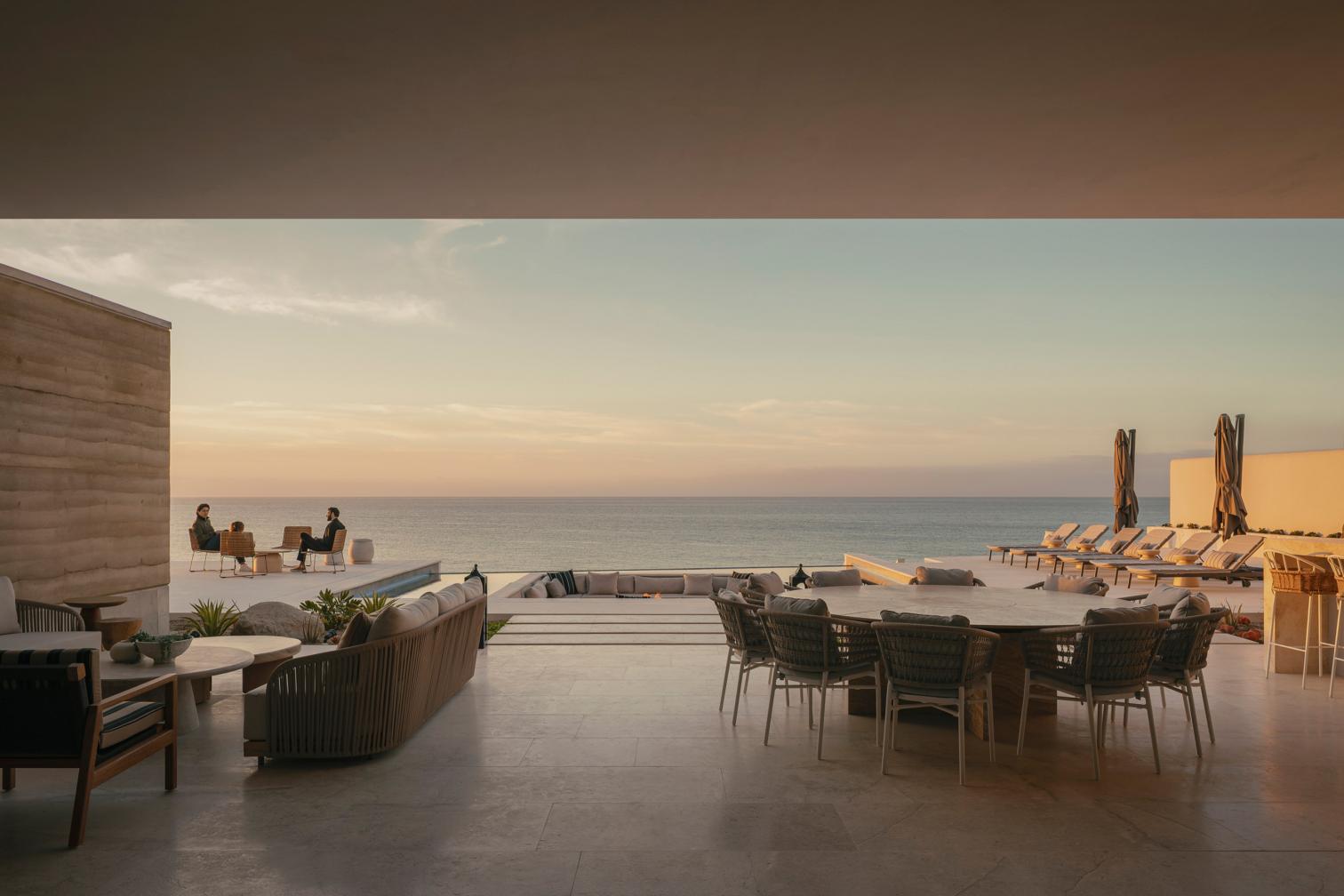
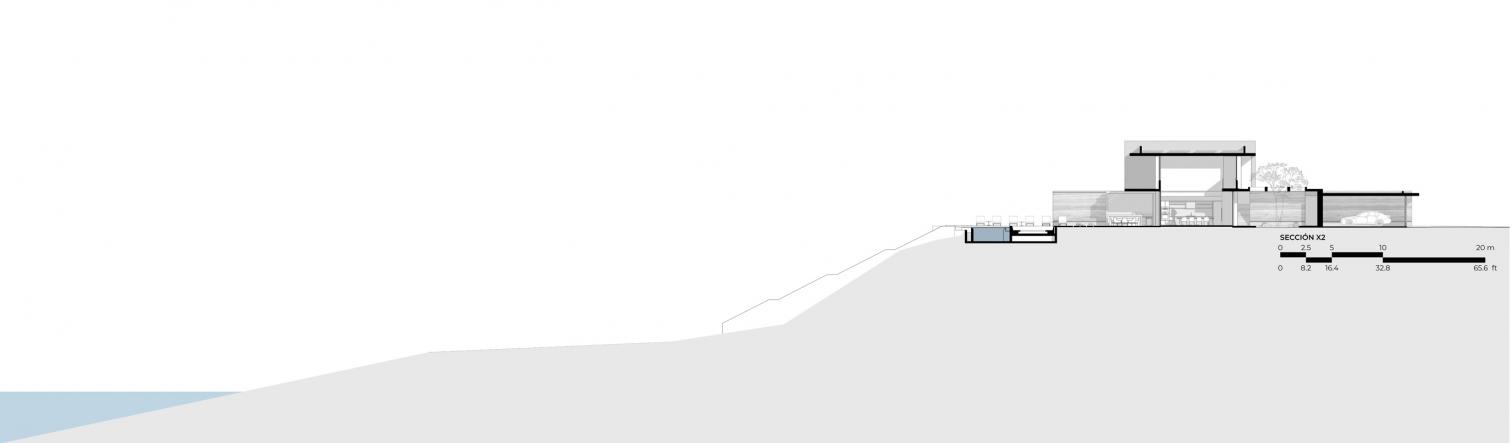
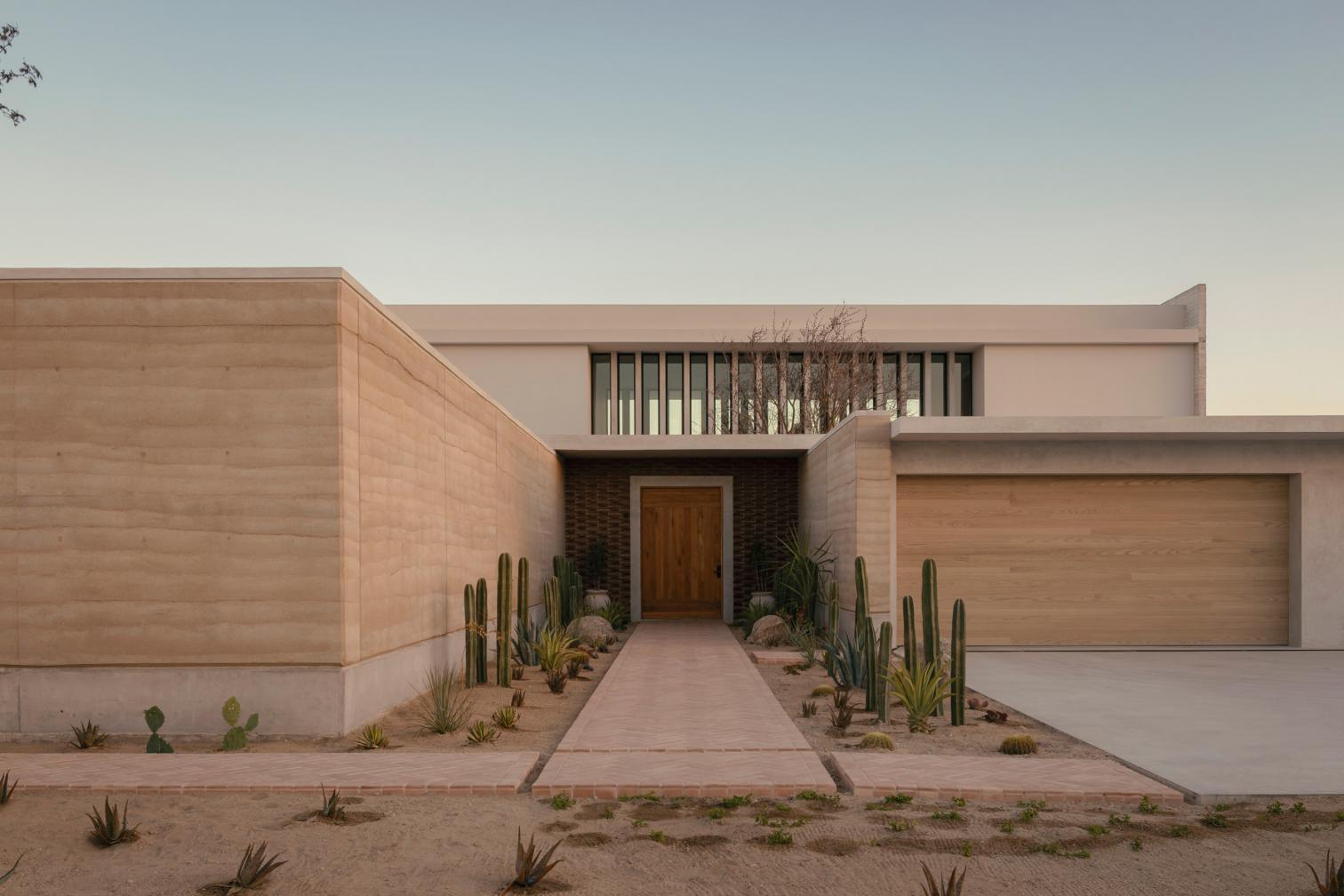
Located amid the privileged landscape of Cabo del Este, in Baja California Sur, the house responds sensitively to its natural surroundings, protecting itself from prevailing winds without sacrificing the open views of the sea. Access to it is designed as a gradual transition sequence. A blind wall marks the front facing the street to guarantee privacy, leaving only the pedestrian and vehicular accessways visible. From this point, the compacted-earth walls of the main volume lead to the entrance, culminating in a brick wall that frames a monumental oak door. This path leads to the central courtyard, the organizing element and heart of the project.
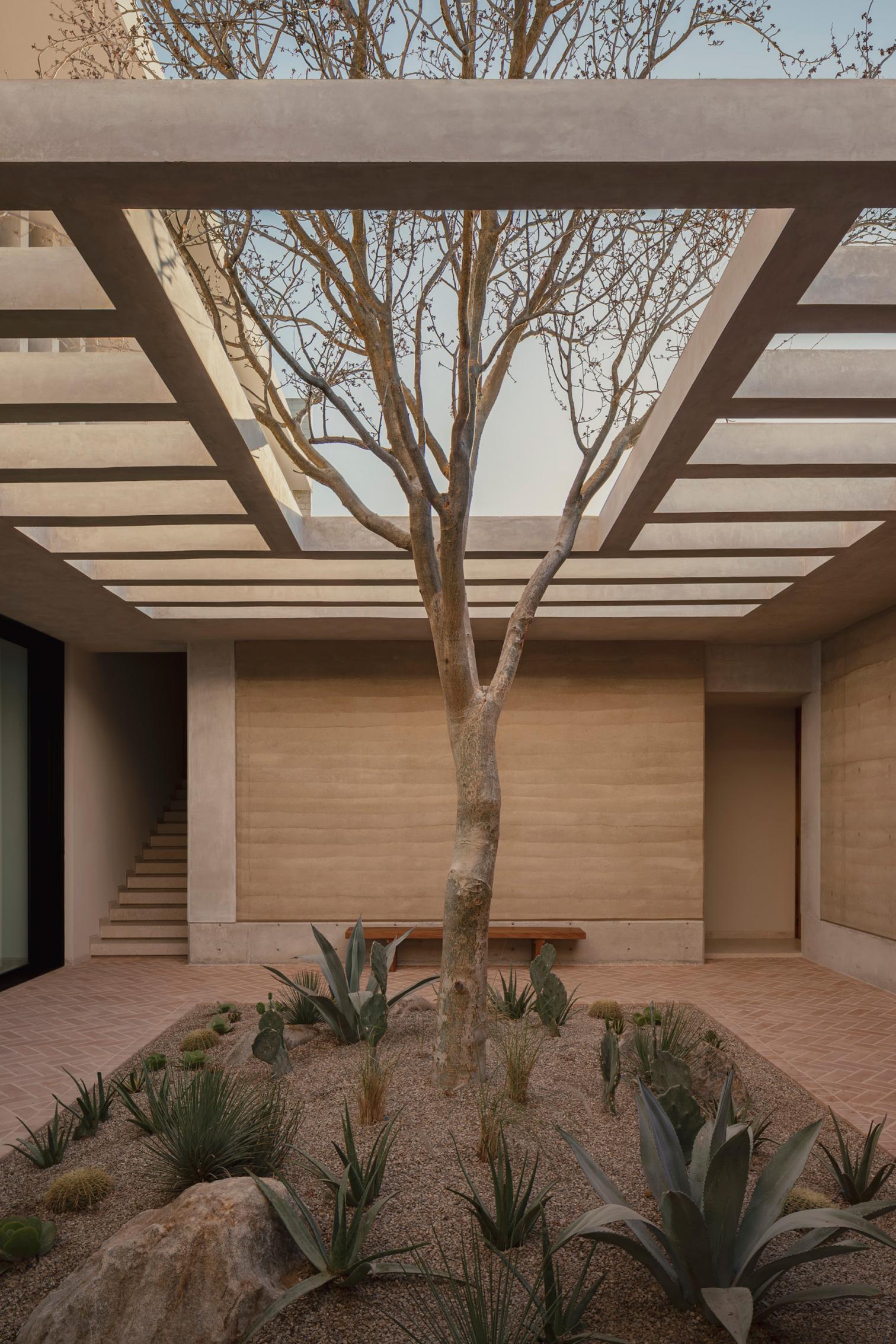
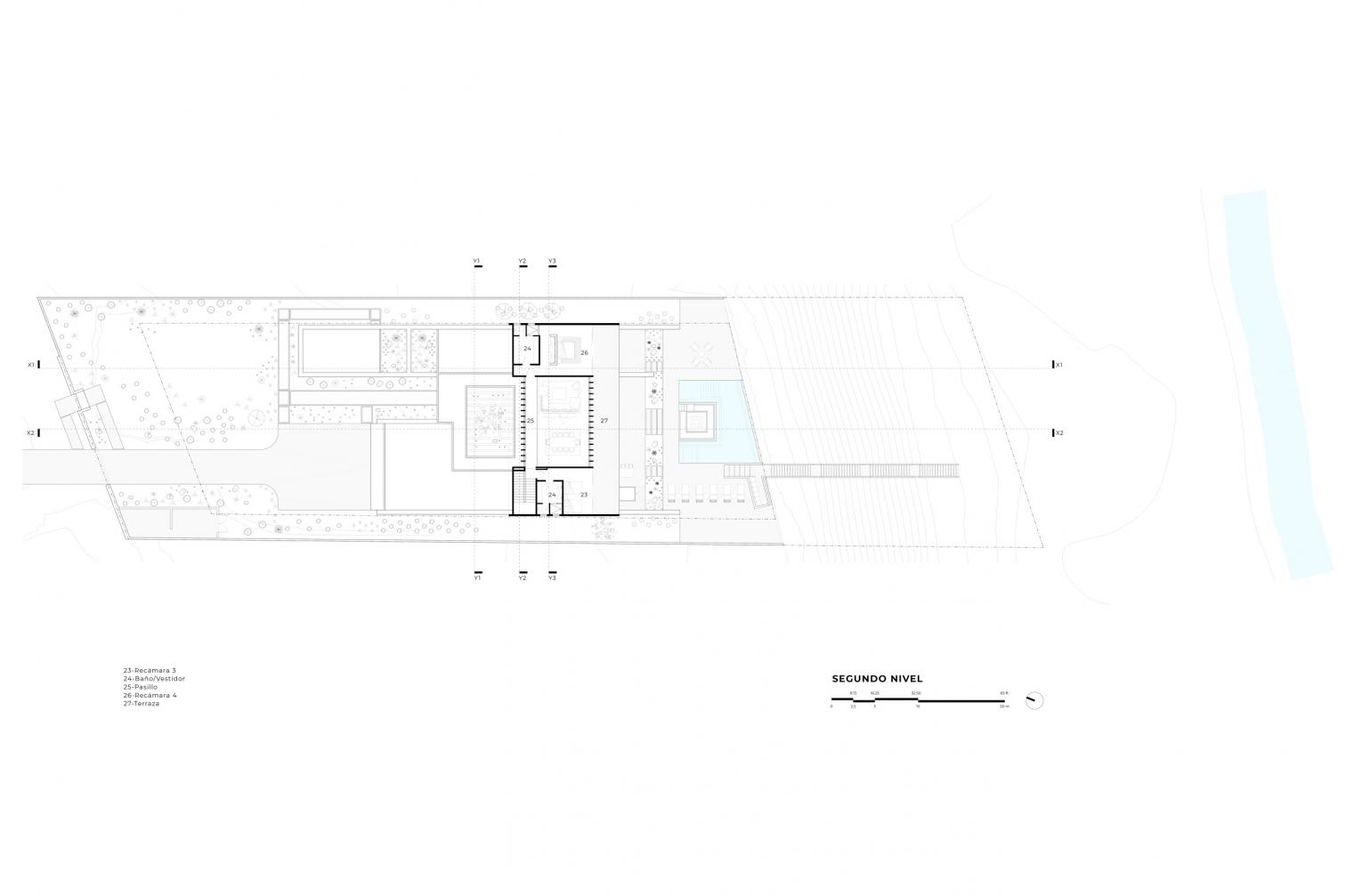
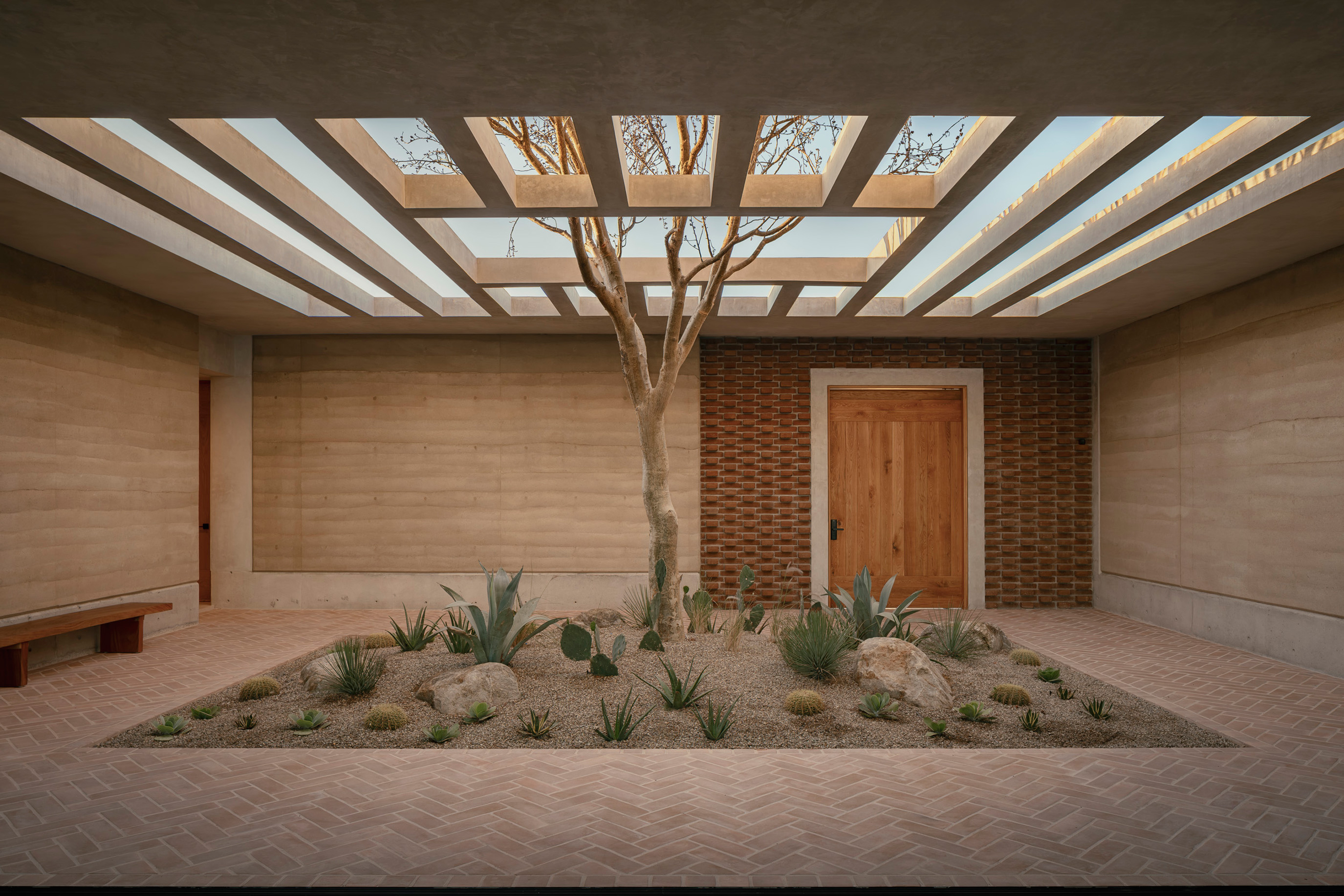
The courtyard organizes the interaction between the social and private areas of the house. A perimetral concrete pergola allows for controlled light and natural ventilation, while a rectangular opening at the center embraces a tree, which becomes the focal point of the space. Endemic vegetation and clay flooring reinforce the regional character of the residence and its connection to the site.
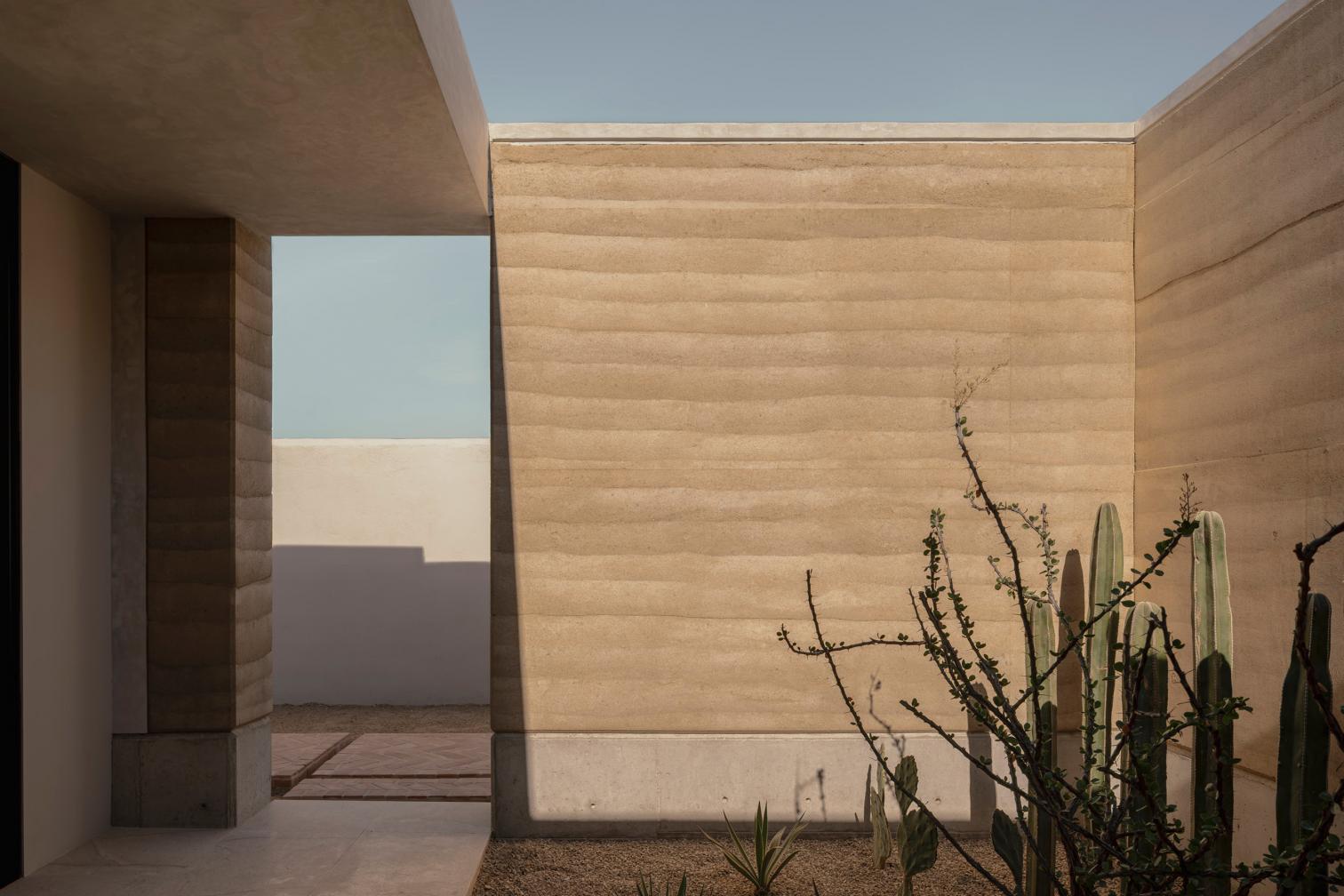
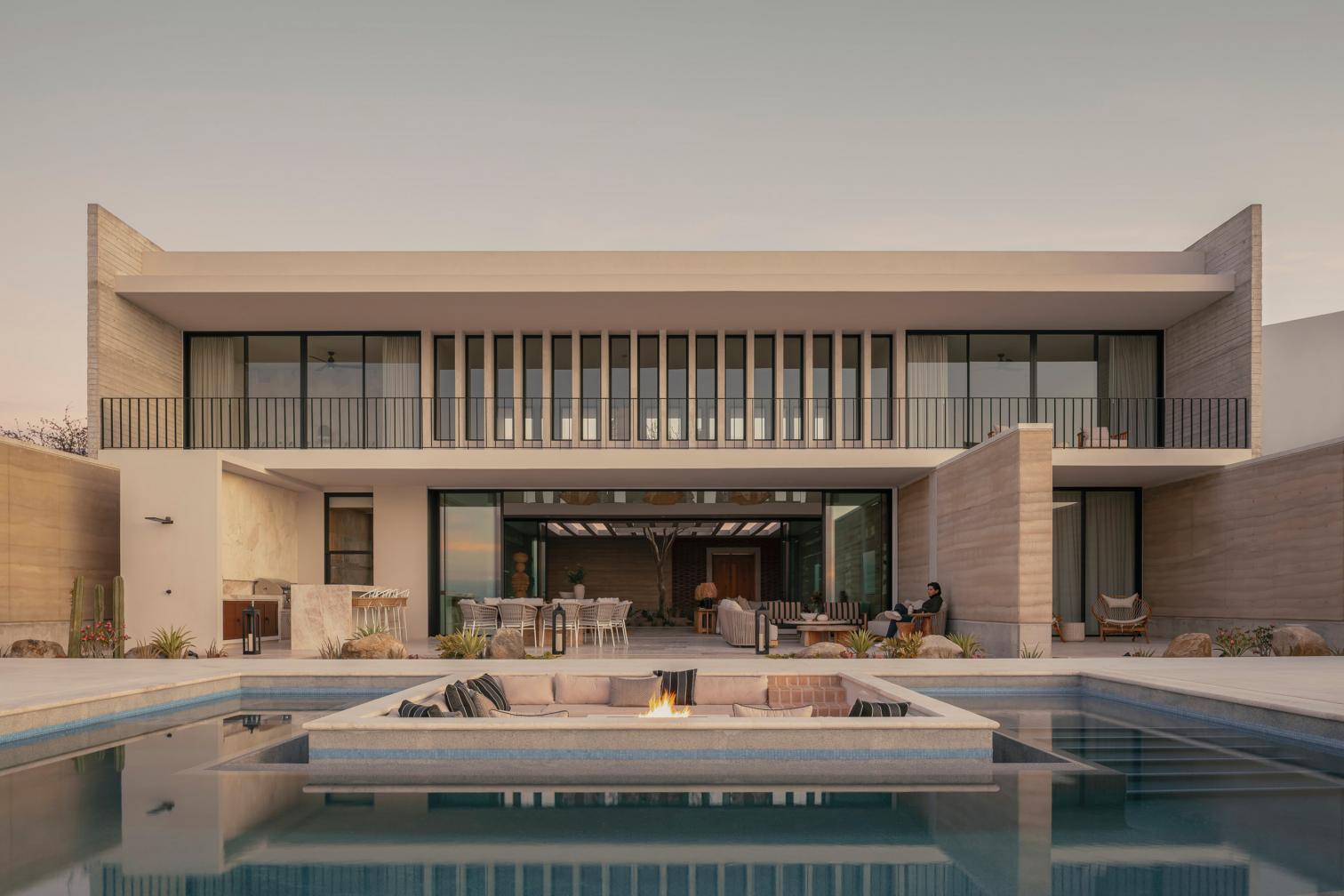
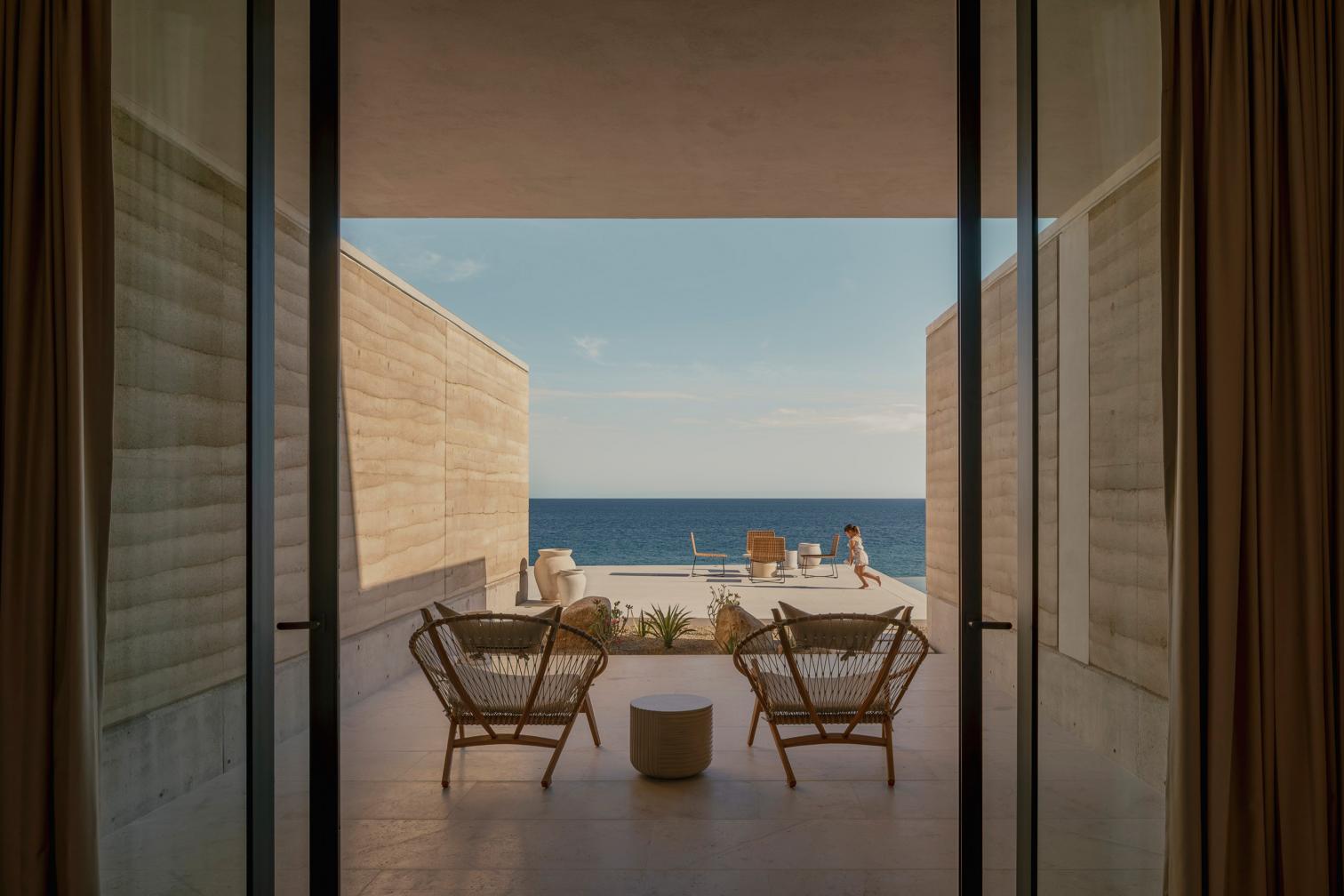
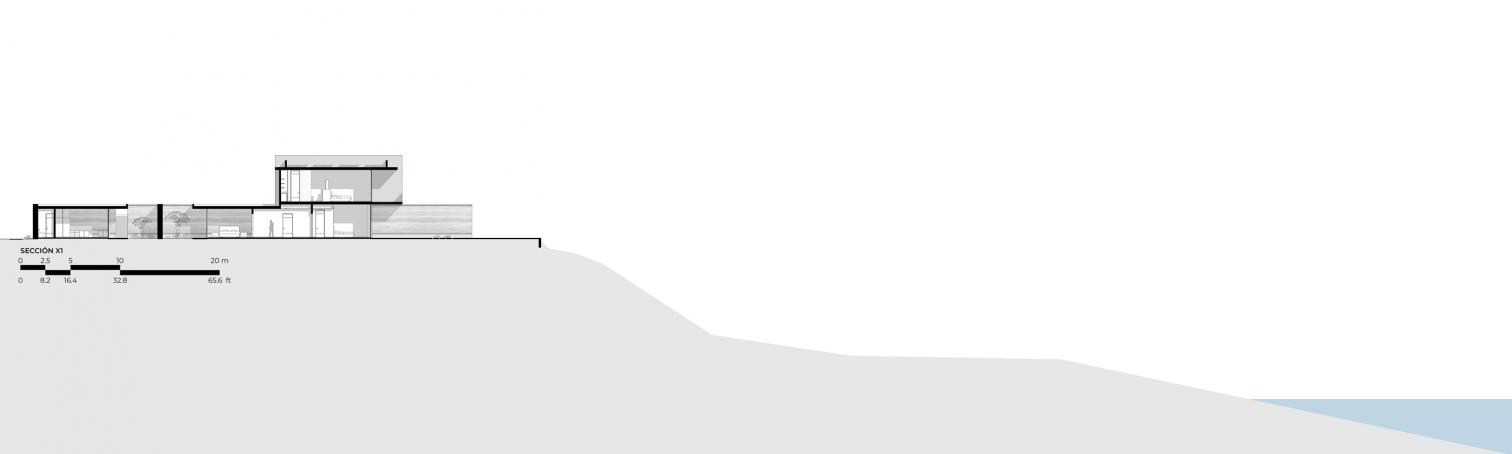
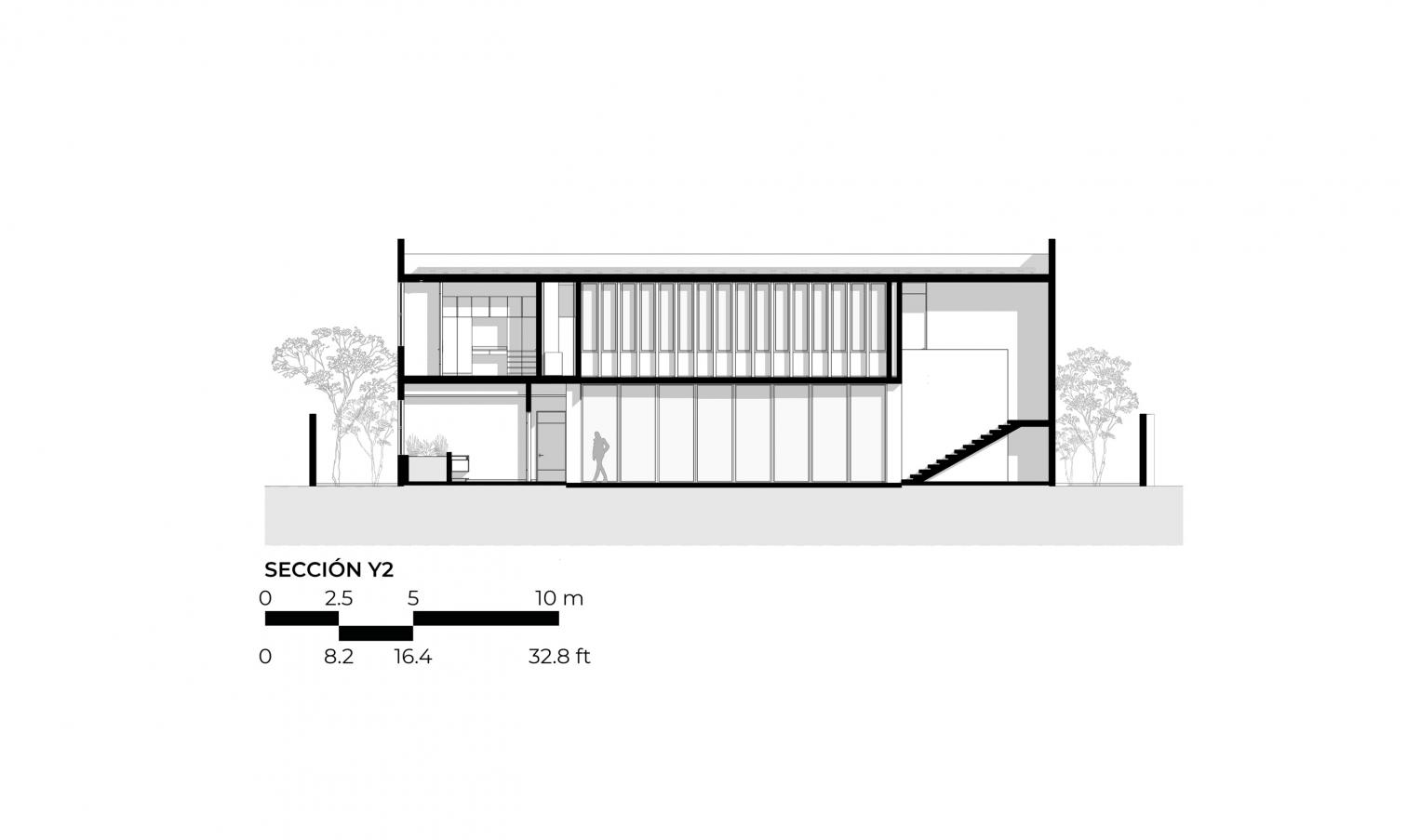
Inside, the house unfolds through a sequence of visual planes that link the social area to the terrace, the pool, and the Pacific Ocean less than 40 meters away. The family bedrooms, distributed on two levels within the main volume, have direct sea views and a constant rapport with the outdoor areas. Added to this is a guest house, laid out around an inner courtyard delimited by walls of rammed earth.
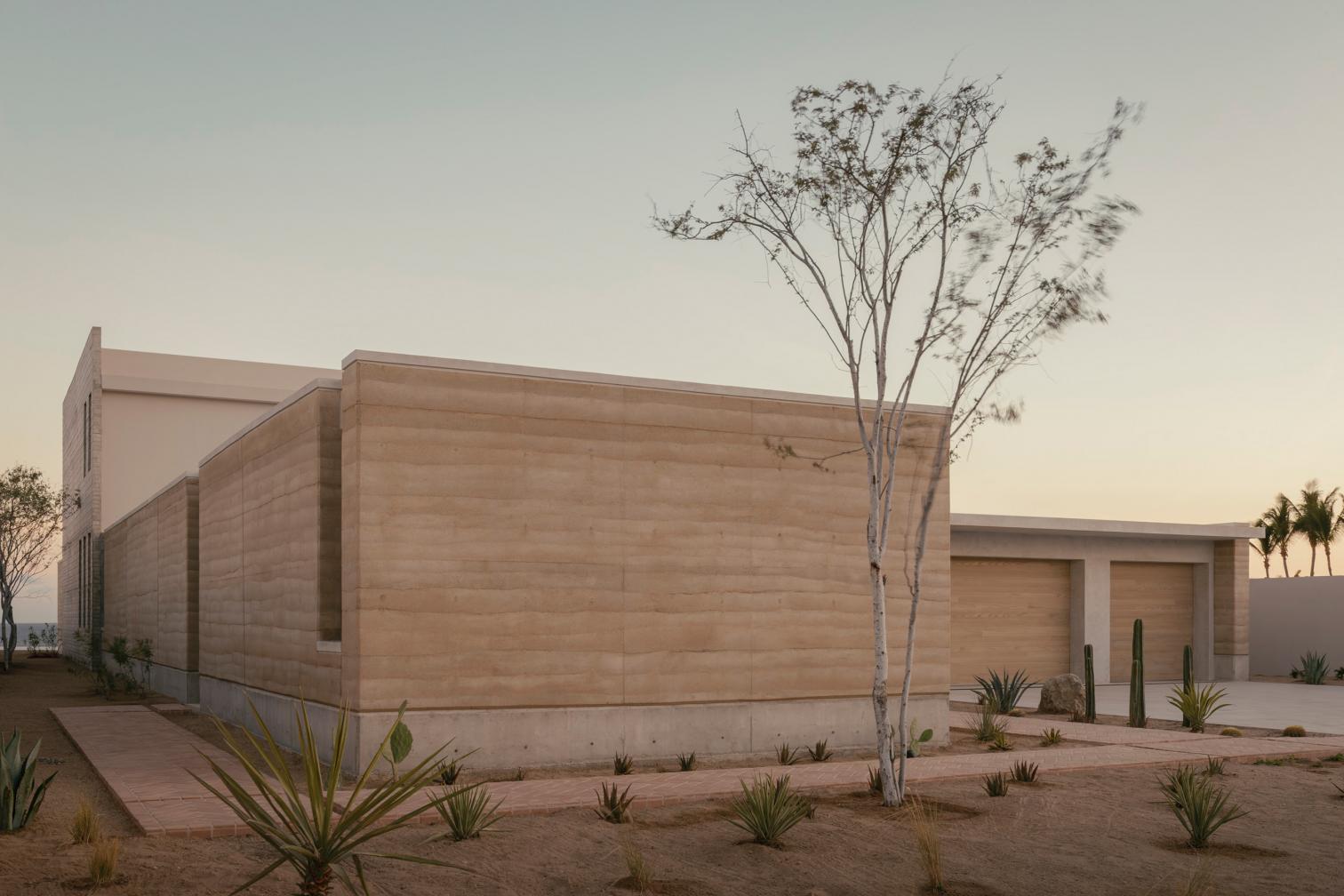
The mostly sandy terrain posed a challenge at first, but the sand from the site itself, which initially hindered the construction process, became a fundamental resource for the execution of the earth walls that define the project. In this way, structural and geotechnical problems were solved through integrated solutions that maintained the formal clarity of the scheme and strengthened its engagement with the natural environment.
The materials – compacted earth, concrete, clay, marble, wood -- strike a balance between solid and warm. The concrete, poured with an intentionally imperfect texture, dialogues with the rusticity of the earth walls. The house is self-sufficient, using solar energy and an efficient water-treatment and reuse system, addressing the conditions of the site.