
Architectural photography, especially of the kind that contextualizes architecture in the complexity and heterodoxy of its urban and territorial dimensions, wanted its own internal competition and external recognition. This is the idea that the Portuguese publisher Scopio had in mind with the holding of the first Luis Ferreira Alves International Photography Competition, which also served to honor the figure and legacy of the photographer who died in 2022, having masterfully created the imagery of the best of Portuguese architecture of the last quarter of the 20th century.
With a jury including the architect Eduardo Souto de Moura and the photographers Hélène Binet and Paulo Catrica, the close to 1,500 entries attest to the good health of a discipline that is moving away from mere documentary to immerse itself – influenced by contemporary photography’s artistic bent – in holistic, transversal readings of the built domain. The book, serving as the exhibition catalog, presents the results of the contest (three awards, seven finalists, two special mentions) and takes stock of an unchallengeable paradigm shift.
The Irani Maho’s Frequent Whites portrays the surreal urbanscape of Pardis, a neocity of white towers in a mountainous environment outside Tehran. The poetic milky atmosphere depicted at different seasons shows the difference between virgin nature and accelerated anthropization. Through beautiful images, the contrast between context and construction dulcifies a dehumanized, (un)inhabitable reality.
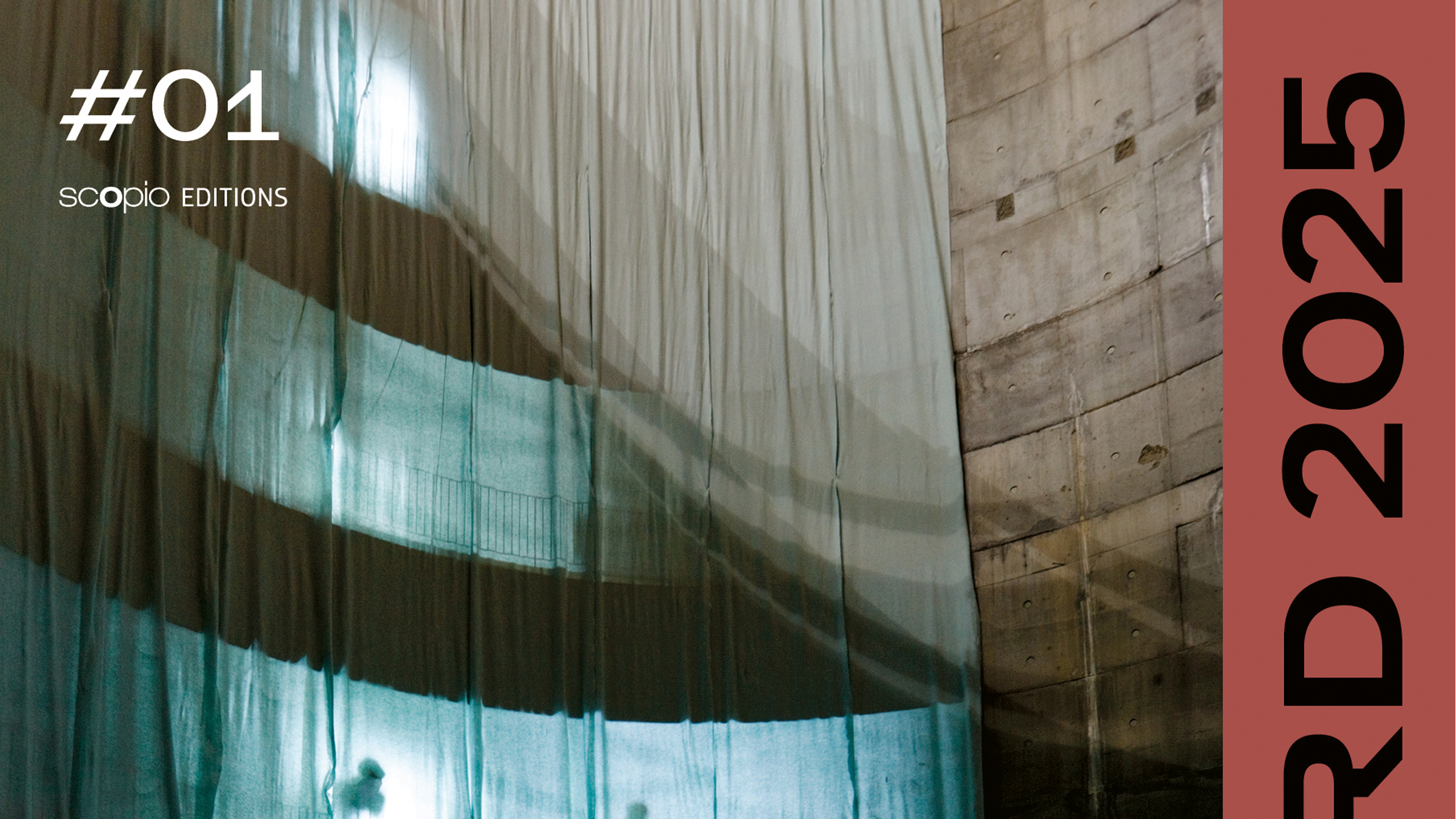
The French Cyrille Weiner’s series Oui avec plaisir (2004-2006) delves into interiors, particularly in the scenographic and performative territory of Patrick Bouchain’s temporary theaters and auditoriums. There is a new effort to capture the vivifying atmospheric aspect of functional spaces, activated by our imagination.
The renowned Valencian Sergio Belinchón completes the trio of awardees with Provisional Atlas of Berlin (2021-2024). An experienced interpreter of urbscapes in transformation, Belinchón finds a symptomatic example of the deep changes affecting Europe’s historic cities. In the case of the German capital, the rapid processes of demolition and reconstruction taking place on the grid in palimpsest manner bring to mind the scars of history and memory, and come to life in paradoxically gorgeous, autonomous, transcendental pictures.
James Smith, Kris Scholz, Seunggu Kim, Ricardo Nunes, Marco Yat Chun Chan, Nuno Serrão, Vincenzo Pagliuca, Sana Ahmadizadeh, and Amelia Lancaster complete the list of winners, painting an at once varied and recurring picture that lays bare the fragile current configuration of the built environment. Architectural photography is a tool for reflection, a means more than an end. The photographer’s more or less embellishing but always suggestive gaze transcends the subject, and in the autonomy of the craft it presents itself as worthy of the acknowledgment and stimulus to which this competition successfully contributes.