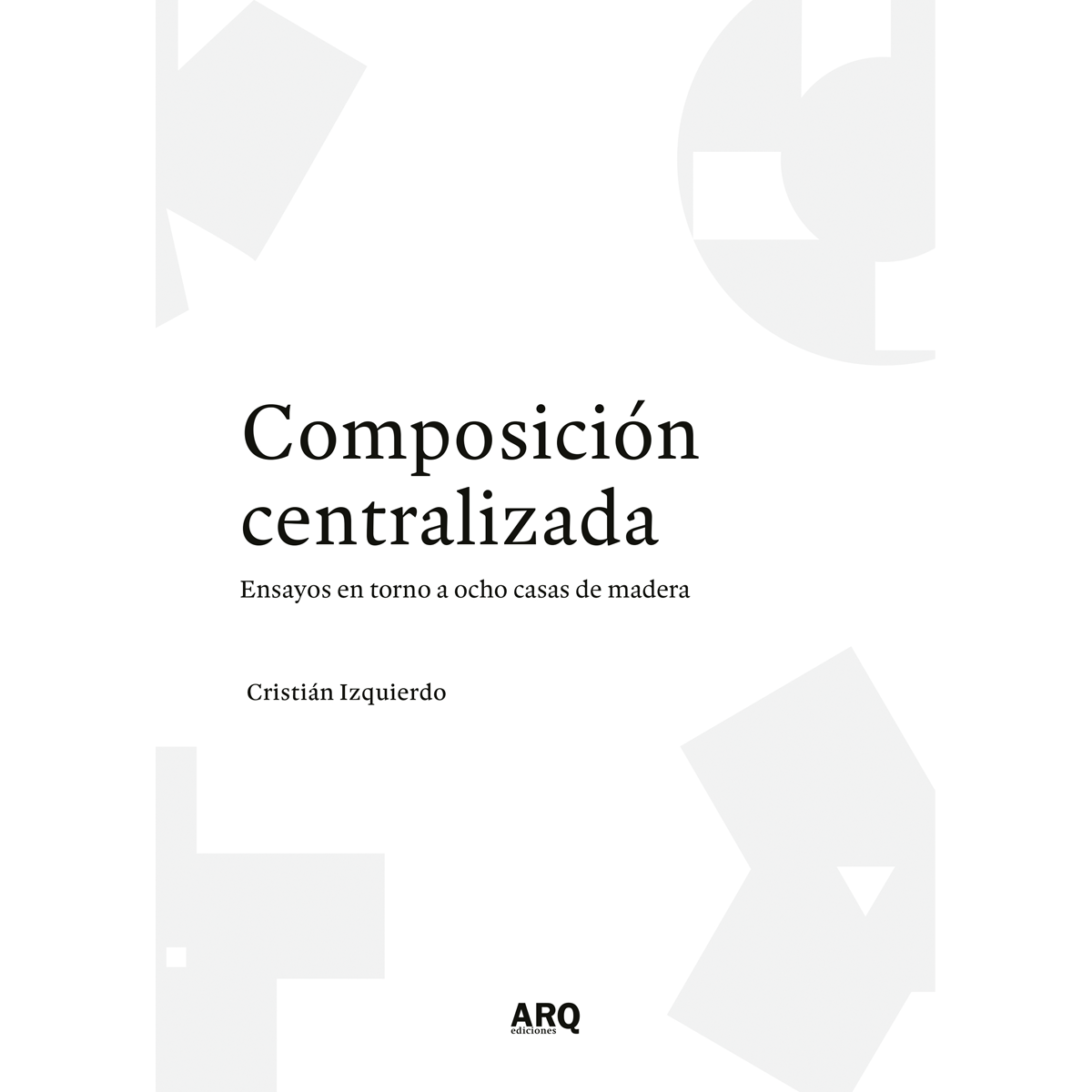

The term ‘centralized composition’ brings memories of reading Wittkower’s Architectural Principles in the Age of Humanism as a student. How ideas travel is astonishing: in this case, architectural theories of the Renaissance were retrieved in the ambit of the Warburg Institute, to come to me in a corner of South America. It’s even more surprising to find them anew in the original publication of a contemporary Chilean architect.
Cristián Izquierdo’s book has required lots of courage. Tracing an arch from Renaissance architectural thought through 18th- and 19th-century theories to contemporary production requires walking on a tightrope.
The operation he proposes is well expressed in the title: four essays on eight wooden houses with centralized floor plans. The texts retain relative autonomy in relation to the works featured, neither justifying nor introducing but engaging in dialogue with them. The underlying question is the tension between theory and practice.
Everything gravitates around a desire for the centralized and whole, though the gap between thinking and doing that Eugenio Trías vigorously emphasized is not suppressed: an unavoidable leap from thought to action.
But architecture is a practice. The need to think it out comes from that fact, and architecture, to maintain its purpose, must return to it to some degree. Izquierdo explores the possibility that some classical ideas can be of use in clarifying what today goes through the mind of an architect who is aware of the complexities of his craft.