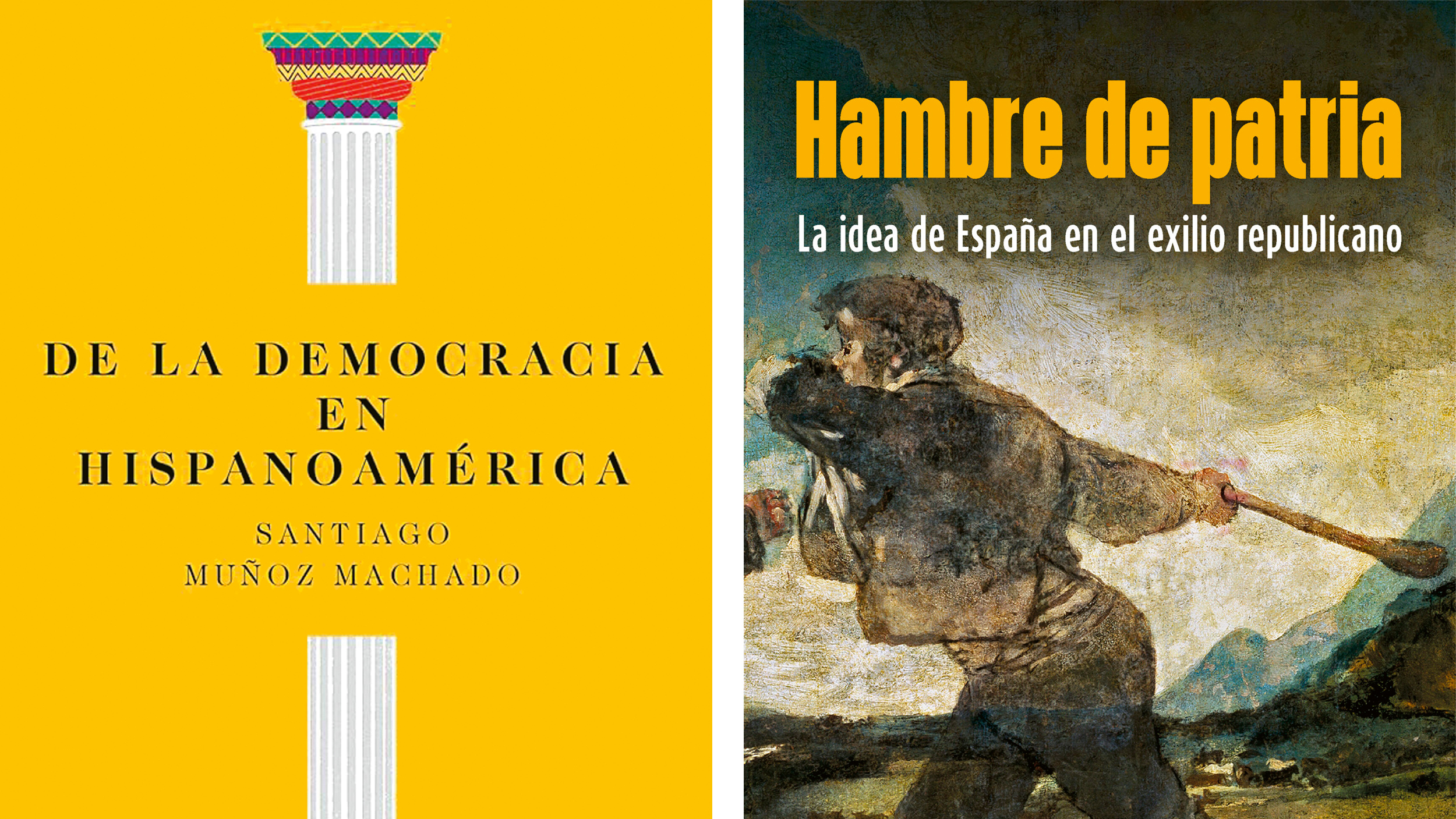
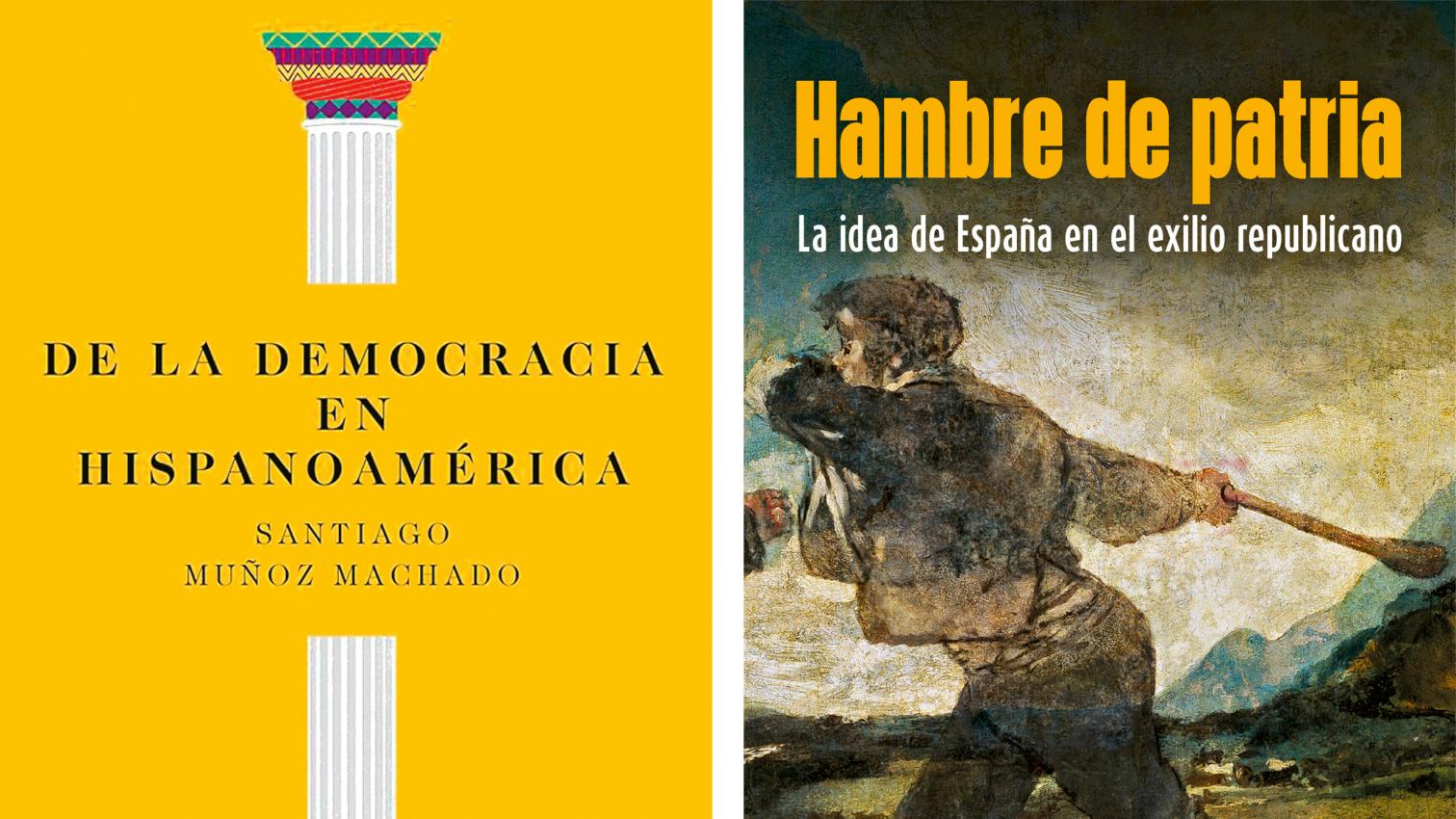
Two academics distinguished with the National History Prize have published in 2025 essential books to get to know each other better. The jurist Santiago Muñoz Machado, who received it in 2018 for Hablamos la misma lengua, a political history of Spanish in America, returns to the continent with De la democracia en Hispanoamérica, which documents the journey of these countries during the two centuries since independence; and the historian Juan Francisco Fuentes, who received it this year for Bienvenido, Mister Chaplin, a work on the Americanization of leisure and culture, returns to the twentieth century with Hambre de patria, an essay on the idea of Spain in Republican exile. Both volumes combine rigor with a defense of democracy, fragile and threatened, in our Hispanic sphere as in the rest of the world.
Muñoz Machado’s monumental work arises from his interest in the new Latin American constitutionalism, which seeks to extend the limits of representative democracy, and which has been embodied in the Venezuelan constitution of 1999, the Ecuadorian of 2008, and the Bolivian of 2009. Although they are in tune with the defense of cultural particularisms in advanced democracies, and have such positive elements as the recognition of the rights of nature, these movements of democratic regeneration have been used to strengthen autocratic regimes that have abolished the alternation of power and eliminated the right to political dissent. To try to understand the process that has led to this point, the jurist explores the history of Latin American republics, from the formation of national states to the more recent populism and militarism that made democracy an often ephemeral achievement.
Fuentes’s timely book collects testimonies from exiled Republicans to show their anguished reflection on their mistakes in the 1930s, their painful nostalgia for the homeland, and their desire for a new beginning. From this chorus of voices emerges a scarcely idealized image of the Second Republic, in open contradiction with the vision advocated by the defenders of what they call historical memory. The historian maintains that “whatever the differences between Spaniards inside and outside, right and left, there was a time when they preferred peace to war, freedom to tyranny, reconciliation to revenge and consensus to confrontation”. And if the self-critical revision of Spain in the 1930s led to a political project without exclusions or sectarianism, it is not difficult to find that objective in the democracy born in the Transition, a historic achievement that the country deserves to continue celebrating.