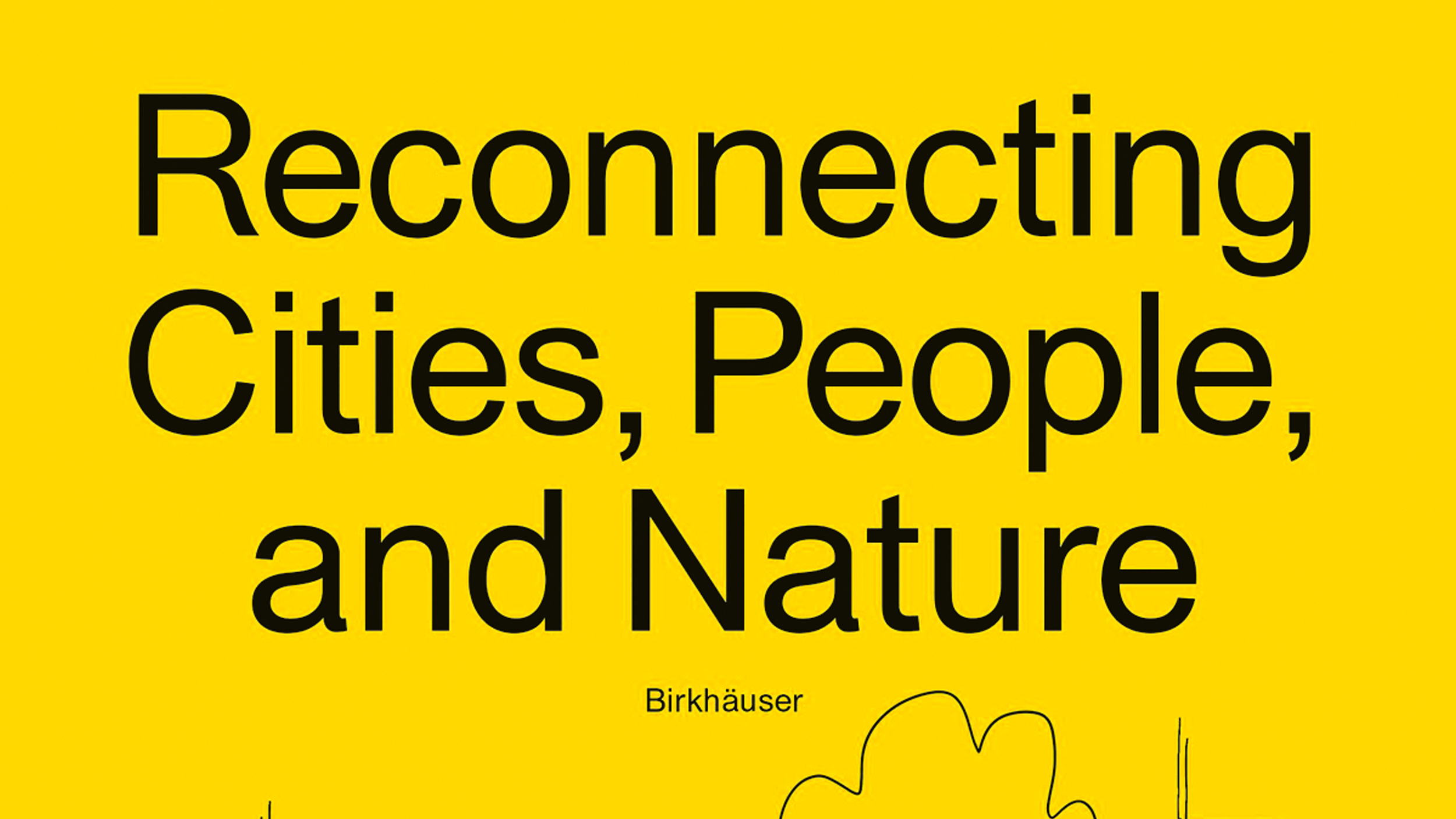
This book proposes a blurring of the limits between architecture, landscape, and urban planning in a bid for flexibility between different scales, spaces, and categories, between public and private, living and mineral, human and non-human. It prompts us, in short, to question the mutually exclusionary binary classifications of modernity, and as Bruno Latour and Donna Haraway tell us, to accept that there exists no sphere ‘natural’ or ‘external’ to us, we being an indivisible part of everything.
It may seem hard to apply these notions to urban design and planning, built on rigid paradigms that are part of our social, political, and economic life. But, Reconnecting Cities, People, and Nature optimistically proves that we can bring on radical change in our environment, be it global or local, and that we already have the tools to design spaces that connect with social and ecological ecosystems. All we need is to trust and use them.
Through practical exercises TU Delft professors Víctor Muñoz Sanz and Robbert Jan van der Veen assert the knowledge and techniques of an ‘urban discipline’ that combines design with landscape architecture and urban planning, and fuels transformation to address the environmental crisis and growing inequality. Urban design will have to include social and environmental know-how while keeping urban form as the goal. This is the contradiction we face in imagining healthier, more resilient, more equitable cities, ecosystems which are interconnected rather than isolated.